
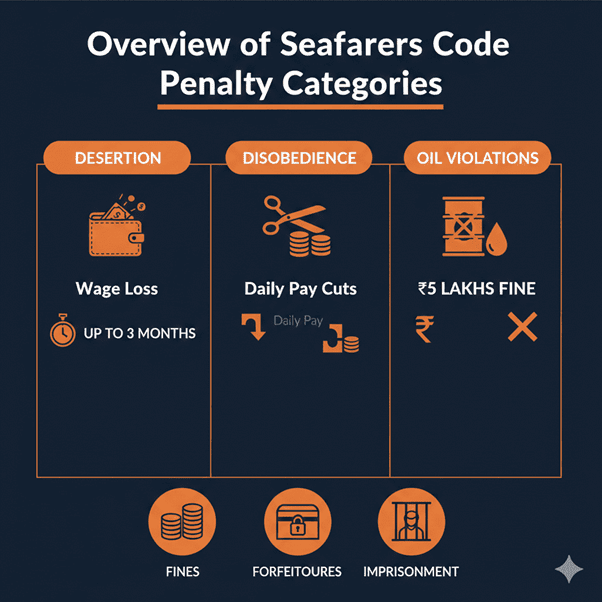
Financial penalties under the Seafarers Code, enforced by India’s Directorate General of Maritime Administration (DGMA), target misconduct like desertion and disobedience to ensure maritime safety and compliance. These rules, rooted in the Merchant Shipping Act and recent DGMA orders, impose fines, wage forfeitures, and more on seafarers and shipmasters. Understanding them helps avoid career-ending sanctions.
What Is the Seafarers Code?
The Seafarers Code refers to the Code of Conduct introduced by DGMA in 2025, aligning with the Merchant Shipping Act and MLC 2006 for ethical seafaring. It outlines professional duties, safety protocols, and violations leading to financial penalties. Non-compliance triggers investigations and sanctions like fines up to ₹5 lakhs.
Why does the Seafarers’ Code emphasize financial penalties? These deter reckless behavior endangering lives and vessels, protecting the industry. For details on DGMA compliance, check the official guidelines.
Why Do Financial Penalties Exist in the Seafarers Code?
Financial penalties maintain discipline aboard ships by directly impacting wages and property. Under Section 191, desertion leads to forfeiture of property left onboard and earned wages, plus excess substitute costs. This motivates adherence to contracts.
When do these penalties apply most strictly? During voyages, for acts like smuggling or neglect causing damage (Section 194), fines reach ₹500 with 3 months’ imprisonment.
What Are Common Financial Penalties for Seafarers?
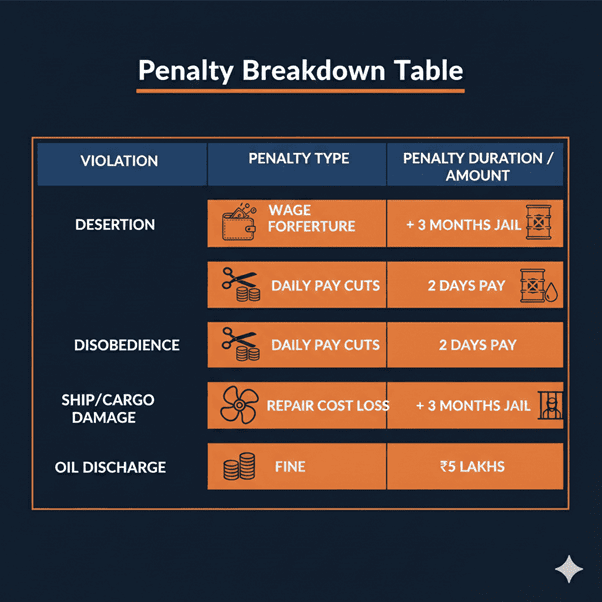
Common penalties include wage forfeiture for misconduct under Section 194: up to 1 month’s pay for disobedience. Fines extend to ₹200-₹1000 for certification fraud or inspection failures. Masters face ₹50-₹500 for crew engagement violations.
How do fines get imposed? Masters deduct from wages and remit to Shipping Masters per Section 202, funding seafarer welfare. For oil discharges (Section 356C), masters pay up to ₹5 lakhs. See DGMA penalties page for the full list.
When Do Severe Fines Apply Under the Code?
Severe fines are imposed for environmental breaches like oil pollution (₹5 lakhs for tankers) or load line submersion (₹10,000+ per inch). Nuclear ship notice failures bring ₹10,000 fines with 1-year jail. These apply immediately upon detection.
Why are oil penalties so high? To enforce global standards under MARPOL via the Merchant Shipping Act. Recent DGMA Order 10/2025 details enforcement manuals. Explore DGMA RPSL penalties for agency fines up to ₹2 lakhs.
How Are Penalties Calculated and Collected?
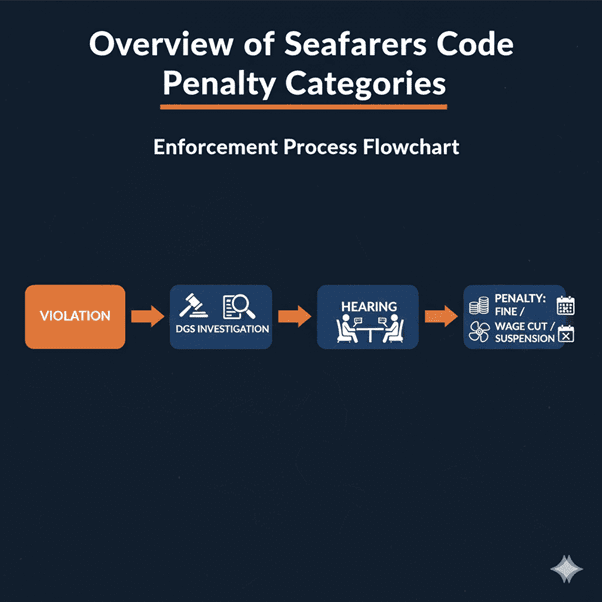
Penalties are calculated based on violation severity: daily pay multiples for neglect, fixed sums like ₹500 for smuggling. Collected via wage deductions and remitted to the government. In appeals via DGMA, fair hearings are possible.
What happens if unpaid? Further license suspensions or blacklisting under the Seafarers Code. RPSL agencies face fines for non-reporting.
Who Enforces Seafarers Code Penalties?
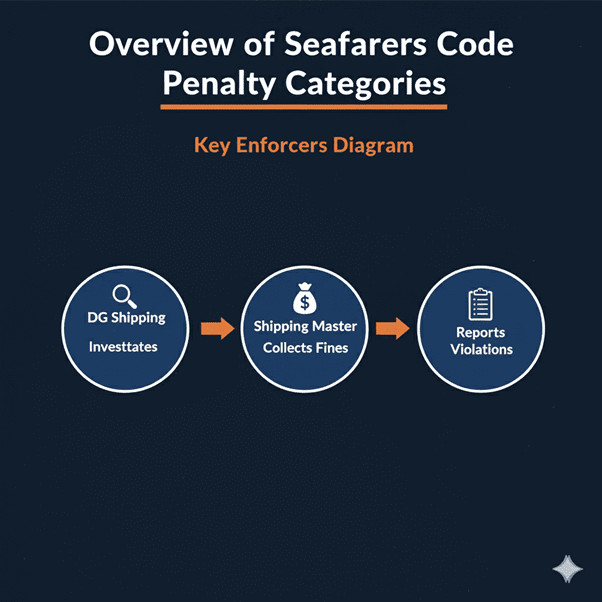
DGMA enforces via investigations, with Shipping Masters handling collections. Port State Control aids under MLC 2006. Violations lead to CDC/CoC suspensions up to 2 years. Why involve RPSL agencies? They report misconduct or face blacklisting/fines. Check DGMA circulars for the latest.
What Defenses Exist Against Penalties?
Defenses include proving weather-induced deviations or a lack of knowledge of load lines. Fair hearings allow appeals before imposition. No penalties for innocent errors per the enforcement manual. When can seafarers appeal? Post-notice, via the DGMA process, ensure response rights.
Why Comply with the Seafarers Code?
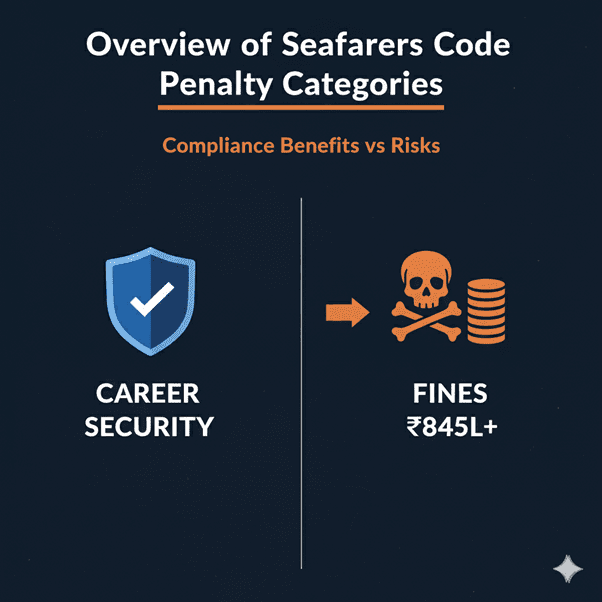
Compliance avoids fines, sustains careers, and upholds safety. The recent 2026 updates stiffen sanctions for deliberate acts. Training via approved centres prevents issues. How does non-compliance impact careers? License bans of up to 2 years and wage losses.
How to Avoid Financial Penalties?
- Follow the Articles of Agreement strictly to dodge Section 194 fines.
- Report issues promptly; use onboard complaint mechanisms under MLC.
- Maintain records for oil books (Section 356F) to evade ₹10,000 fines.
- Undergo DGMA-approved medicals, such as fitness lists.
- Train on code via RPSL; avoid fraud for no 2-year bans.
What is the fine for seafarer desertion under the Code?
Up to full wage forfeiture plus 3 months imprisonment per Section 191.
Why impose wage forfeiture for disobedience?
To deduct 1-6 days’ pay per incident, enforcing discipline (Section 194).
When does DGMA investigate violations?
Upon RPSL reports or port complaints, leading to hearings.
What penalties for oil record book failures?
₹5,000 fine for masters; up to ₹10,000 for falsification.
How much for underage crew engagement?
₹50 fine on master/guardian (Sections 109-111).
Can RPSL agencies face Seafarers Code fines?
Yes, up to ₹2 lakhs for non-reporting or fraud.
What is the max fine for load line breaches?
₹10,000 + ₹5,000 per submerged inch.
When do nuclear ship penalties apply?
₹10,000 fine + 1 year jail for notice failures.