
The monsoon season creates chaos and hardships for the cargo vessels. Besides, negligence and mismanagement of cargo ships makes the situation worse. It is observed by the maritime authorities that many a time, the cargo is either overloaded, not prepared for emergency, or malfunctioning, which leads to a mishap. To cope with this problem, theDirector General of Maritime Administration has introduced several reforms. One of the major reforms towards the safety of maritime communication is the DGMA Circular 58 of 2025 issued by the Director General of Maritime Administration.
What is DGMA Circular 58 of 2025?
DGMA Circular 58 of 2025 is a recent directive initiated by the Director General of Maritime Administration for the safety and operation of general cargo ships that are over 20 years old. It outlines specific protocols that such ships are required to take during the rough monsoon season and foul weather.
It governs the transportation of cargoes between mainland India and the Andaman and Nicobar Islands and transportation within the Andaman and Nicobar Islands. The circular emphasises the need for enhancing the safety of such vessels and strictly prohibits overloading, improper cargo handling, and poor vessel management.
Key Highlights of DGMA Circular 58 of 2025
| Issuing Authority | Director General of Maritime Administration |
| Date of Issue | December 15, 2025 |
| Subject | Safety advisory for General Cargo Ships |
| Primary Focus | Safety measures and guidelines for voyage during rough and foul monsoon season |
| Target Vessel Type | General Cargo Ships over 20 years of age |
| Applicable Routes | Voyages between the Indian Mainland and Andaman and Nicobar Islands and interstate voyages within the Andaman and Nicobar Island |
| Objective | Prevention of maritime accidents and loss of cargo/life |
Who Must Comply with DGMA Circular 58 of 2025?
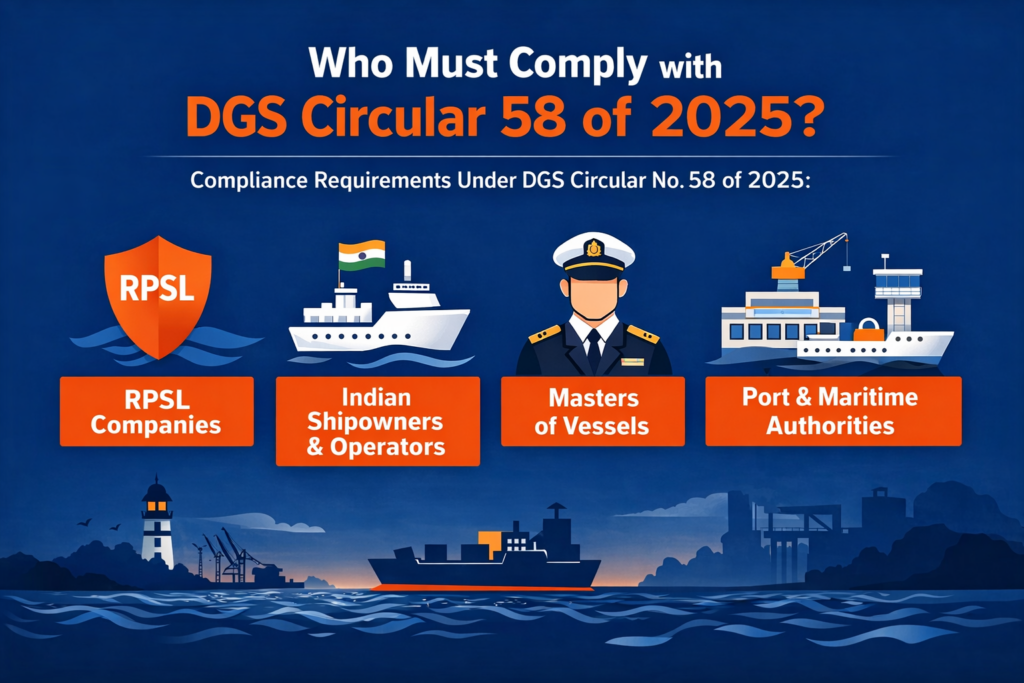
The following entities must comply with the rules and regulations of DGMA Circular 58 of 2025:
- RPSL Companies
- Indian shipowners and operators
- Masters of vessels
- Port and maritime authorities
What are the General Guidelines under the DGMA Circular 58 for Voyage Safety?
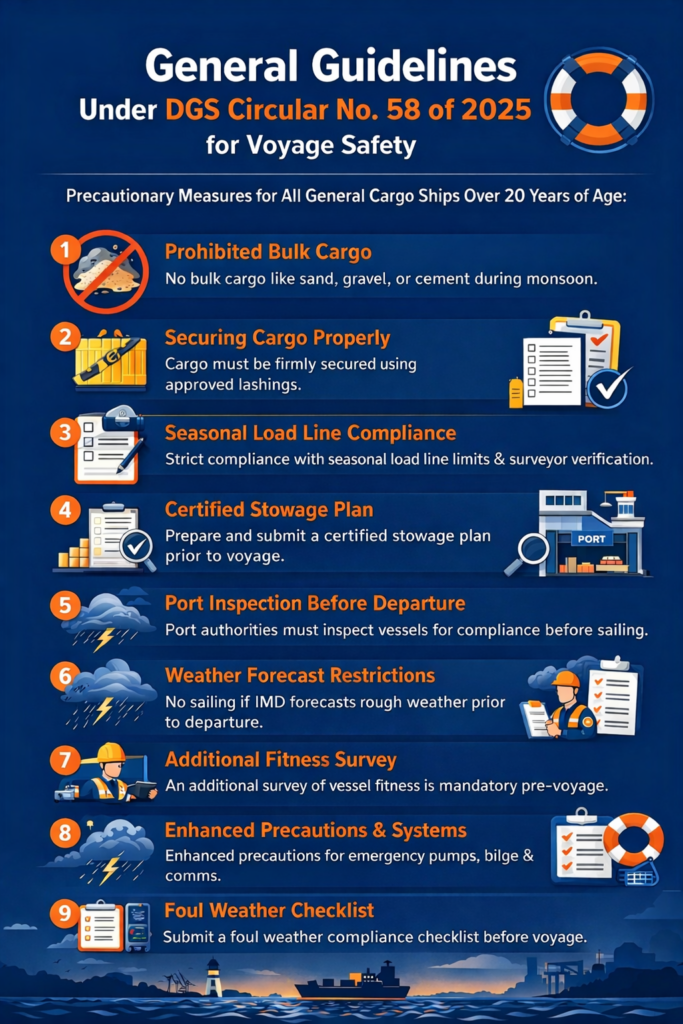
The DGMA Circular 58 of 2025 for Voyage Safety outlines the following precautionary measures or general guidelines for all general cargo ships over 20 years of age:
1. No vessel shall carry bulk cargo like sand, gravel, cement, or any other free-flowing material during the foul monsoon season.
2. No vessel shall carry unsecured containers, unapproved lashings, or open stowage of heavy items. Moreover, loose or unpacked cargo in the vessel should be firmly secured with a tested lashing system as specified in the Cargo Securing Manual.
3. No vessel shall exceed the seasonal load line limit specified by the Merchant Shipping (Load Line) Rules under any circumstances. An independent surveyor authorised by the Directorate or MMDs should inspect the cargo vessel and submit a copy of the total weight and quantity in the cargo for inspection by Port and MMD officials.
4. Each voyage should prepare a detailed General Stowage Plan before the commencement of the voyage, which is duly verified and certified by an independent third-party cargo surveyor. A copy of the same should be submitted to the Mercantile Marine Department (MMD) before the vessel’s departure.
5. Before the commencement of the voyage, the port authorities should carefully inspect the vessel. In case of any deficiencies such as overloading, hull weakness, improper lashing, or non-compliance with weather advisories, the voyage shall not commence until such deficiency is removed. The same shall be reported to the Director General of Maritime Administration and the local MMD.
6. No vessel shall leave the port or depart in case the IMD forecasts adverse or rough weather conditions six hours prior to the scheduled departure. In such a case, the voyage must be delayed or suspended until a revised clearance is given to it.
7. Every vessel is required to undergo an additional fitness survey prior to the commencement of voyage during the foul weather season.
8. Every shipowner is required to take enhanced precautions during the foul season and ensure the functionality of the emergency pumps, communication system, bilge system, monitoring system, and navigation system.
9. Every vessel is required to prepare and submit a foul weather compliance checklist to confirm adherence to all necessary requirements.
What are the Legal Consequences of Non-Compliance with DGMA Circular 58 of 2025?
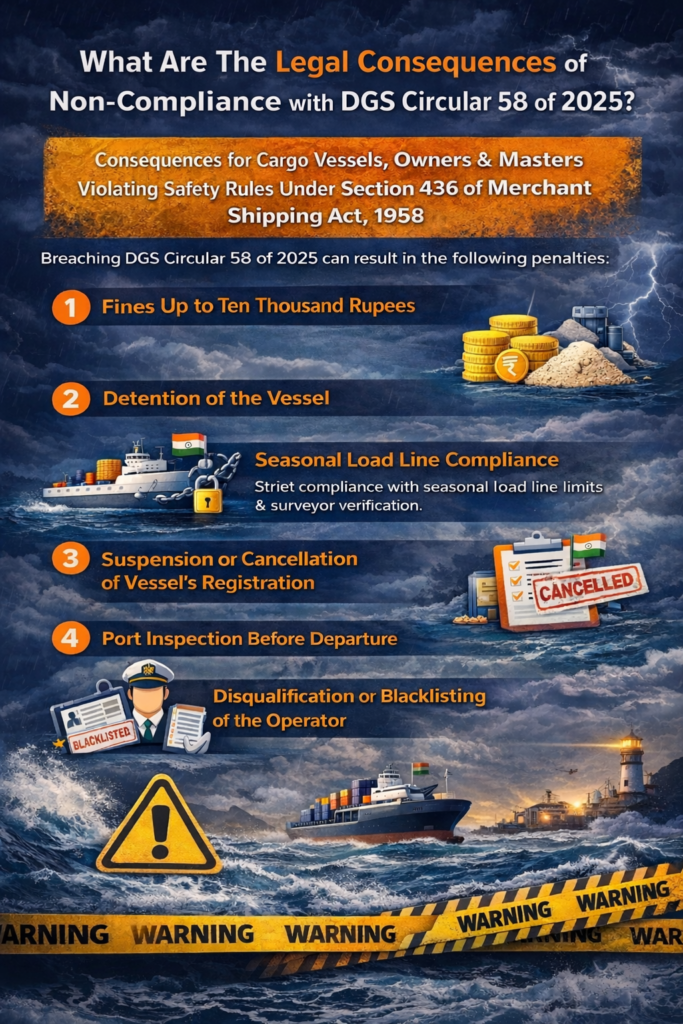
If any cargo vessel, ship owner, or master fails to comply with the legal requirements of DGMA Circular 58 of 2025, they are punished according to Section 436 of the Merchant Shipping Act, 1958. The section outlines the following punishment for breach, omission, or contravention:
- Fines up to ten thousand rupees
- Detention of the vessel
- Suspension or cancellation of the vessel’s registration, or
- Disqualification or blacklisting of the operator
Why DGMA Circular 58 of 2025 Is a Critical Instrument for Maritime Safety?
Following the incident of the sinking of a 41-year-old cargo ship, MV ITT Puma, in 2024, the Director General of Maritime Administration has issued numerous DGMA Orders in 2025 that aim to improve and elevate maritime safety. DGMA Circular 58 of 2025 is one such order that focuses on old general cargo ships.
This circular enlists the precautionary measures that general cargo ships should take to ensure the safety of the cargo and life at sea. Such ships, during the course of time, develop potential defects which remain neglected and become a cause of mishap during rough weather. The circular provides a checklist that the shipowners should undergo to ensure the safety and reliability of such cargoes.
The Bottom Line
The DGMA Circular 58 of 2025 is a great move to ensure the credibility and consistency of the cargo vessels that communicate in the foul and rough monsoon weather. Compliance with the measures and guidelines of this circular ensures that your cargo is ready to go, prepared for emergency response, and able to safely handle rough conditions.
Frequently Asked Questions
1. What is the monsoon or rough weather season under the DGMA Circular 58 of 2025?
The monsoon or rough weather season mentioned under Circular 58 of 2025 is from 1st May to 30th November.
2. What type of cargo is prohibited under DGMA Circular 58 during monsoon season?
Bulk or free-flowing materials like sand, gravel, cement, etc., are prohibited under circular 58 to ensure voyage safety.
3. Does DGMA Circular 58 of 2025 also include vessels below 20 years of age?
The DGMA Circular 58 of 2025 is specifically for vessels over 20 years of age. However, its safety compliance guidelines also affect the communication of other vessels in the sea.
4. Can port authorities detain a vessel for the non-compliance of DGMA Circular 58 of 2025?
Yes, port authorities have the right to detain any vessel which does not comply with the regulations under DGMA Circular 58 of 2025.
5. What are the key documents required during the monsoon voyage under DGMA Circular 58 of 2025?
The key documents required during the monsoon voyage include the monsoon fitness certificate, draft survey report, cargo securing and stowage report, foul weather compliance checklist, and weather forecast documentation.