
Table of Contents
Seafarer grievances may be filed against RPSLs within the context of the Seafarers Code of Conduct if they establish violations either by inspecting, observing, and listening to complaints within the guidelines stated in the DGS Compliance Enforcement Manual beginning on January 1, 2026. The process ensures transparency in the enforcement of standards under the Merchant Shipping Act, as it is linked to actions against RPSLs and broader impacts of the DGS Order 2025. Seafarer complaints may prevent dangers, as indicated in the MLC guidelines in relation to MLC certification.
Why Must RPSLs Lodge Complaints for Code Violations?
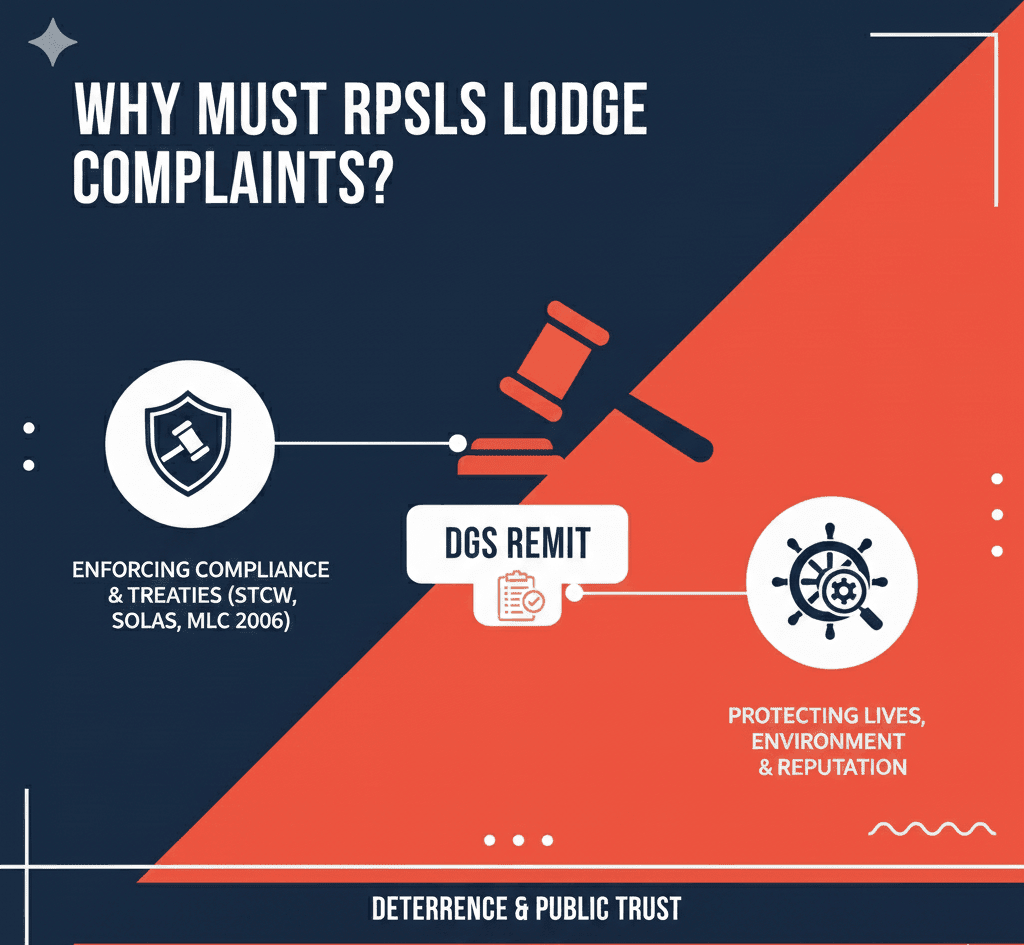
RPSLs utilize the complaints process to enforce voluntary compliance, safety monitoring, and international treaties, such as STCW, SOLAS, and MLC 2006, within the remit of the DGS. The strategy focuses on reporting deliberate actions that pose a risk to human life, the environment, and the industry’s reputation. It also protects compliant operators, as reflected in RPSL company information, and also serves as a mechanism to deter repeat violators. Enforcement builds public trust in the standards and is made to effectively counter intentional disregard, using methods from counseling to prosecution. DGS maintains collaborative partnerships with industry to work on international levels of safety, treating each matter differently to ensure equity while maintaining consistency.
What Triggers RPSLs to Lodge Complaints?
Identified incidents of observed breaches of DA policy, harassment, forgery of documents, interference, or environmental infractions, among those identified by scheduled audits or by citizens, are some of the triggers. Small ones are addressed internally by SMS, while the serious ones require the filing of an Initial Violation Process Form immediately with the headquarters of the DGS. It has to be checked with Doctors approved by the DGS to avert the possibility of cases of medical fraud.
| Trigger Type | Examples | When to Lodge | DGS Link |
| Safety Breaches | Unsafe acts, no rest | Immediate if risk | VDR evidence |
| Conduct Issues | Bullying, assault | Post internal probe | Grievance officer |
| Fraud | Fake logs, smuggling | With evidence | INDOS database check |
| Desertion | Unauthorized absence | After 48 hours | MS Act rules |
When Exactly Do RPSLs Lodge Formal Complaints?
RPSLs formally lodge after filling out an Initial Violation Process Form, which requires answering WHO, WHAT, WHEN, WHERE, WHY, HOW, and attaching photos or logs as evidence, without delay, to protect the facts. DGS assigns investigators for thorough investigations in those cases where minor mediation is not possible. Timelines are focused on perishable evidence. The system is integrated with onboarding procedures for new RPSL companies. Officers take immediate action in their areas of specialty without delay, even in forwarding minor cases for surveillance purposes. Cases that involve perishable evidence demand immediate action.
How Do Investigations Follow RPSL Complaints?
After the stay, the Defense Grievance System then proceeds to carry out interviews, screen the defense for coercion or necessity, utilize the risk matrix on the level of severity, or obtain a Not Insufficiently Connected NIC or Not Found Adjudged NFA, if there is no violation. Witness statements are compared, while the disclosure of an investigation is limited to ensure confidentiality until deterrent actions have been implemented. Appeals ensure equity, which is a basic requirement for the RPSL license. Meticulous investigations use VDR, logs, and defenses are assessed, with an investigation being closed clearly, encouraging safe reporting.
What Documentation Is Required for Complaints?
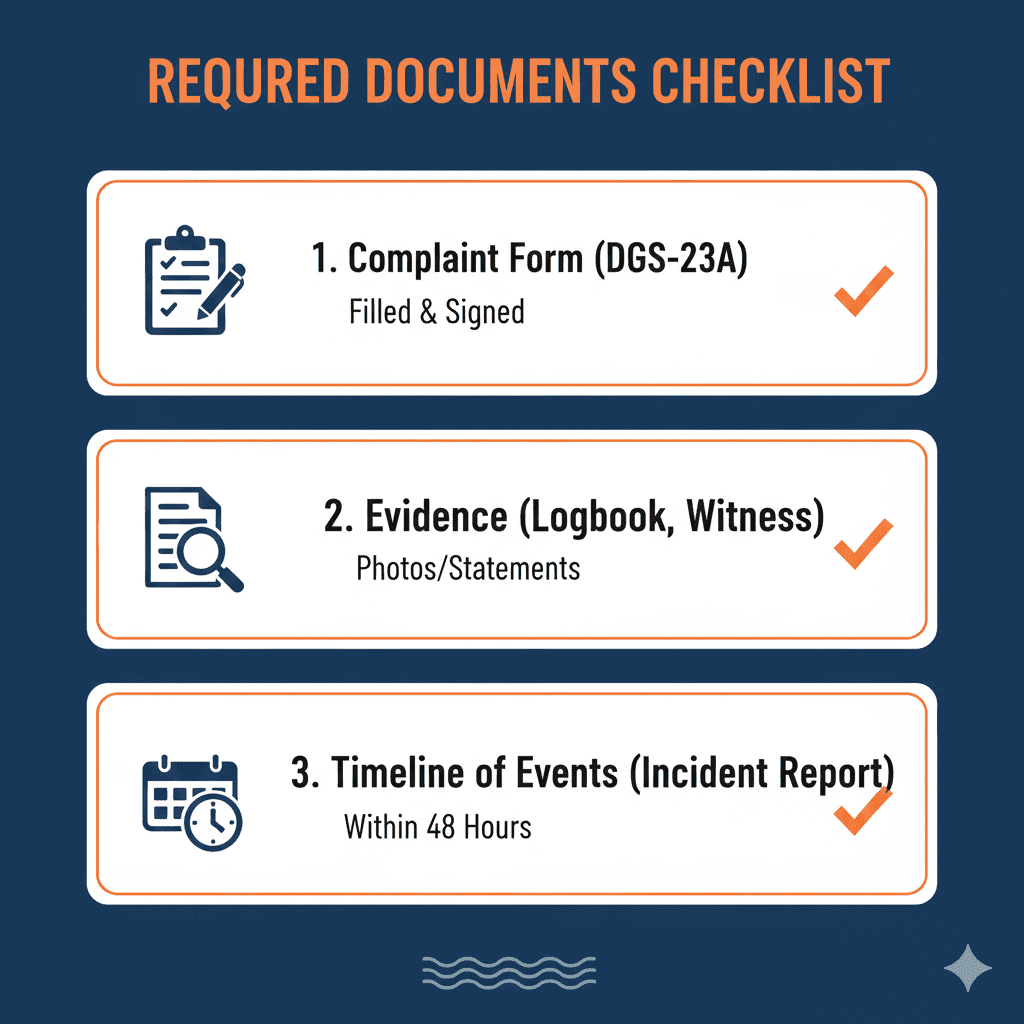
RPSLs provide the Standard Initial Violation Form (Appendix 3), Show Cause Notice templates (Appendix 4), VDR data, and risk assessments as required by Appendix 2. Non-financial sanctions progress from warnings to suspensions as per Appendix 1, while financial penalties are applied through a matrix. Links with amendments to the Maritime Labour Convention. The forms give specific information about the violations, thereby leading to notices issued by the model that uphold the principles of due process and chains of evidence.
Why Follow Principles Before Lodging Complaints?
There are guiding principles of impartialness, proportionality, and public trust in RPSLs, without any consequences for honest mistakes but harsh measures for deliberate offenses. Voluntary processes will not apply to those who constantly disobey, and conflicts of interest are made explicit. Offers maritime consulting services to new RPSL organizations. There is also the enforcement of policies to close the skill gap via educational tools while simultaneously lessening the effects of deliberate risk-taking, ensuring equal treatment of all cases.
When Do Complaints Lead to Star System Impacts?
The grievances that affect the rating of seafarers, for example, regarding skills or safety issues, continue to recur and may provide difficulty in placement. RPSLs monitor for promotion and pay purposes. Increases accountability onthe official website of DGS. Stars recognize and reward outstanding achievements while penalizing those where repeated patterns have occurred, also linked to career advancement opportunities: transferring to a new ship or taking on shore-based responsibilities.
How to Prevent the Need to Lodge Complaints?
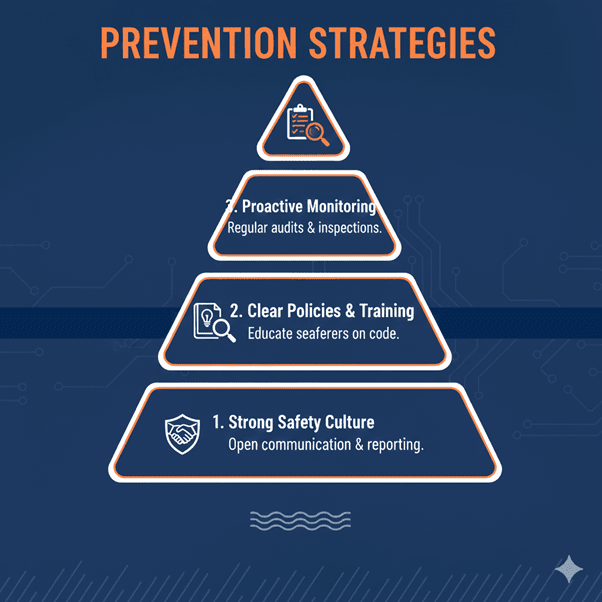
RPSLs promote the culture of training, QHSE activities, and reporting procedures; seafarers abide by the RESPECT guidelines (Rules, Environment, Safety, etc.). Trade unions support seafarers in this regard, and one can approach Legalbabu for further assistance. Incidents can thus be reduced on a continuous improvement basis through proactivity, such as audits, diversity, and green actions.
When must RPSLs lodge complaints immediately?
Upon detecting high-risk violations like sabotage or DA on duty, with evidence.
What if a seafarer defends against a complaint?
DGS assesses defenses like necessity; fair hearings are provided.
Can RPSLs handle minor complaints internally?
Yes, via SMS if no safety threat, before DGS escalation.
When to lodge after detection?
Without delay, preserve evidence promptly.
Does lodging affect RPSL licensing?
Non-lodging risks RPSL penalties; timely action protects status.
Who assigns investigators after complaints?
DGS HQ is based on violation severity and MLC/MS Act protocols.
What evidence strengthens complaints?
VDR, logs, affidavits; digital formats preferred.
Can unions influence complaint outcomes?
They monitor, but DGS decides per principles.