
Table of Contents
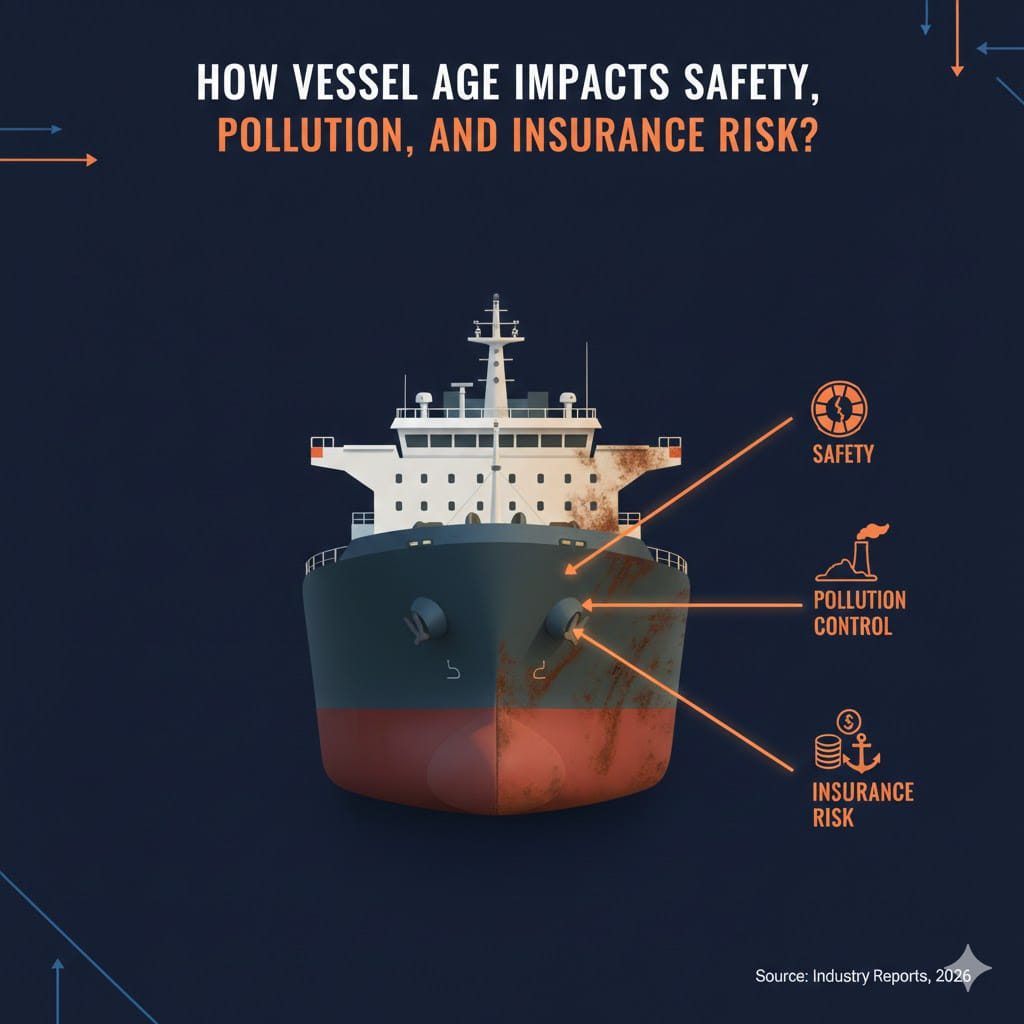
Vessel age plays a key role in deciding safety levels, pollution control efforts, and insurance risks for ships operating under the Indian flag or needing licenses. According to DGS Order No. 01 of 2026, strict age norms ensure quality tonnage, reducing accidents and emissions while keeping insurance costs in check.
This order from the Directorate General of Shipping highlights why older vessels face higher scrutiny for vessel age impact on safety, pollution prevention, and risk coverage.
What Are the Main Reasons for Setting Vessel Age Norms?
The Merchant Shipping Act, 1958, aims to build a strong Indian mercantile marine that serves national needs safely. DGS Order 06 of 2023 started this, but the average age of Indian tonnage keeps rising while the world fleet gets younger.
Quality tonnage matters for safe ocean growth and sustainability. Older ships mean more risks to life at sea, so norms push for modern vessels with better tech for low-carbon fuels. This fights greenhouse gases as per IMO goals.
Stakeholders like ship-owners, asked for reviews due to costs and vessel shortages. An IIM Indore study backed entry age limits and suggested flexible exit rules for complex ships.
Why Does Vessel Age Affect Safety Standards?
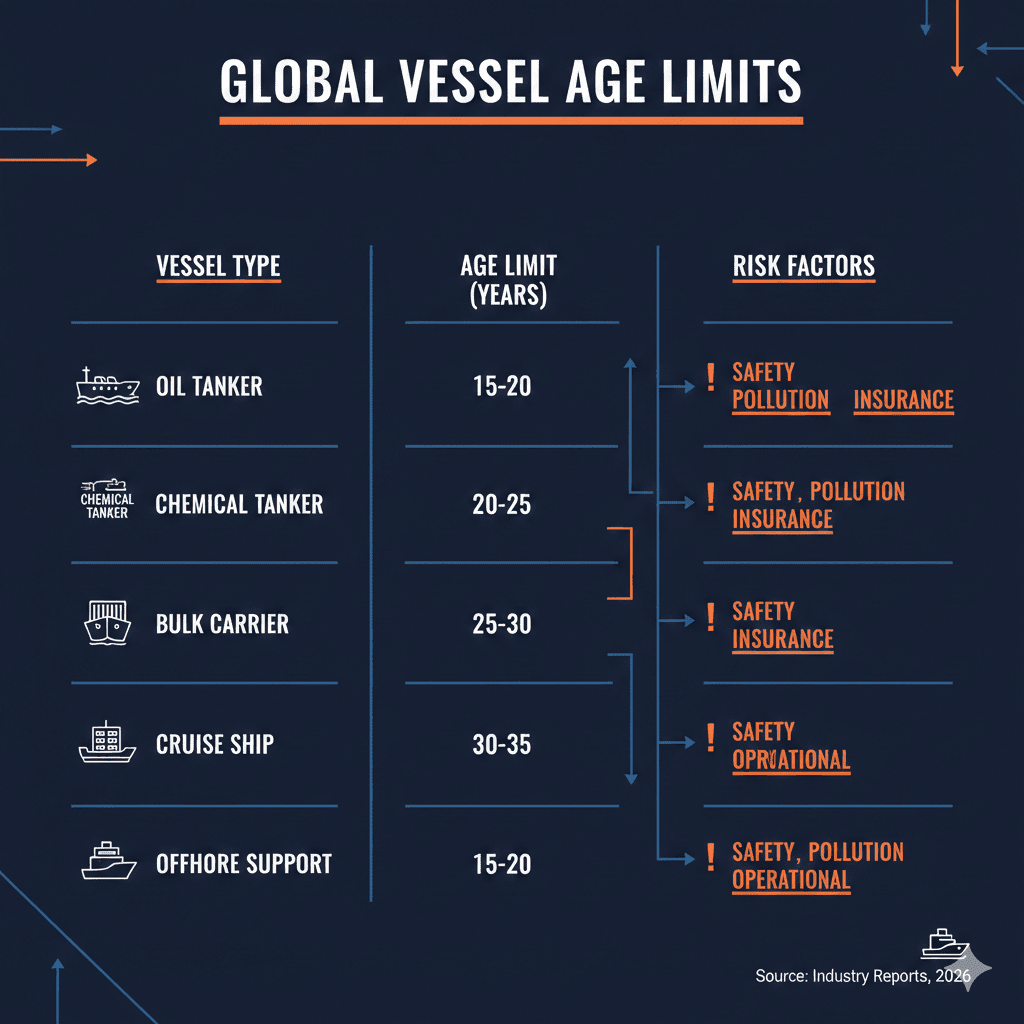
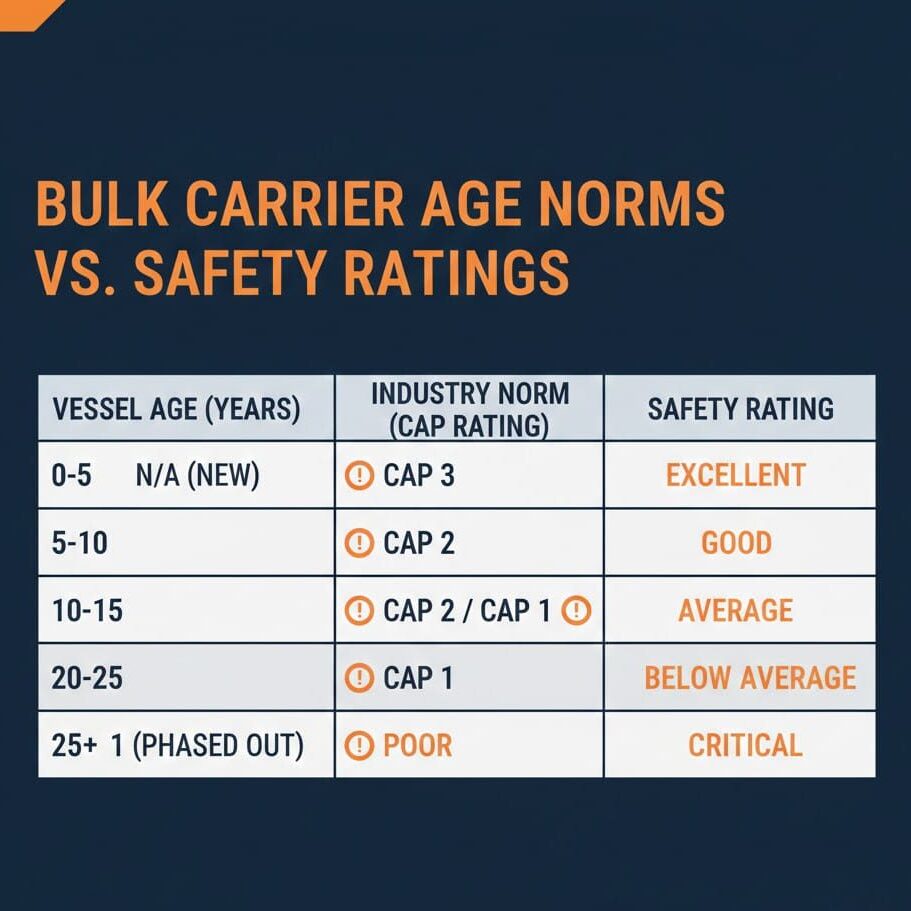
Older vessels wear out faster, leading to hull cracks, machinery failures, and weak systems. DGS norms require IACS classification and CAP ratings for hull and machinery on ships over 15 years old.
For bulk carriers over 20 years, Rightship inspections or DGS ratings check safety. Oil tankers above 20 years cannot enter the Indian registry, cutting accident risks.
Inspections like OVID for offshore vessels ensure older ships stay fit. Without these, safety drops, raising crew and cargo dangers.
When Do Entry Age Limits Apply to New Ships?
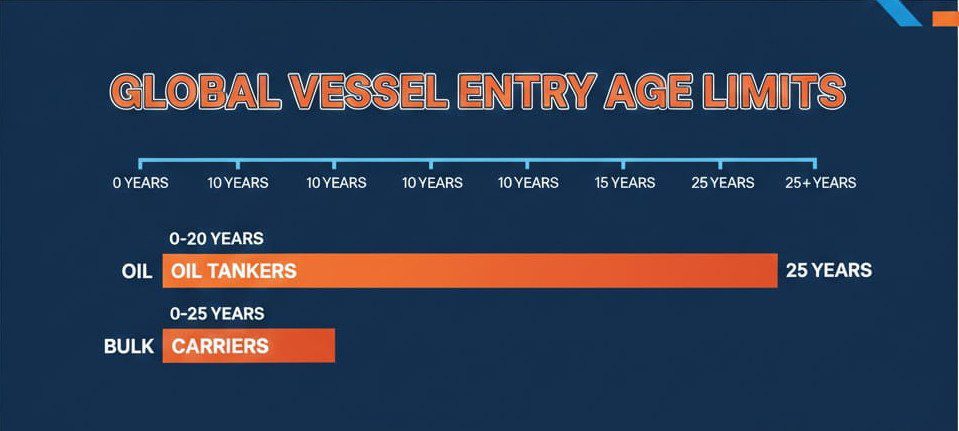
Ships below 15 years enter freely if classed with IACS members. Between 15-20 years, they need CAP 1 for hull and CAP 2 for machinery at dry-dock.
Over the next 20-25 years, entry will tighten—there will be no second-hand buys for most tankers or bulkers. Foreign-flag ships under Sections 406/407 follow the same rules for EEZ work.
Age counts from “Date of Delivery” on safety certificates. This keeps the fleet young and safe.
How Does Vessel Age Influence Pollution Control?
Aging ships use outdated engines that emit more fumes and leak oil more easily. Norms push for energy-efficient ships to meet IMO GHG cuts.
Older chemical carriers need annual FSI inspections after 20 years to control spills. Bulk carriers require Rightship scores above 3, ensuring clean ops.
Sustainability Indexing will determine whether ships over the maximum age can continue to operate after 2031. This links age to pollution rules.
What Happens to Existing Vessels Past Age Limits?
Ships registered before January 21, 2026, run till March 31, 2029. A two-year extension to 2031 needs a Sustainability Index review.
General cargo over 40 years operates only in fair weather. No exemptions for most types, pushing fleet renewal.
Why Are Inspections Tougher for Older Offshore Vessels?
Offshore ships over 15 years old need OVID or DGS ratings yearly. DP2 vessels exit at 30 years, others at 25.Annual FSI keeps pollution and safety in line. This cuts risks in harsh seas.
When Must Bulk Carriers and General Cargo Follow CAP Ratings?
Below 15 years, just the IACS class. 15-20 years: CAP at dry-dock. No entry over 20 years. Further runs past 25 years need Sustainability checks. Rightship score of 3 minimum.
How Do Age Norms Hit Insurance Risks for Ship Owners?
Insurers charge more for old ships due to high breakdown odds. DGS norms lower risks by mandating ratings and dropping premiums for compliant fleets.
Non-classed or over-age vessels face license denial, hiking uninsured risks. Quality tonnage means fewer claims. Foreign charters in EEZ must match entry ages and leveling costs.
What is DGS Order 01 of 2026?
It sets full age norms for Indian flag vessels and foreign ones under MS Act Sections 406/407.
How is vessel age calculated?
Vessel age is calculated from “Date of Delivery” on the Cargo Ship Safety Construction Certificate.
What about bulk carriers over 20 years?
No second-hand acquisitions are allowed; existing vessels must have a minimum Rightship Safety Score of 3 and comply with qualitative parameters to continue operation.
When do existing ships phase out?
Existing vessels registered before January 21, 2026, can operate until March 31, 2029, with a possible two-year extension to March 31, 2031, subject to a Sustainability Indexing review.