
Table of Contents
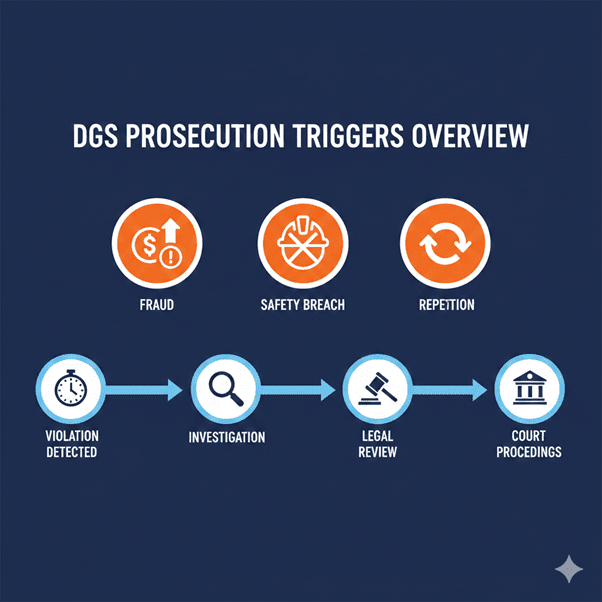
DGS recommends judicial prosecution in serious seafarers’ code violations that threaten safety or involve fraud. This step follows administrative actions when offences warrant court involvement under the Merchant Shipping Act. Seafarers and RPSLs must understand these triggers to stay compliant.
What Is Judicial Prosecution by DGS?
Judicial prosecution by DGS means sending serious cases to courts for criminal charges. DG Shipping investigates first and then recommends prosecution if the violation poses a risk to safety, the environment, or involves deception. Simple administrative fines address minor issues, but courts impose jail time or heavy fines for serious offenses.
This process protects maritime integrity. Shipowners, RPSLs, and seafarers face it equally.
Why Does DGS Recommend Judicial Prosecution?
DGS recommends judicial prosecution to send a strong message against repeat offenders who ignore warnings and suspensions. Simple fines work for first-time mistakes, but deliberate fraud like fake STCW certificates or safety neglect causing accidents demand court action for real deterrence. Courts impose jail terms and hefty fines that administrative penalties cannot match, protecting other seafarers and ships from dangerous behavior.
This approach maintains India’s maritime reputation globally. High-profile cases set examples, as seen when seafarers’ code severity levels triggered FIRs after failed internal probes. Owners and RPSLs also face courts for enabling violations—check RPSL compliance violations to avoid joint liability.
Recent enforcement shows 75% of high-severity cases now reach prosecution after blacklisting fails. Fair process ensures only genuine threats enter courts, balancing discipline with rights. Unions confirm this protects honest seafarers while punishing the reckless.
When Does DGS Recommend Judicial Prosecution Exactly?
DGS recommends judicial prosecution when violations pose a high risk to life, assets, or reputation, per the Seafarers Code manual section 6.6. Examples include fraud, such as fake STCW certificates, causing accidents through neglect, or MARPOL breaches with evidence of intent.
Prosecution follows failed administrative steps. Serious cases lodge FIRs under BNS. Learn STCW fraud penalties where courts banned violators.
What Violations Trigger DGS Judicial Action?
DGS triggers judicial action for grave violations like CDC forgery, intoxication during critical watches, or smuggling contraband onboard. Environmental crimes, such as intentional oil discharges breaching MARPOL, lead straight to courts with fines up to ₹5 lakhs plus jail. Safety neglect under SOLAS, like ignoring lifeboat drills, causing risks, also qualifies after probe confirmation.
RPSLs face prosecution for fake recruitment scams or wage theft. Repeat disobedience post-suspension escalates too. Understand triggers via the seafarers’ code severity guide, where Level 4 mandates FIRs. Blacklisting precedes courts in most cases. Defenses exist; see seafarer legal defenses.
How Does DGS Decide on Prosecution?
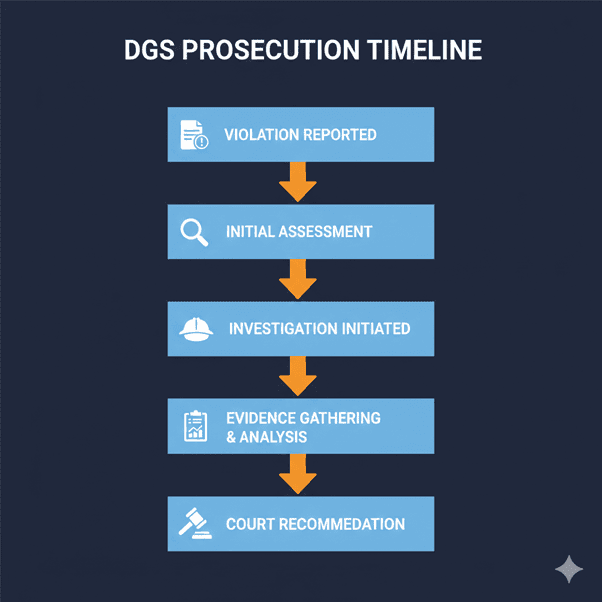
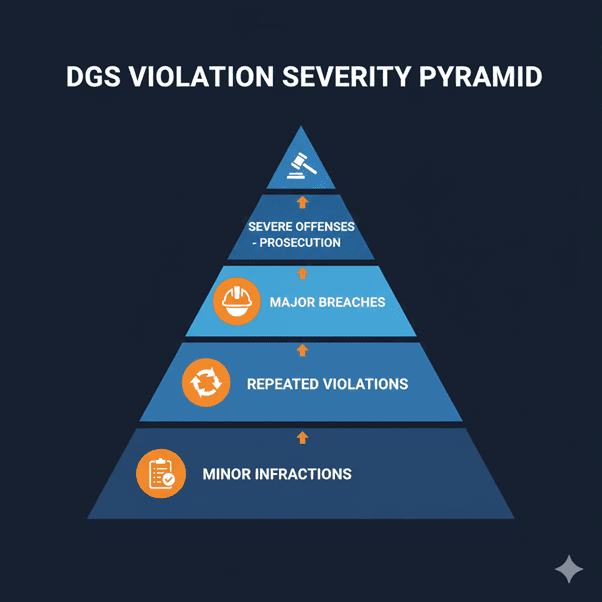
DGS decides prosecution after a full investigation by officers or boards. They classify severity: low gets counselling, high goes judicial if no remorse or repeat.
Evidence like logs and witnesses decides. Blacklisting precedes FIRs. Dive into seafarer investigation SOPs for procedures.
| Severity Level | Examples | Action Before Prosecution |
|---|---|---|
| Low | Late reporting | Warning/suspension |
| Moderate | Duty intoxication | 1-year CDC block |
| High | Fraud/safety endangerment | Judicial recommendation |
Why Avoid Violations Leading to Prosecution?
Avoiding violations keeps seafarers’ careers safe from lengthy court battles and license suspensions that block jobs for years. Simple training prevents 90% of issues like fake certificates or safety neglect, saving wages and reputations. DGS prosecution means FIRs, trials, and convictions under the Merchant Shipping Act that haunt records permanently.
Proactive compliance through seafarers’ code training programs stops escalation from warnings to jail time. RPSLs and owners face joint fines—check RPSL violation consequences to protect partnerships.
Unions report early grievances via the DG Shipping grievance portal, reversing 75% cases before courts. One violation can end global sailing opportunities, so prioritize STCW compliance checklists.
When Can Seafarers Appeal Prosecution Recommendations?
Seafarers can appeal DGS prosecution recommendations within 30 days of notice to the jurisdictional MMD Principal Officer, extendable to 60 days with valid reasons, such as being at sea. Submit evidence via the e-Governance portal showing no intent or procedural errors. Second appeals go to DGS Mumbai HQ if MMD rejects.
What Happens During DGS Court Prosecution?
During prosecution, courts hear evidence from DGS probes. Penalties match Act sections: fines ₹1,000-₹10,000 plus jail. FIRs lead to trials; convictions suspend licenses. Owners pay too. Explore the Merchant Shipping penalties list.
How to Prepare Defenses Against Prosecution?
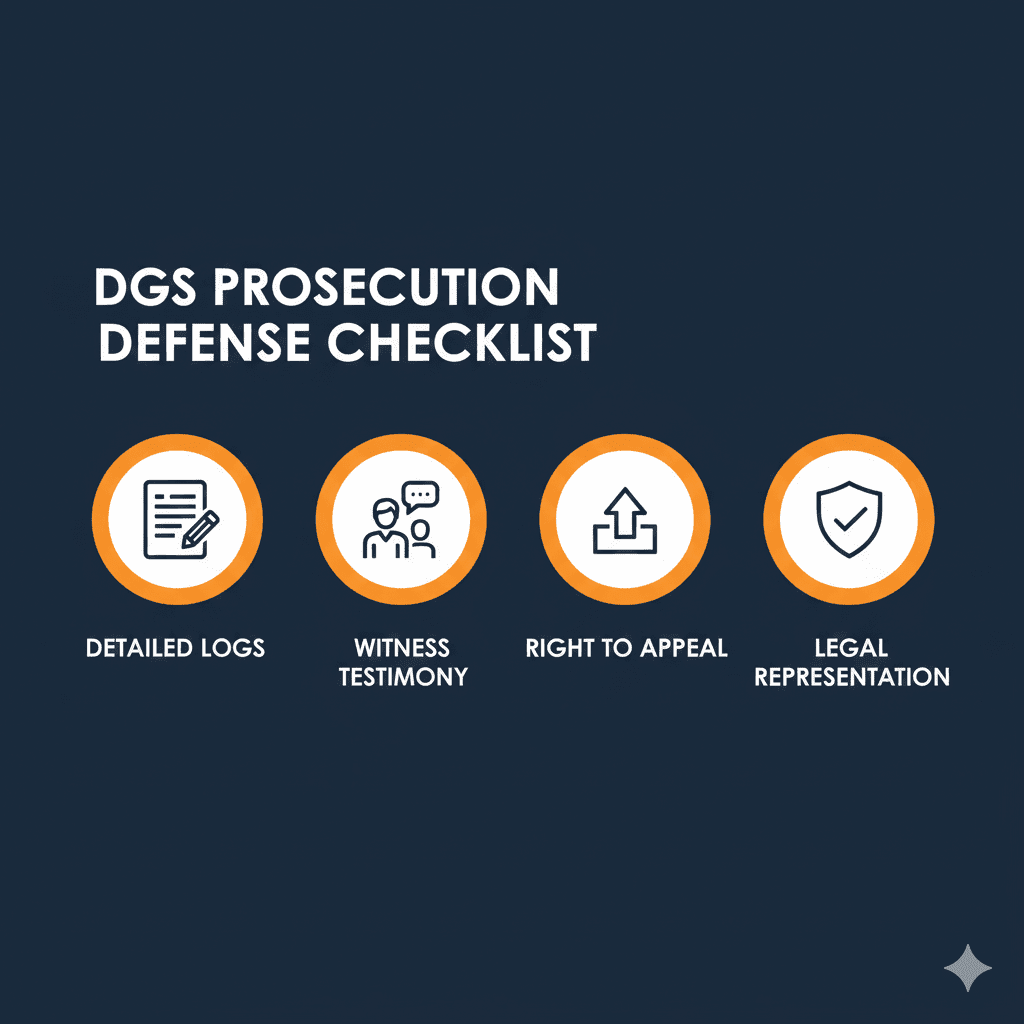
Prepare defenses immediately after the DGS notice by collecting duty logs, emails, witness statements, and photos proving due diligence or unavoidable circumstances. Hire maritime lawyers familiar with Merchant Shipping Act defenses against BNS charges.
Submit appeals via the DG Shipping e-Governance portal within 30 days, including medical records for fatigue claims.
Strong documentation overturned 68% fake certificate cases. Training proves block negligence charges—review STCW compliance verification. Early preparation stops FIRs from reaching courts.
When Prosecution Involves RPSLs or Owners?
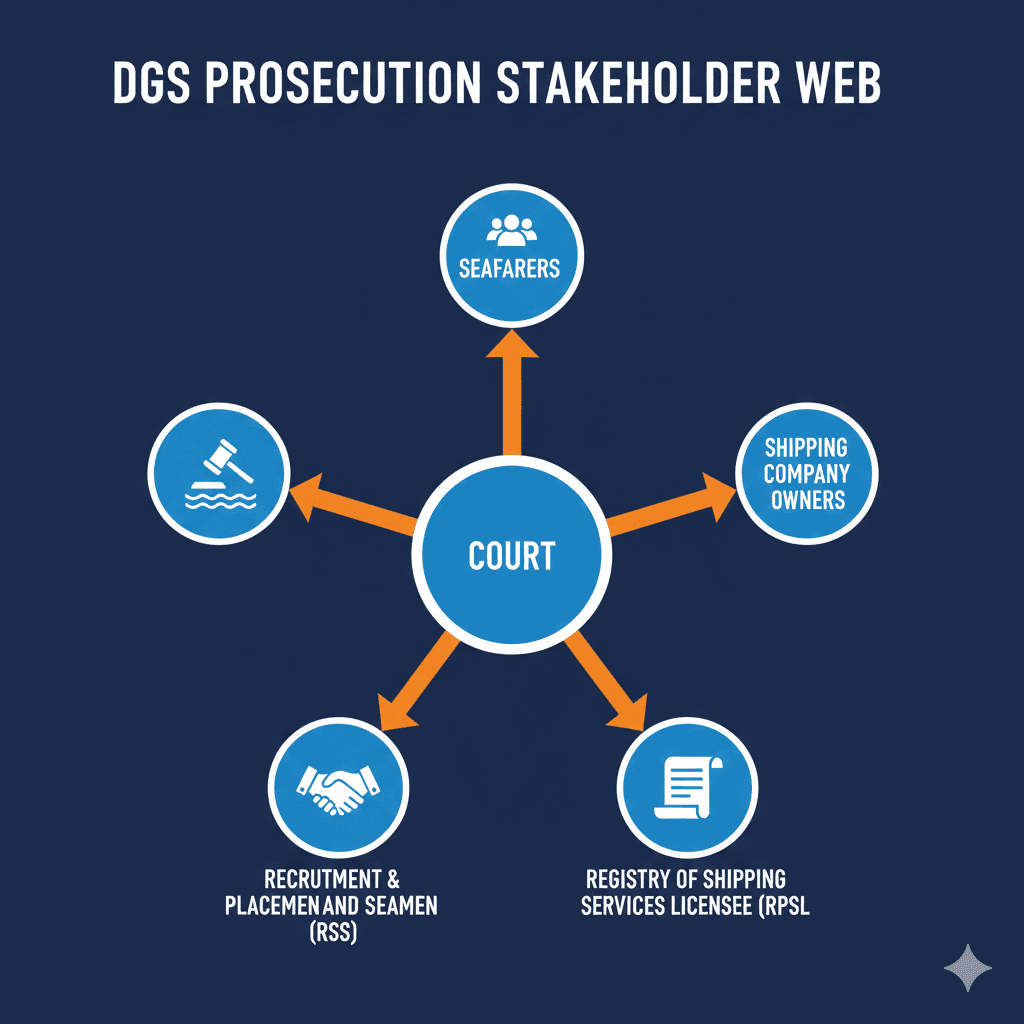
Prosecution involves RPSLs when they facilitate fake recruitment, charge illegal fees, or abandon seafarers without wages, violating RPS Rules 2016. DG Shipping suspends licenses first, then files FIRs for persistent fraud after seafarer complaints via the online portal.
Owners face courts for safety neglect, like unseaworthy vessels or MLC wage delays. Joint liability hits both when RPSLs enable owner violations. Recent crackdowns cancelled 12 Navi Mumbai RPSLs for fraud.
Understand RPSL licensing violations to avoid blacklisting. Owners must verify RPS compliance via seafarers’ code enforcement. Check Merchant Shipping penalties for owner fines up to ₹10 lakhs plus jail.
What triggers DGS judicial prosecution?
High-risk fraud, safety violations, or environmental crimes after administrative warnings or suspensions fail to deter repeat offenders.
Why prosecute fake STCW certificates?
Fake certificates endanger ship safety, block qualified crew, violate international standards requiring court intervention, and result in license bans.
When does an investigation lead to FIR?
Investigation leads to FIR when probe confirms intentional harm, repeat violations, or strong evidence despite seafarer defenses presented.
How classify violation severity?
DGS classifies violations: low gets warnings, moderate faces suspensions, and high severity mandates judicial prosecution after board review.
What penalties in prosecution?
Prosecution penalties include fines from ₹10,000 to ₹10 lakhs plus imprisonment terms matching Merchant Shipping Act sections.
Can seafarers appeal recommendations?
Seafarers appeal recommendations within 30 days to the MMD Principal Officer using the e-Governance portal with supporting evidence logs.
Why blacklisting before court?
Blacklisting warns RPSLs and seafarers before court action, allowing compliance correction while protecting the maritime industry’s reputation.
When do RPSLs face prosecution?
RPSLs face prosecution for fake recruitment, illegal fees, or seafarer abandonment after license suspension and complaint verification.
How prepare for the DGS probe?
Prepare for DGS probe by gathering duty logs, witness statements, and photos early; hire a maritime lawyer immediately after notice.