

India phases out older ships to cut accident risks and boost global competitiveness. Older vessels often lack updated tech for collision avoidance or fire suppression, leading to incidents like oil spills. The policy logic ties directly to India’s Maritime India Vision 2047, prioritizing safety over short-term costs.
Economic reasons stand out, too. Maintaining rusty hulls drains funds better spent on new builds. Fresh ships cut fuel use by 20-30%, slashing emissions and import bills. For Indian shipowners, this means lower insurance premiums and easier access to international routes. Explore DGMA order compliance for practical steps.
Environmental protection forms another pillar. Older engines spew high sulfur oxides, violating IMO 2020 rules. DGMA Order enforces scrubbers or fuel switches, but phasing proves cheaper long-term. Seafarers benefit from stable jobs on reliable vessels, reducing abandonment cases seen in past fleet woes.
What Is DGMA Order 01 of 2026 and Why Does It Target Older Ships?
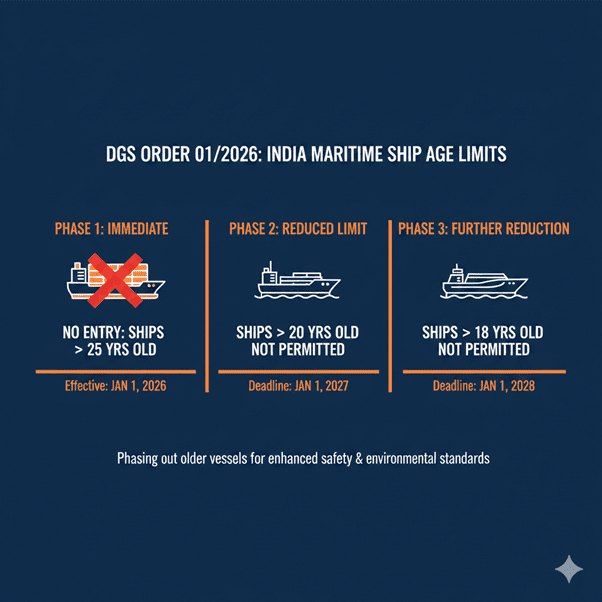
DGMA Order 01 of 2026, issued by India’s Directorate General of Maritime Administration sets strict norms for phasing out older vessels from the Indian registry. This policy mandates that ships over specific age limits must retire or upgrade to meet modern safety and environmental standards. Ship owners now face clear deadlines to comply, ensuring India’s fleet aligns with global maritime rules. Owners can prepare using RPSL annual compliance services tailored for DGMA updates.
The order focuses on vessels built before 2000, requiring them to exit service by phases starting April 2026. Simple logic drives this: older ships carry higher risks of breakdowns, pollution, and accidents at sea. By enforcing age-based retirement, India protects seafarers, coasts, and trade routes from potential disasters. Detailed compliance checklists help here, like those in RPSL guidelines.
Detailed sentences explain the core aim. Ships aging beyond 25 years for bulk carriers or 20 years for tankers trigger mandatory surveys and upgrades. Failure leads to de-flagging, meaning they lose Indian CDC privileges. This shift builds a safer, greener fleet for India’s growing maritime economy.
What Safety Risks Do Older Ships Pose That Prompted This Order?
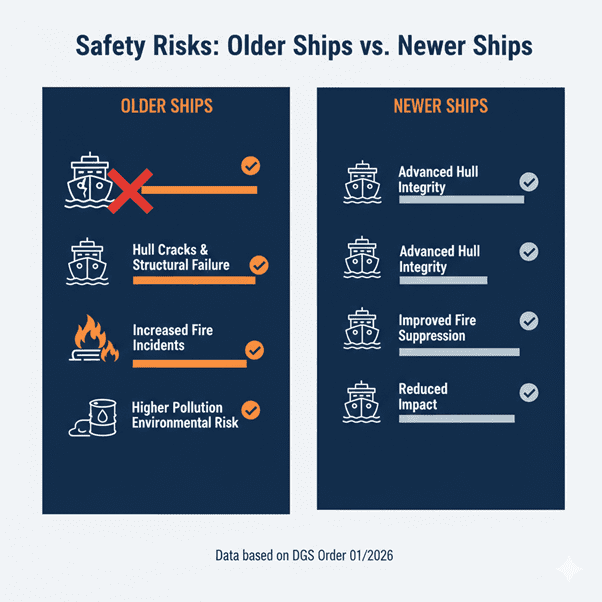
Older ships pose hull fatigue risks, where metal weakens from years of salt exposure and waves. Cracks lead to flooding, as seen in global sinkings yearly. DGMA Order 01 mandates ultrasonic thickness checks every six months for at-risk vessels. Addressing crew safety starts with non-seafarer licensing for repairs.
Fire hazards rise, too. Aging wiring sparks easily in engine rooms packed with oil lines. The policy demands retrofits like low-flashpoint fuel systems, but non-compliant ships face bans. Crew training gaps amplify dangers, with outdated STCW certification on legacy fleets. Check the seafarer code enforcement for violation handling.
Pollution threats loom large. Ballast water from old tanks spreads invasive species, harming fisheries. The order requires a BWMS installation, yet economics favor retirement. India’s coasts, vital for 90% trade, stay protected this way.
When Does DGMA Order 01 of 2026 Take Full Effect for Shipowners?
DGMA Order 01 kicks in phases from January 21, 2026, with full enforcement by April 1. Initial audits hit ships over 20 years old immediately, giving six months for upgrades. Non-compliance triggers port state detentions. Stay updated via DGMA circulars and chartering license processes.
Tiered timelines ease transition. Bulk carriers over 25 years retire first by Q3 2026. Tankers follow in 2027. Owners submit compliance plans via the e-Samudra portal by the end of March. RPSL firms use tools from the course approval fees guide.
Grace periods apply for flagged vessels abroad. Repatriation deadlines extend to 18 months if surveys pass.
How Does This Order Align with Global Maritime Standards?
This order mirrors IMO’s Hong Kong Convention on ship recycling, pushing safe disposal over beach scrapping. India, a signatory, avoids blacklisting by phasing out substandard tonnage. Surveys match SOLAS Chapter XI-1 protocols. Align training with DGMA MTI requirements.
EU MRV rules inspire emission caps, linking age to CO2 output. Older ships exceed limits, barring EU ports. Compliance opens doors to premium charters. See related RPSL compliance strategies.
What Economic Impacts Follow from Phasing Out Older Ships?
Phasing creates jobs in new shipyards like Cochin and Mazagon. India aims for 1,000 new builds by 2030, cutting import reliance. Charter rates rise 15% for compliant fleets. Budget wisely using RPSL audit services.
Short-term costs hit small owners, but subsidies via Sagarmala soften the blow. Fleet modernization lifts GDP contribution from 2% to 5%. Learn from seafarer complaint protocols. Trade flows more smoothly without delays.

Why Do Environmental Goals Drive India’s Older Ship Phase-Out?
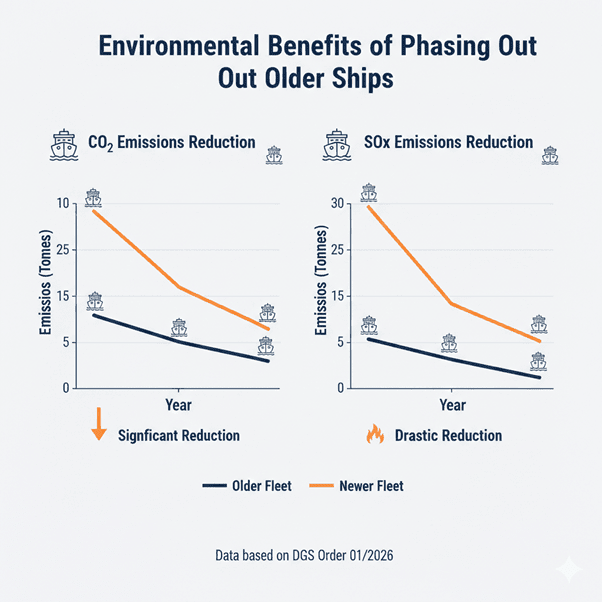
Sulfur caps from older bunkers harm air quality near ports like Mumbai. Order mandates LSMGO switches, but LNG retrofits prove unviable for 30-year hulls. Retirement cuts SOx by 80%. Green compliance ties to non-seafarer placements.
Ocean health improves sans heavy metals leaching. Ballast reforms prevent algal blooms. Track via DGMA news.
How Will Seafarers Be Affected by This Shipping Policy?
Seafarers shift to modern vessels with better tech, reducing fatigue from breakdowns. Wages stabilize as quality fleets attract top firms. Training mandates rise, but resources like training institute setups aid the transition.
Job losses minimal; new ships need skilled crews. See RPSL seafarer codes.
What Compliance Steps Must Shipowners Take Immediately?
Owners audit hulls via Class societies now. File Age Norms plans on the DG portal. Budget for surveys costing INR 5-10 lakhs per vessel. Use course fee structures for crew prep. Non-move risks fines up to INR 1 crore.
What triggered DGMA Order 01 of 2026?
Recent accidents and IMO audits exposed fleet gaps, prompting safety reforms.
When must 25-year-old bulk carriers retire?
By Q3 2026, post final survey.
Why prioritize tankers in phase-out?
Oil spill risks demand faster action.
How does order affect foreign-flagged Indian ships?
Repatriation or sale required within 18 months.
What upgrades qualify older ships for extension?
Scrubbers, BWMS, and hull plating renewals.
How to check vessel eligibility online?
Use DGMA e-Samudra for the age calculator.
What role does RPSL play in enforcement?
RPSLs audit crews on compliant ships only.