
How to Get Jobs in Japan in 2026: A Complete Guide for Indians
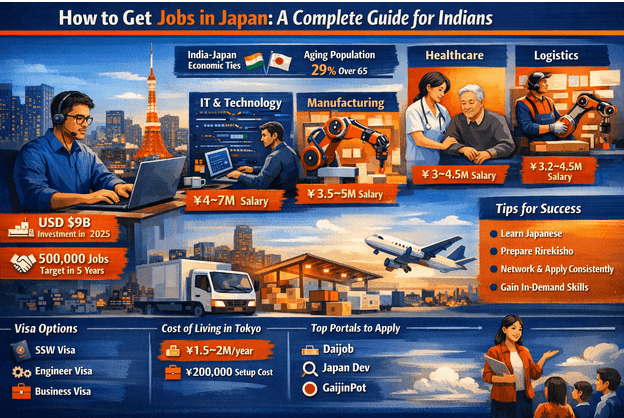
Japan is opening its doors wider than ever to Indian professionals. With nearly USD 9 billion in investments in 2025 and a major India–Japan Action Plan targeting 500,000 jobs over five years, this is a rare opportunity across industries like IT, manufacturing, healthcare, logistics, and education etc.
For job seekers, freelancers, and even business owners, this growing partnership with companies like Fujitsu, NTT Data, and NEC is creating long-term career potential. This is a great opportunity for anyone who wants to explore the international job market in 2026.
Why Japan Needs Indian Talent Now
Two major factors are driving this demand:
- Strong India–Japan Economic Ties
Since 2020, Japan has increased investments in India across startups, banking, and infrastructure, strengthening business collaboration. - Aging Population Crisis
Japan has one of the world’s oldest populations, with nearly 29% over the age of 65. This has created a massive shortage of skilled workers, making Indian talent highly valuable.
Top Job Sectors for Indians in Japan
1. IT & Technology – The Biggest Opportunity
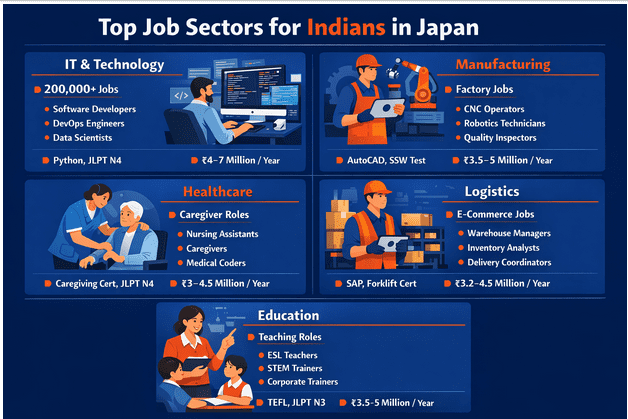
Japan is undergoing digital transformation, creating over 200,000+ job openings.
Popular Roles:
- Software Developers (React, Node.js)
- DevOps Engineers
- Data Scientists
Skills Required:
- Python, Cloud (AWS/Azure)
- Basic Japanese (JLPT N4)
Salary: ¥4–7 million (₹24–42 lakh)
Top Employers: Fujitsu, NTT Data, NEC
Tip: Use platforms like Japan Dev and Tokyo Dev (many roles are English-friendly).
Manufacturing – Skilled Trades in Demand
Japan needs 100,000+ workers in factories and automation.
Roles:
- CNC Operators
- Robotics Technicians
- Quality Inspectors
Skills Required:
- AutoCAD, SolidWorks
- SSW Skills Test
Salary: ¥3.5–5 million (₹21–30 lakh)
Tip: Experience in India’s manufacturing sector (like auto or metal industries) is a strong advantage.
Healthcare – High Demand Due to Aging Population
Japan is actively hiring caregivers and healthcare professionals.
Roles:
- Nursing Assistants
- Caregivers
- Medical Coders
Skills Required:
- Basic caregiving certification
- JLPT N4
Salary: ¥3–4.5 million (₹18–27 lakh)
Bonus: Many jobs offer free housing.
Also before you move ahead to apply for a nurse or health worker in Japan, go through the latest emigrate nurse process rules to save yourself from application rejection.
Logistics – Growing E-commerce Sector
With platforms like Rakuten and Amazon Japan growing rapidly, logistics jobs are increasing.
Roles:
- Warehouse Managers
- Inventory Analysts
- Delivery Coordinators
Skills Required:
- SAP/ERP
- Forklift certification
Salary: ¥3.2–4.5 million (₹19–27 lakh)
- Education – Teaching Opportunities
Japan needs 30,000+ teachers, especially bilingual educators.
Roles:
- ESL Teachers
- STEM Trainers
- Corporate Trainers
Skills Required:
- TEFL / B.Ed
- JLPT N3
Salary: ¥3.5–5 million (₹21–30 lakh)
Note: Salary data is based on prevailing Yen-Rupee exchange.
Who Qualifies for Jobs in Japan?
You don’t always need a degree, but you must have:
- Relevant technical or sector skills
- Basic Japanese (JLPT N5/N4)
- Certifications (depending on industry)
Pro Tip: Learning Japanese can increase your job chances by up to 3x.
Visa Options for Indians
Visa Options for Indians
| Visa Type | Duration | Best For | PR Path |
| SSW Type 1 | Up to 5 years | Entry-level skilled jobs | Upgrade possible |
| SSW Type 2 | Long-term | Advanced professionals | Yes |
| Business Manager Visa | 1–5 years | Entrepreneurs | Yes |
Processing Time: It may take 1 to 3 months to complete the process subjected to document verification and approval by relevant authorities in Japan.
How to Apply for Jobs in Japan
Best Job Portals
These are some job portals which you can use to find jobs in Japan that match your skills..
- Daijob.com (bilingual roles)
- Japan Dev / Tokyo Dev (tech jobs)
- GaijinPot Jobs (expat-friendly)
Resume Format: Rirekisho
Japanese employers prefer a 1-page resume with:
- Passport-size photo
- JLPT level clearly mentioned
- Clean, concise job history
Tips to Boost Your Selection
- Learn Japanese (JLPT certification)
- Customize your resume for Japan
- Apply to at least 10 jobs per week
- Network via LinkedIn and Indian communities in Japan
- Highlight measurable achievements (e.g., “Built app with 1M users”)
Salary Overview
Here is the sector wise salary breakdown in Japan as per current data.
| Sector | Salary (¥) | Equivalent (₹) |
| IT | 4–7M | 24–42L |
| Manufacturing | 3.5–5M | 21–30L |
| Healthcare | 3–4.5M | 18–27L |
| Freelancing | 5M+ | 30L+ |
Cost of Living in Japan
- Tokyo living cost: ¥1.5–2M/year
- Initial setup cost: ~¥200,000 deposit
- Lifestyle: Safe, efficient, high quality
Opportunities for Freelancers & Business Owners

Japan’s USD 68 billion investment ecosystem creates huge opportunities:
- IT outsourcing projects
- Consulting services
- Joint ventures with Japanese firms
Freelancers can find work via platforms like Upwork Japan or direct partnerships
Other Job Roles You Can Explore in Japan
1. Building Cleaning Management
Jobs in this sector require attention to detail, physical fitness, and the ability to maintain hygiene standards in buildings. No advanced technical skills are needed, making it suitable for beginners. Basic Japanese communication skills are helpful for following instructions.
2. Machine Parts & Tooling Industry
Candidates should have hands-on experience or training in machining, welding, casting, or metalwork. Knowledge of tools, measurements, and industrial safety standards is important.
Technical certifications or prior factory experience can significantly improve job prospects.
3. Industrial Machinery Industry
This sector requires skills in machine operation, assembly, maintenance, and industrial processes. Candidates should be comfortable working with equipment and understanding production workflows. Basic technical knowledge and problem-solving ability are essential.
5. Electric, Electronics & Information Industry
Applicants should have knowledge of electronics, circuit assembly, or equipment maintenance. Familiarity with tools and basic electrical systems is important. Candidates with ITI, diploma, or technical certifications have an advantage.
6. Construction Industry
This field requires physical strength and skills in areas like carpentry, plumbing, scaffolding, or general construction work. Experience in construction projects is highly valued. Safety awareness and the ability to work in teams are essential.
7. Shipbuilding & Ship Machinery
Candidates should have experience in welding, machining, or heavy equipment handling. Knowledge of industrial tools and ship-related work is beneficial. This sector suits those with a background in heavy engineering or fabrication.
8. Automobile Repair & Maintenance
Applicants need basic knowledge of vehicle inspection, servicing, and repair. Experience as a mechanic or formal training in automobile engineering is preferred. Understanding of tools and troubleshooting skills is important.
9. Aviation Industry
This sector requires precision, discipline, and awareness of safety standards. Roles may involve ground handling or assisting in aircraft maintenance. Candidates should be physically fit and able to work in high-responsibility environments.
10. Accommodation Industry
Jobs in hospitality require good communication skills, customer service attitude, and basic knowledge of hotel operations. Basic Japanese is important for interacting with guests and staff.
11. Agriculture
Candidates should be comfortable with farming activities such as planting, harvesting, and livestock management. Physical endurance and willingness to work outdoors are essential.
No high-level qualifications are required, but practical experience is helpful.
12. Fishery & Aquaculture
This sector requires the ability to work in marine environments, including fishing, seafood processing, and aquaculture management. Physical fitness and adaptability to challenging conditions are important.
13. Food & Beverage Manufacturing
Applicants should understand food processing, packaging, and hygiene standards. Experience in food factories or production units is beneficial.
Attention to cleanliness and safety regulations is crucial.
14. Food Service Industry
This field requires skills in cooking, food preparation, customer service, and basic restaurant operations. Good communication, teamwork, and a service-oriented mindset are key to success.
How Overseas Recruitment Agencies Can Help You?
In case you are not able to find a suitable role for you in Japan or are puzzled about the process, then you can contact overseas recruitment agencies in India. These recruitment agencies have complete know-how of the recruitment process and relevant information about job openings, which will ease your path to a job in Japan. Also, they will help you with document verification and get you relevant ones if you are missing any.
Final Thoughts: Why You Should Act Now
Japan is no longer just a dream destination, it’s a real and growing opportunity for Indian professionals, freelancers, and entrepreneurs. With a strong demand for skilled talent, supportive government policies, and deepening India–Japan ties, the pathway to building a successful career in Japan has never been clearer. However, success depends on preparation like learning basic Japanese, building relevant skills, and understanding the country’s work culture can significantly improve your chances. You can also seek help from overseas recruitment agencies in India if you are unable to find a suitable role. If you act early and stay consistent, Japan can offer not just a job, but long-term career growth and global exposure.
Next Steps:
- Start learning Japanese
- Prepare your Rirekisho resume
- Apply consistently
- Build strong industry skills
Frequently Asked Questions on Jobs in Japan for Indians
1. How can Indians get a job in Japan?
Indians can get jobs in Japan by applying through job portals like Daijob, Japan Dev, and GaijinPot. Having in-demand skills, a well-structured Rirekisho resume, and basic Japanese language proficiency (JLPT N4/N5) significantly improves your chances.
2. Is the Japanese language mandatory for jobs in Japan?
Japanese is not always mandatory, especially for IT jobs, but having a JLPT certification (N5 or N4) can increase your selection chances and help with workplace communication.
3. What are the most in-demand jobs in Japan for Indians?
The most in-demand jobs include roles in IT, manufacturing, healthcare, logistics, and education. Positions like software developers, caregivers, CNC operators, and English teachers are highly sought after.
4. What is the average salary in Japan for Indian professionals?
The average salary ranges between ¥3 million to ¥7 million per year (₹18 lakh to ₹42 lakh), depending on the industry, experience, and skill level.
5. Can freshers apply for jobs in Japan?
Yes, freshers can apply, especially in sectors like IT, manufacturing, and education. Skill-based training programs and certifications can improve employability.
6. What visa is required to work in Japan?
The most common visas are the Specified Skilled Worker (SSW) visa and the Engineer/Specialist visa. Entrepreneurs can apply for a Business Manager Visa.
7. How long does it take to get a Japanese work visa?
The processing time for a Japan work visa usually takes between 1 to 3 months after submitting all required documents.
8. What documents are required to apply for jobs in Japan?
You typically need a passport, Rirekisho (Japanese resume), educational certificates, work experience documents, and language proficiency proof (if applicable).
9. Can Indians settle permanently in Japan?
Yes, Indians can apply for permanent residency after working in Japan for several years, depending on the visa type and eligibility criteria.
10. Is Japan a good country for Indian professionals?
Yes, Japan offers high salaries, a safe environment, advanced infrastructure, and strong career growth opportunities, making it a great option for Indian professionals.