
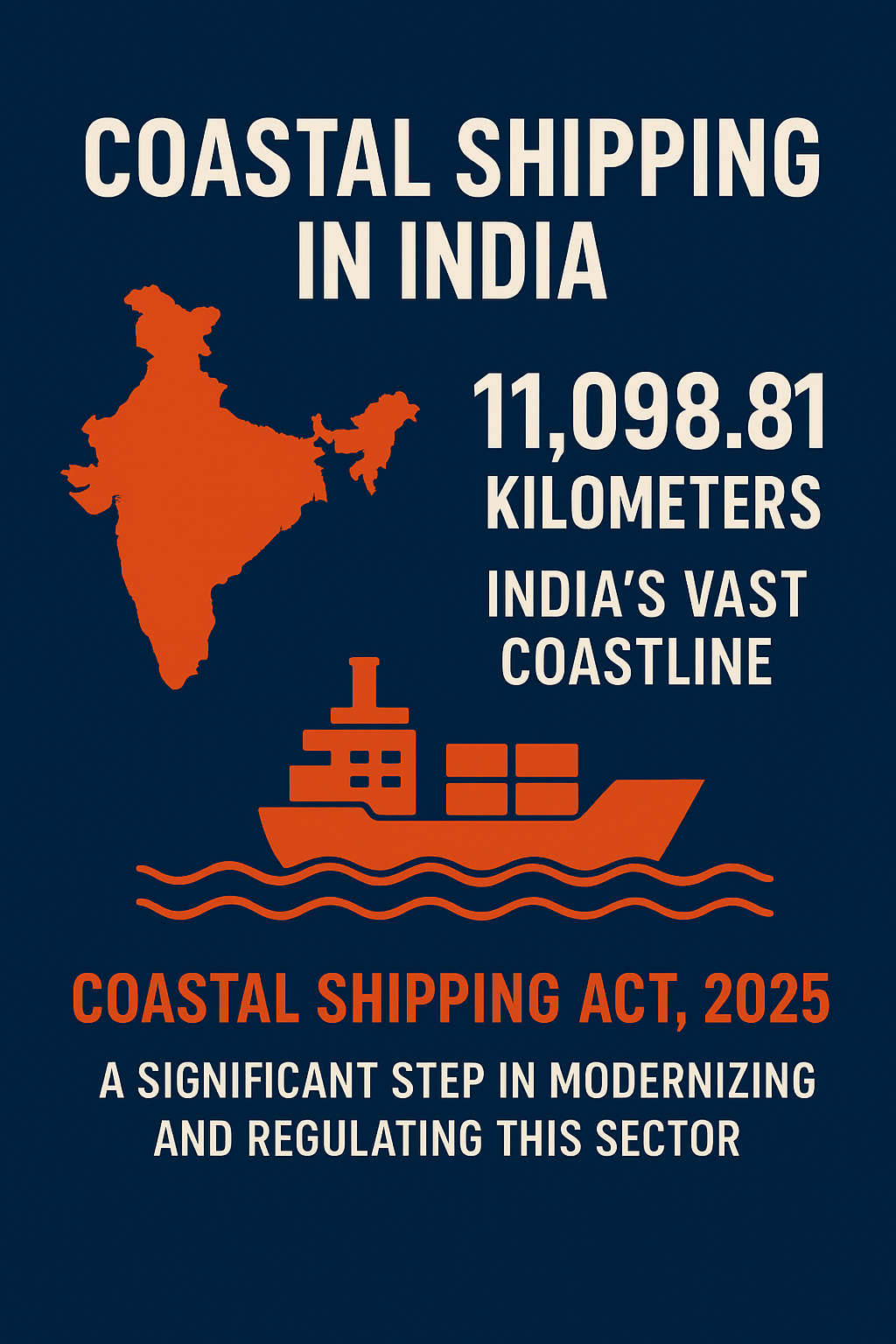
India’s vast coastline stretches over 11,098.81 kilometers, making coastal shipping a vital component of the nation’s maritime landscape. The Coastal Shipping Act, 2025 marks a significant step in modernizing and regulating this sector. This blog unpacks Chapter 1 of the Act, focusing on the key definitions and scope, to help you understand what this means for India’s coastal trade and shipping ecosystem stakeholders like RPSC companies and seafarers.
What is the Coastal Shipping Act, 2025?
Enacted to consolidate and update the laws governing coastal shipping, the Coastal Shipping Act, 2025 aims to promote domestic shipping, enhance national security, and facilitate economic growth along India’s coasts. It brings clarity and structure to how foreign and Indian vessels operate between ports in Indian territorial waters, encouraging more efficient and sustainable maritime transport.
Key Definitions
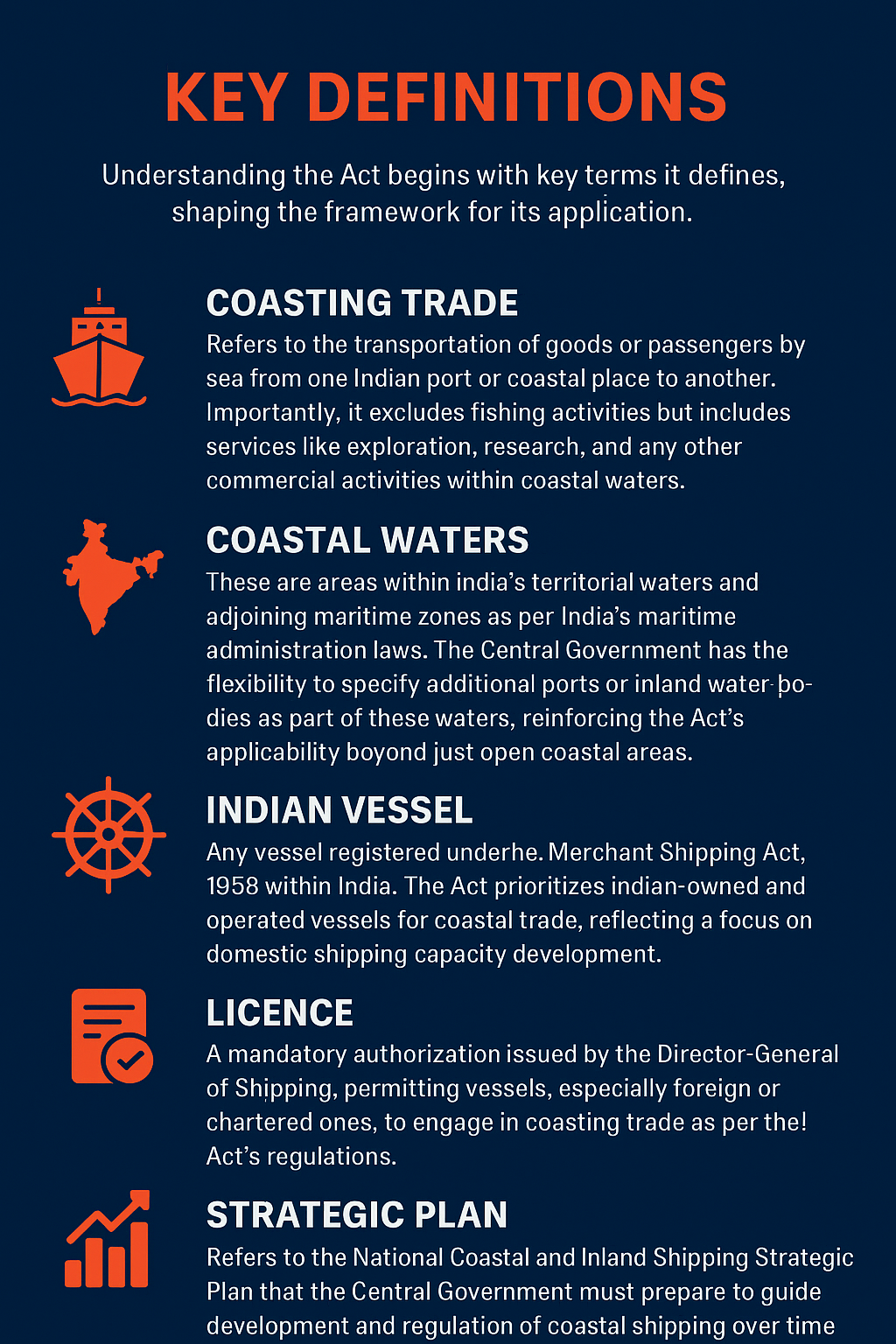
Understanding the Act begins with key terms it defines, shaping the framework for its application:
- Coasting Trade: Refers to the transportation of goods or passengers by sea from one Indian port or coastal place to another. Importantly, it excludes fishing activities but includes services like exploration, research, and any other commercial activities within coastal waters. This broad definition underscores the modern range of maritime operations the Act covers.
- Coastal Waters: These are areas within India’s territorial waters and adjoining maritime zones as per India’s maritime administration laws. The Central Government has the flexibility to specify additional ports or inland water bodies as part of these waters, reinforcing the Act’s applicability beyond just open coastal areas.
- Indian Vessel: Any vessel registered under the Merchant Shipping Act, 2025 within India. The Act prioritizes Indian-owned and operated vessels for coastal trade, reflecting a focus on domestic shipping capacity development.
- Licence: A mandatory authorization issued by theDirector General of Maritime Administration, permitting vessels, especially foreign or chartered ones, to engage in coasting trade as per the Act’s regulations.
- Director-General: A pivotal authority under the Act, responsible for issuing licenses, enforcing compliance, and overseeing coastal shipping operations.
- Strategic Plan: Refers to the National Coastal and Inland Shipping Strategic Plan that the Central Government must prepare to guide development and regulation of coastal shipping over time.
Scope of the Act
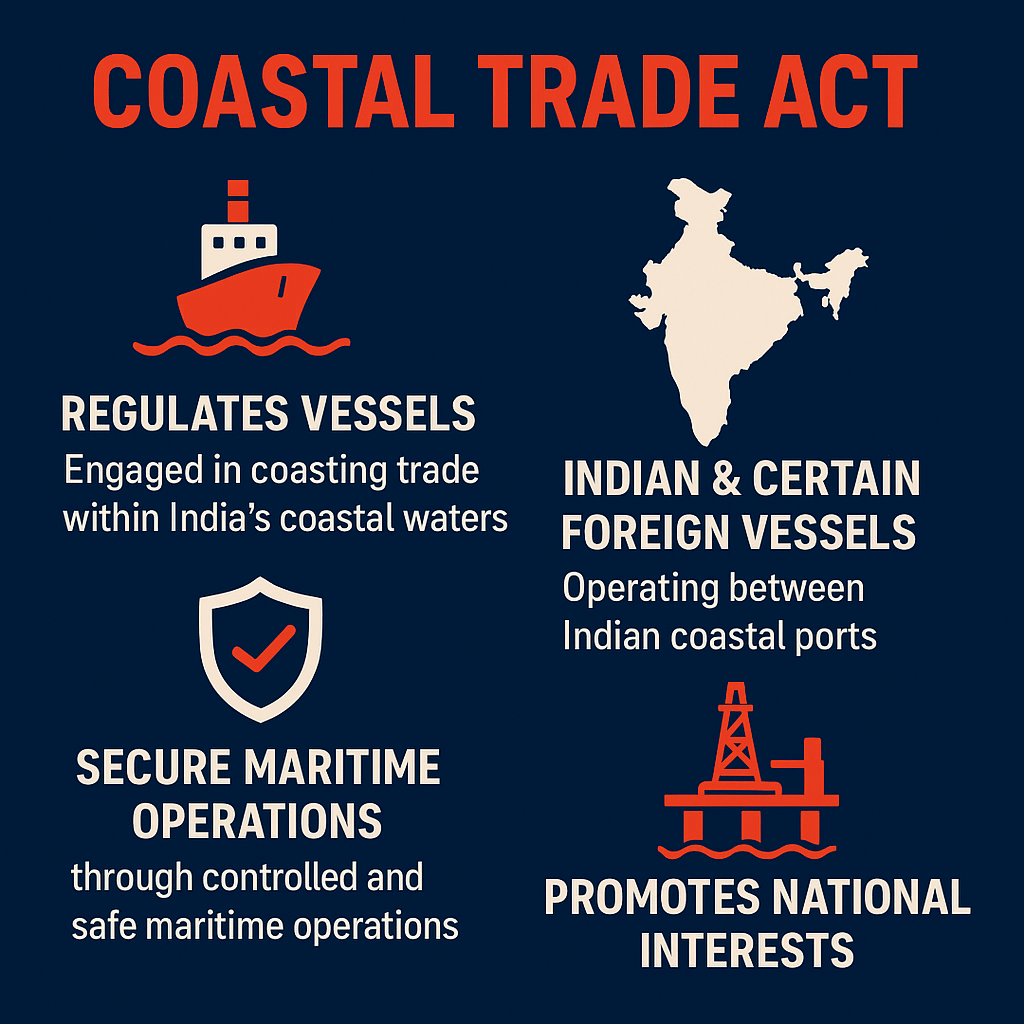
The Act extends broadly to regulate all vessels engaged in coasting trade within India’s coastal waters. It applies to Indian and certain foreign vessels operating between Indian coastal ports, ensuring controlled and secure maritime operations.
The provisions are designed to:
- Protect national interests by promoting Indian-owned shipping.
- Regulate the operation of foreign vessels through licensing.
- Encourage safety, security, and environmental responsibility.
- Support commercial activities beyond mere transport, like offshore exploration.
The Act’s commencement date and the applicability of different sections can vary as notified by the Central Government, allowing flexibility in phased implementation.
Why These Definitions Matter
Clear definitions establish the legal boundaries and operational parameters for coastal shipping. They help in:
- Defining who can operate in coastal waters and under what conditions.
- Clarifying the kinds of activities considered part of coasting trade.
- Enabling the Central Government and Director-General to effectively regulate shipping.
- Supporting the creation of a data-driven strategic plan for the sector’s growth.
Conclusion
Chapter 1 of the Coastal Shipping Act, 2025 forms the foundation of this transformative legislation by laying out clear, modern definitions and demarcating the scope of the Act. It sets the stage for a regulatory environment that balances national security, maritime safety, and the economic potential of coastal shipping. As India looks to boost coastal trade and reduce logistics costs, understanding these key terms and the scope of the Act is essential for stakeholders and observers alike.
This Act signals a new era where India’s maritime sector embraces strategic regulation, encourages domestic shipping capacity, and integrates modern commercial activities in coastal waters, shaping a secure and sustainable maritime future.
Frequently Asked Questions on Coastal Shipping Act, 2025
What is the Coastal Shipping Act, 2025 and why is it important for India’s maritime sector?
The Coastal Shipping Act, 2025 is a new law passed by the Indian Parliament to modernize regulations governing coastal shipping. It aims to promote domestic coastal trade, enhance national security by building an Indian-owned coastal fleet, and support economic growth along India’s vast coastline. By consolidating previous laws and introducing clearer licensing and strategic planning frameworks, the Coastal Shipping Act, 2025 streamlines operations and boosts competitiveness for Indian shipping sectors, aligning with the country’s vision to become a major maritime hub.
How does the Act define “coasting trade” and what activities does it include or exclude?
Coasting trade is defined as the carriage of goods or passengers by sea between ports or coastal places within India. It excludes fishing activities but includes other commercial services such as exploration, research, and offshore operations in coastal waters. This broad and modern definition takes into account the wide range of maritime commercial activities impacting India’s coastal economy.
What are “coastal waters” as per the Act and how is their scope determined?
Coastal waters include the territorial waters of India and adjoining maritime zones as defined by India’s maritime laws. Additionally, the Central Government can specify specific ports or inland waterways as part of coastal waters. This ensures the Coastal Shipping Act, 2025 covers all relevant maritime areas for regulating coastal shipping and related activities.
Who qualifies as an “Indian vessel” under the Act and why is this distinction significant?
An Indian vessel is any vessel registered in India under the Merchant Shipping Act, 1925. This distinction is crucial because the Act prioritizes Indian-owned and operated vessels for engaging in coasting trade, exempting them from licensing requirements that foreign vessels must fulfill. This encourages the development of a strong domestic coastal fleet, important for national security and economic self-reliance.
What role does the Director General of Maritime Administration play in regulating coastal shipping through this Act?
The Director-General is the key authority responsible for issuing licenses, enforcing compliance, and overseeing coastal shipping operations under the Coastal Shipping Act, 2025 The Director-General evaluates license applications based on safety, security, and operational criteria, monitors reporting requirements, and has powers to suspend, revoke or modify licenses for violations. This central role ensures streamlined regulation and strategic oversight of India’s coastal shipping industry.