
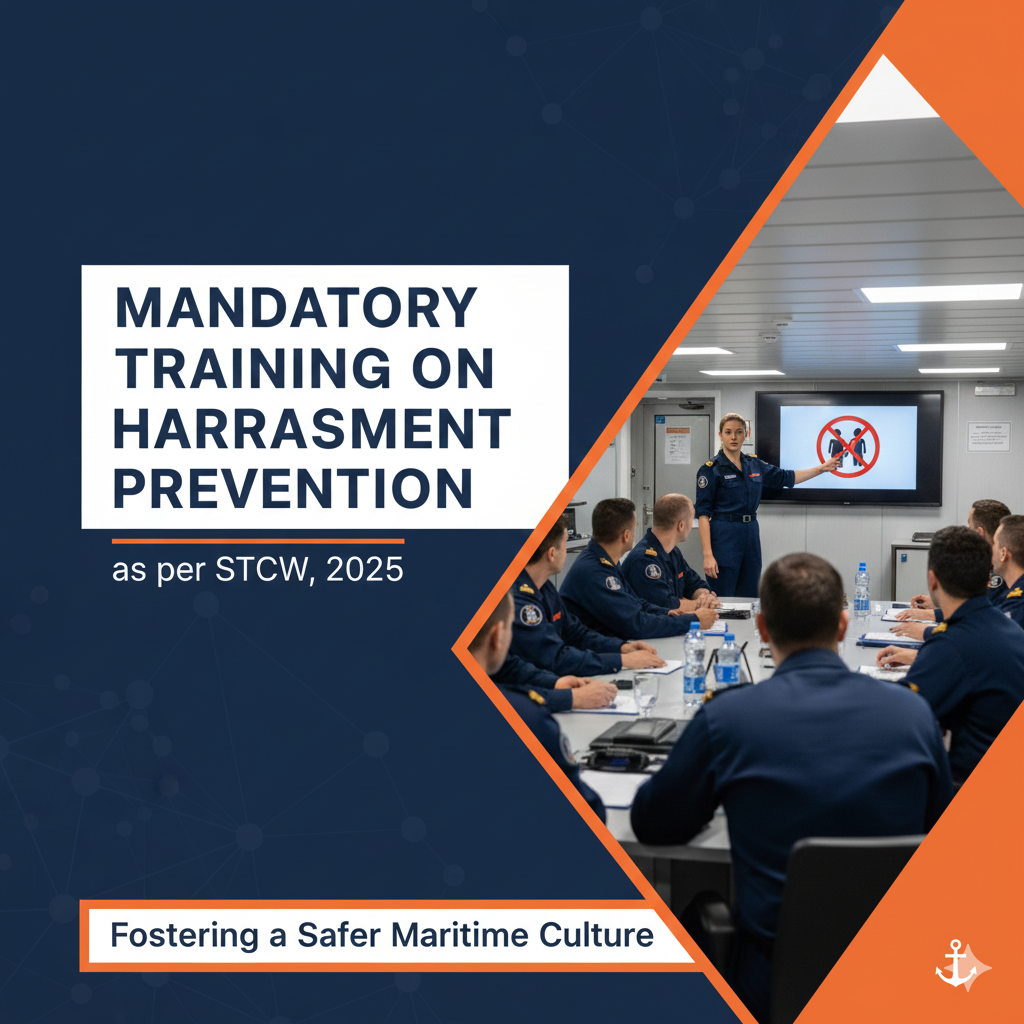
The Indian maritime industry is going through a major shift as executives across the globe push for a safer and more respectful work environment at sea. STWC (Standards of Training, Certification and Watchkeeping for Seafarers) along with directorate general of shipping rolled out a new set of guidelines to implement mandatory training to push all seafarers to work on prevention of violence, bullying & sexual harassment. This update is a crucial step taken by the executives to make life at sea, more safe, secure and respectful.
Similar to these, DGMA has also taken steps towards setting high standards and criteria for empanelment and restitution of salvors and salvage firms which directly work towards accident prevention, improving the overall safety of seafarers. According to this guideline all seafarers from December of 2025 are mandated to go through the training.
What is STWC and why does this update matter?
STCW stands for Standards of Training, Certification, and Watchkeeping for Seafarers. It is an international convention established by the International Maritime Organization (IMO) in 1978, aimed at promoting safety of life and property at sea through standardized training for the staff. The STCW sets minimum qualification standards for seafarers on seagoing merchant ships and large yachts, ensuring a consistent level of training across the globe.
The rules and regulations set by the treaty apply to ports, seafarers and maritime industries all across the world. The new update is essential to uphold all sorts of human dignity, mental health and safety of the staff working for the shipping industry.
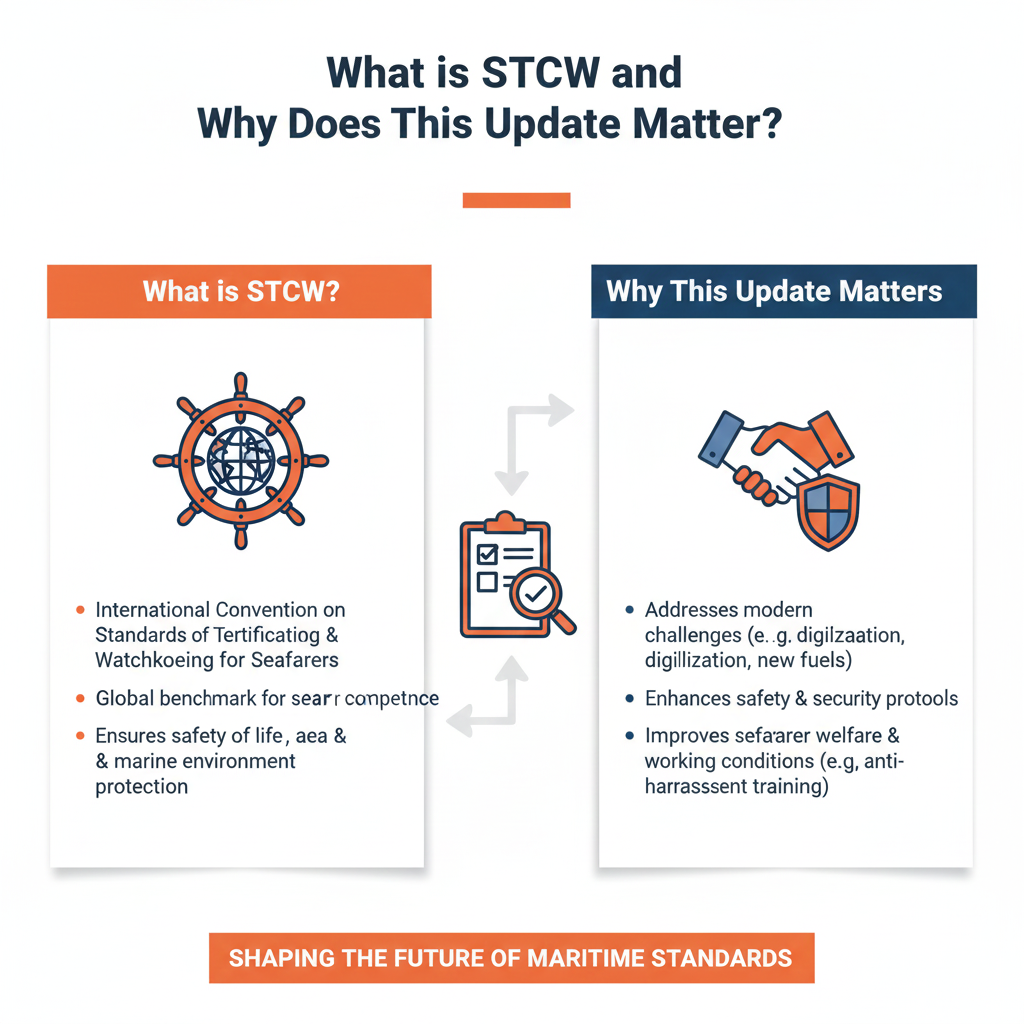
There have been multiple reported and possibly unreported harassment cases surfacing throughout the years, and hence, it is more important than ever that all seafarers regardless of their age, gender, race and background feel welcomed and free of any sort of harassment from their peers or seniors. This new update from the executives is working towards eliminating all sorts of violence and moving towards a better work culture.
Along with this new update the MS ACT 2025 is working towards standardizing the maritime industry to be more reliable, safe and efficient. Check out and understand the preliminary part of the act along with the rules for establishment of National shipping board and Seafarer welfare board.
Who does this new amendment affect?
Seafarers – The new amendment as it states, implies a direct effect on all seafarers, staff and executives at sea. There will be different types and structures of training for all levels of employees.
While a few of them will be mandated to take offline/classroom training the others will need to take the course online through the DGMM Online ADU Learning Management System (LMS) under the subsection of e-learning course for PSSR amendment 2026. The seafarer can download the certificate after completing the course and those who are currently serving onboard may complete the said course after signing off and before joining the next vessel.
The staff required to take the classroom training are as follows:
- Nautical officers
- Engineering officers
- Revalidation officers/candidates
The staff required to take online training and certification are:
- All existing officers
- All ratings
Institutes – All MTI’s (Maritime training institutes) are required to update their Personal safety and social responsibilities (PSSR) courses by adding the new 3 hours violence and harassment prevention module by 1st of December 2025 and this update increases the total PSSR duration to 29 hours over four days. Certificates will only be issued after completing the updated course.
And all maritime companies are required to update their training programs/ courses accordingly and train their staff to comply with the new safety standards. With that they also need to maintain records for reporting if they fail to do any of these they as an entity might have to face audit findings, PSC issues, and legal liabilities.
Implementation dates and certifications
Indian Implementation:
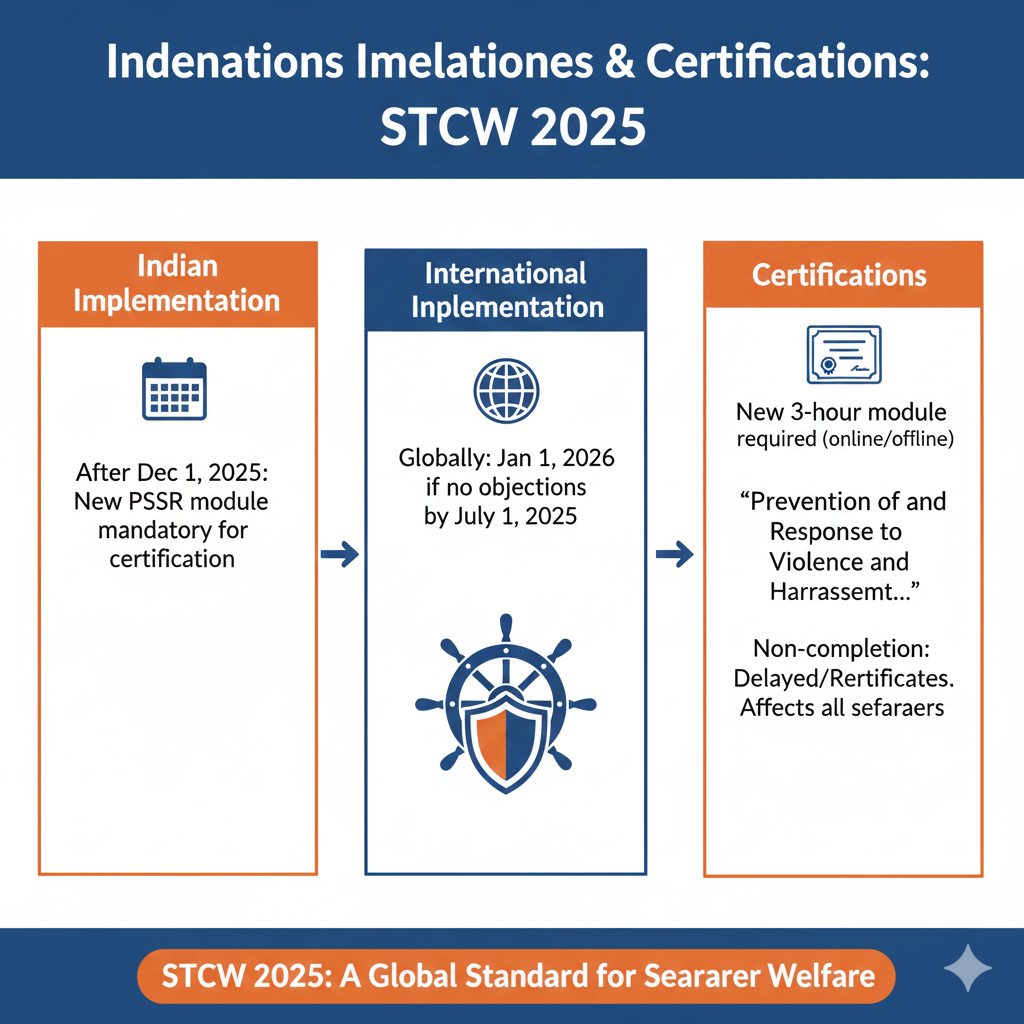
In India if you want to acquire the PSSR certificate after December 1 2025, you must take the new module and will only be given the certificate after the course completion.
International STWC Implementation:
Around the world if no objection is raised by any countries by July 1st of 2025 then the curriculum will go into effect on January 1st 2026 globally.
Certifications:
No seafarer is allowed to have the certificate without the completion of the new 3 hour module and if they do complete the course (online or offline) according to the guidelines then they will receive a certificate with annotated text that states that he/she has completed the training in “Prevention of and Response to Violence and Harassment, including Sexual Harassment, Bullying and Sexual Assault.”
If they fail the course their certificates might be delayed, or rejected or revalidation may be rejected altogether. This rule applies for not only new cadets but for existing officers renewing their certificates. Non-completion may directly affect employment readiness.
Along with the PSSR certificates, maritime staff are also being mandated to acquire and go through mandatory training for other sectors. Here’s a clear guide on what the rules are for maritime training under MS ACT 2025. These courses/curriculums and certificates are all for normal seafarers, if you are a medical professional interested in getting into maritime it’s important to learn how to get DGMA approval as a doctor ,so you can work with the shipping sector.
The STCW Competency Standards
STWC has updated the minimum standard of competence in personal safety and social responsibility. The table you will see below is the official IMO/STCW format used worldwide to define every maritime competency.
The table dives into subjects such as emergency procedures, pollution prevention, safe working practices, human relationships, fatigue management and as per the latest update prevention of violence and harassment.
| COLUMN 1 | COLUMN 2 | COLUMN 3 | COLUMN 4 |
| Competence | Knowledge, understanding and proficiency | Methods for demonstrating competence | Criteria for evaluating competence |
| Comply with emergency procedures | – Types of emergency which may occur, such as collision, fire, foundering – Knowledge of shipboard contingency plans for response to emergencies – Emergency signals and specific duties allocated to crew members in the muster list; muster stations; correct use of personal safety equipment – Action to take on discovering potential emergency, including fire, collision, foundering and ingress of water into the ship – Action to take on hearing emergency alarm signals – Value of training and drills – Knowledge of escape routes and internal communication and alarm systems | Assessment of evidence obtained from approved instruction or during attendance at an approved course | – Initial action on becoming aware of an emergency conforms to established emergency response procedures – Information given on raising alarm is prompt, accurate, complete and clear |
| Take precautions to prevent pollution of the marine environment | – Basic knowledge of the impact of shipping on the marine environment and the effects of operational or accidental pollution on it – Basic environmental protection procedures – Basic knowledge of complexity and diversity of the marine environment | Assessment of evidence obtained from approved instruction or during attendance at an approved course | Organizational procedures designed to safeguard the marine environment are observed at all times |
| Observe safe working practices | – Importance of adhering to safe working practices at all times – Safety and protective devices available to protect against potential hazards aboard ship – Precautions to be taken prior to entering enclosed spaces – Familiarization with international measures concerning accident prevention and occupational health | Assessment of evidence obtained from approved instruction or during attendance at an approved course | Safe working practices are observed and appropriate safety and protective equipment is correctly used at all times |
| Contribute to effective communications on board ship | – Understand the principles of, and barriers to, effective communication between individuals and teams within the ship – Ability to establish and maintain effective communications | Assessment of evidence obtained from approved instruction or during attendance at an approved course | Communications are clear and effective at all times |
| Contribute to effective human relationships on board ship | – Importance of maintaining good human and working relationships aboard ship – Basic teamworking principles and practice, including conflict resolution – Social responsibilities; employment conditions; individual rights and obligations; dangers of drug and alcohol abuse | Assessment of evidence obtained from approved instruction or during attendance at an approved course | Expected standards of work and behaviour are observed at all times |
| Contribute to the prevention of and response to violence and harassment, including sexual harassment, bullying and sexual assault | Prevention of violence and harassment: – Basic knowledge and understanding of violence and harassment, including sexual harassment, bullying and sexual assault, and the continuum of harm – Understanding consequences for victims, perpetrators, bystanders and stakeholders, and impact on safety, health and well-being – Understanding contributing factors: power relations, discrimination, stress, isolation, fatigue, drugs or alcohol Responding to violence and harassment: – Ability to identify violence and harassment, including sexual harassment, bullying and sexual assault – Basic knowledge of action to intervene and report – Understanding trauma-informed response and how to support victims, bystanders and self | Assessment of evidence obtained from approved instruction or during attendance at an approved course | – Acceptable practices and procedures for prevention are observed at all times – Able to identify violence and harassment and its effects – Acceptable procedures for intervention and reporting are observed at all times |
| Understand and take necessary actions to control fatigue | – Importance of obtaining necessary rest – Effects of sleep, schedules and circadian rhythm on fatigue Physical stressors – Environmental stressors inside and outside the ship – Effects of schedule changes on fatigue | Assessment of evidence obtained from approved instruction or during attendance at an approved course | Fatigue management practices are observed and appropriate actions are used at all times |
Course outline for the mandatory training
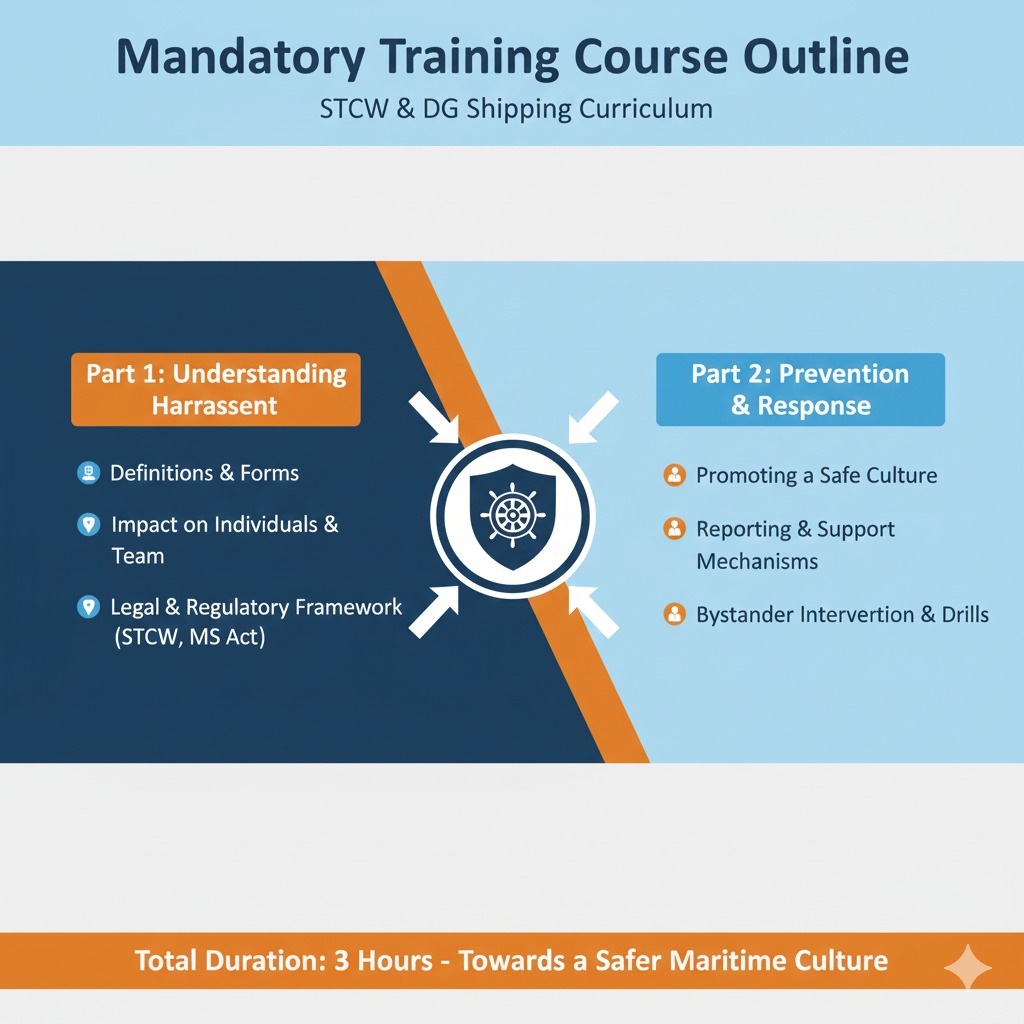
The STWC and DGMA combined have designed a 3-hour long curriculum/course for the new update of mandatory training towards prevention and response to violence and harassment at sea. The course is divided into 2 parts 1.5 hours each and it aims to train seafarers and other staff thoroughly and certify them to be respectable individuals and co-workers.
The curriculum:
| SR NO. | SUBJECT AREA | NO. OF HOURS |
| 1.0 | Contribute to the prevention of and response to violence and harassment, including sexual harassment, bullying and sexual assault | |
| 1.1 | Prevention of violence and harassment: | 1.5 hours |
| 1. basic knowledge and understanding of violence and harassment, including sexual harassment, bullying and sexual assault, and the continuum of harm 2. remember basic concepts such as violence, harassment, sexual harassment, bullying, sexual assault, victims, perpetrators, bystanders, stakeholders, safety, health, and well-being 3. list causes of violence, harassment, sexual harassment, bullying, and sexual assault 4. identify causes of violence, harassment, sexual harassment, bullying, and sexual assault related to different cultures, religions, and traditions 5. recognize cyber-harassment and cyber-bullying 6. basic knowledge and understanding of the consequences of violence and harassment, including sexual harassment, bullying and sexual assault on victims, perpetrators, bystanders and stakeholders, and its effects on safety, health and well-being 7. recognize the consequences of violence and harassment, including sexual harassment, bullying and sexual assault on victims, perpetrators, bystanders and stakeholders, and its effects on safety, health and well-being on board ships 8. analyse the consequences of not preventing violence and harassment, including sexual harassment, bullying and sexual assault on victims, perpetrators, bystanders and stakeholders, and its effects on safety, health and well-being on board ships 9. value teamwork, respect for cultural, religious, gender and ethnic diversity, as well as conflict management and the creation of an inclusive work environment10. understand that, among others, abuse of power relations, discrimination, stress, isolation, fatigue, drugs or alcohol may contribute to violence and harassment, including sexual harassment, bullying and sexual assault 11. describe the underlying causes of violence and harassment, including sexual harassment, bullying and sexual assault 12. identify potential conditions and attitudes, which could increase the risk of violence and harassment on board 13. identify the factors and risks that may contribute to violence and harassment, including sexual harassment, bullying and sexual assault on board | ||
| 2.2 | Responding to violence and harassment | 1.5 hours |
| 1. ability to identify violence and harassment, including sexual harassment, bullying and sexual assault 2. identify behaviours which could trigger violence and harassment, including sexual harassment, bullying and sexual assault 3. recognize victims, perpetrators, and bystanders 4. basic knowledge of the action to take to intervene in and report violence and harassment, including sexual harassment, bullying and sexual assault 5. describe the basic procedures to intervene in and report violence and harassment, including sexual harassment, bullying and sexual assault 6. apply the basic procedures to intervene in and report violence and harassment including sexual harassment, bullying and sexual assault 7. record cases of violence, harassment, including sexual harassment, bullying and sexual assault 8. understand the basic principles of trauma-informed response and how to provide appropriate support to a victim, bystanders and self. 9. describe trauma informed response 10. indicate appropriate action to be taken for a trauma-informed response 11. demonstrate how to support victims and bystander | ||
| TOTAL | 3 HOURS |
Final thoughts
This STCW amendment marks one of the most important upgrades in modern maritime training towards human safety, they aim to achieve this by making anti harassment and violence prevention training compulsory, the industry is moving toward a safer, more respectful and more professional working environment for all workers at sea.
FAQ
What is this new mandatory traing about?
It is a new training module that teaches seafarers how to prevent and respond to violence, bullying, sexual harassment, and sexual assault on board. This module has officially been added to the STCW requirements and must be completed by all seafarers.
Who is required to complete the updated 3-hour module included in the PSSR course?
Everyone who takes the PSSR as part of basic safety training must complete the new module. This includes new seafarers, cadets, and anyone doing the course after 1 December 2025.
When do the new training requirements officially come into effect in India?
In India the changes start on 1 December 2025. For the rest of the world the STCW amendment becomes fully enforced on 1 January 2026.
How will this affect certificate issuance and revalidation?
Certificates will only be issued after completing the updated training. For officers renewing their certificates this competency will also need to be completed or their revalidation may be delayed.
What changes must MTIs make to comply with the updated standards?
Training institutes must add the new 3hour module to the PSSR course and update their total course duration to 29 hours. They must also teach the module in post sea and revalidation programs from 1 December 2025.
Will the new anti-harassment competency also apply to post-sea and officer revalidation courses?
Yes. The same training will become part of competency courses for Nautical and Engineering officers and all Deck and Engine revalidation courses. This begins on 1 December 2025.