
With the global expansion of maritime structures and enterprises, the government is taking more efficient and effective steps towards making the entryway to the shipping sectors easily supervised. This is a step towards monitoring the recruiters, recruited, and all the other parties involved in expanding the industry on a larger scale.
One of the main steps the Ministry of Law and Justice has taken is to revise, update, and upscale the Merchant Shipping Act to the new MS ACT 2025. Under this act, the lawmakers have established several sections; among those is part five, where they establish and clearly state the rights & rules on seafarer eligibility, documentations, rights on wages, and working conditions.
While previous parts laid down the rules for the establishment of the national shipping board and seafarer welfare board, this one focuses on what the agencies, companies, and institutes involved in training/hiring these seafarers need to follow through.
Who does this law apply to under the MS Act 2025?
As suggested in the introduction, this law applies to all sorts of seafarers, ship owners, and recruitment agencies (RPS agencies), and it expands in depth on what the involved parties should/shouldn’t do.
If you are an entity looking to start a maritime business, it’s important that you understand the advantages, disadvantages and get a proper guide on the documentation process, along with ways to acquire certain licenses. Here is a clear guide on platforms that can help you with maritime technical consultancy for RPSL and startups in India.
The government will classify the seafarers into different categories, and they will also decide the minimum manning scale of these workers, along with the different scales of different vessels. Ship owners and everyone else are mandated to abide by the rules & classifications.
Seafarers are officially declared “Keyworkers,” meaning they have the rights to:
- Smooth and unhindered movement when joining and leaving ships
- Step off board (shore leave) for basic needs
- Access offshore medical treatments when necessary
These types of guidelines were predominant during times of COVID-19, meaning these shall be treated as absolute rights during times of health crisis, and authorities, ports, immigration, and other staff are expected to treat seafarers with respect and dignity.
Application of MLC standards & duties of maritime authorities.
Maritime labor convention standards appear in this act and establish rules and guidelines for all sorts of seafarers and vessels on board. All vessels on board must comply with the MLC standards, carry certificates granted to show their eligibility to be on sea. No ship/vessel is allowed to sail without the said document.
If the vessel happens to be certificate-less and on board, then both the ship owner and the RPSL agency involved will be liable, responsible, and the RPS agencies will be treated as owners for the sake of penalties.
If you want to understand MLC standards deeper, here’s a piece on the Maritime Labor Convention 2006 amendments explained in detail through an updated lens.
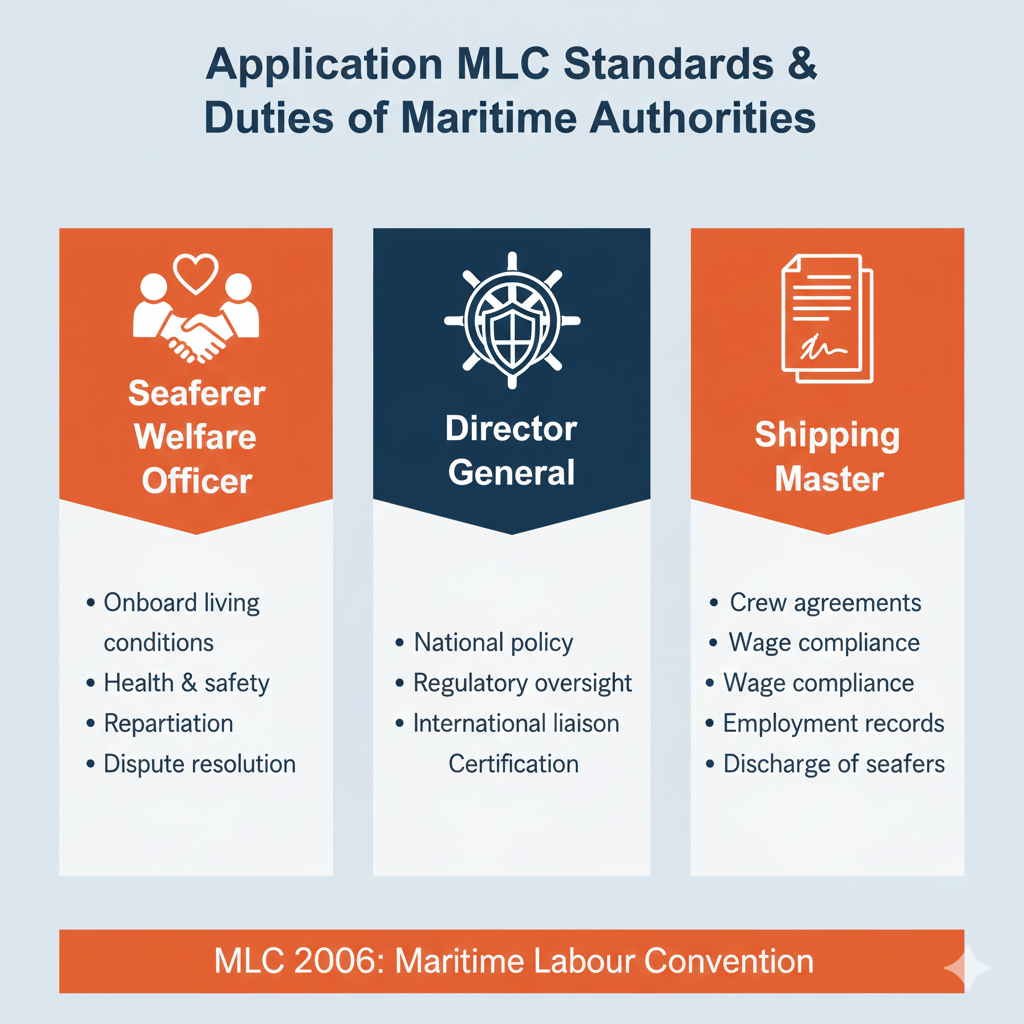
Maritime authorities in general are obliged to monitor, guide, and work with seafarers and other staff to make the shipping industry’s work culture more efficient and effective. In this part of the MS Act 2025, the duties of three main officers have been defined; they are as follows:
- A shipping master is obliged to monitor the engagement, onboarding, and discharge of the crew. He is to ensure and keep track of crew reports on board, to make sure they are at work on time.
A shipping master has the right and authority to issue CDCs and SIDs, along with handling any sort of disputes between crew and shipowners. He will also be responsible for delivering complaints of foreign seafarers to their country’s authorities and the International Labour Convention.
Did you know workers now that DGMA has now taken an initiative to take strict action against forged CDC entries into the Indian maritime sector? The step is to prevent fraudulent workers or agencies from entering the shipping industry and to prevent accidents, scams, along the elimination of sloppy work results.
- A director will be in charge of regulating licensing agencies while inspecting the said agencies and training institutes. He must ensure that no fee is being charged for the seafarers except for their personal documents; the other documentation costs, like that of a visa, must be borne by the ship owners.
As a director, one must maintain records of seafarer registrations and investigate any complaints in their sector while inspecting and verifying the books of accounts of the recruiters, service providers, and maritime training institutes approved by DGMA. He/she is also required to perform shipping master duties when ordered.
- A seafarer welfare officer mainly has two duties;
- To handle any welfare issues in the nation
- To handle any welfare issues abroad and act as an Indian ambassador of seafarers and represent their concerns in foreign countries.
Both the director and the seafarer welfare officer are obliged to abide by and perform other duties if ordered by the Directorate General or the central government.
What are the eligibility criteria for seafarers to be onboard?
- No person under the age of 16 shall be engaged, employed, or working on any vessel.
- A seafarer must have a valid medical fitness certificate from an approved authority before joining a ship. Here’s a detailed guide on the mandatory minimum medical test for Indian seafarers, by DGMA that expands on what tests to take to qualify as medically fit for sea life, how to acquire the medical certificate, and the validity period of the said certificate.
The central government is allowed to restrict any person from entering the maritime workforce if it deems the person unfit/unqualified as per DGMA and STCW standards.
While the ship owners are mandated to ensure that no person who is not trained or certified can enter the vessel. If they fail to do so, they will also be held accountable for the fraudulent entry.
Training and certification structures must follow the conventions and standards of international maritime organizations, along with those of STWC, along the older set of standards for the crew. The organizations recently set out a new curriculum for mandatory harassment prevention training for all seafarers.
Recruitment, placement, and anti-exploitation rules.
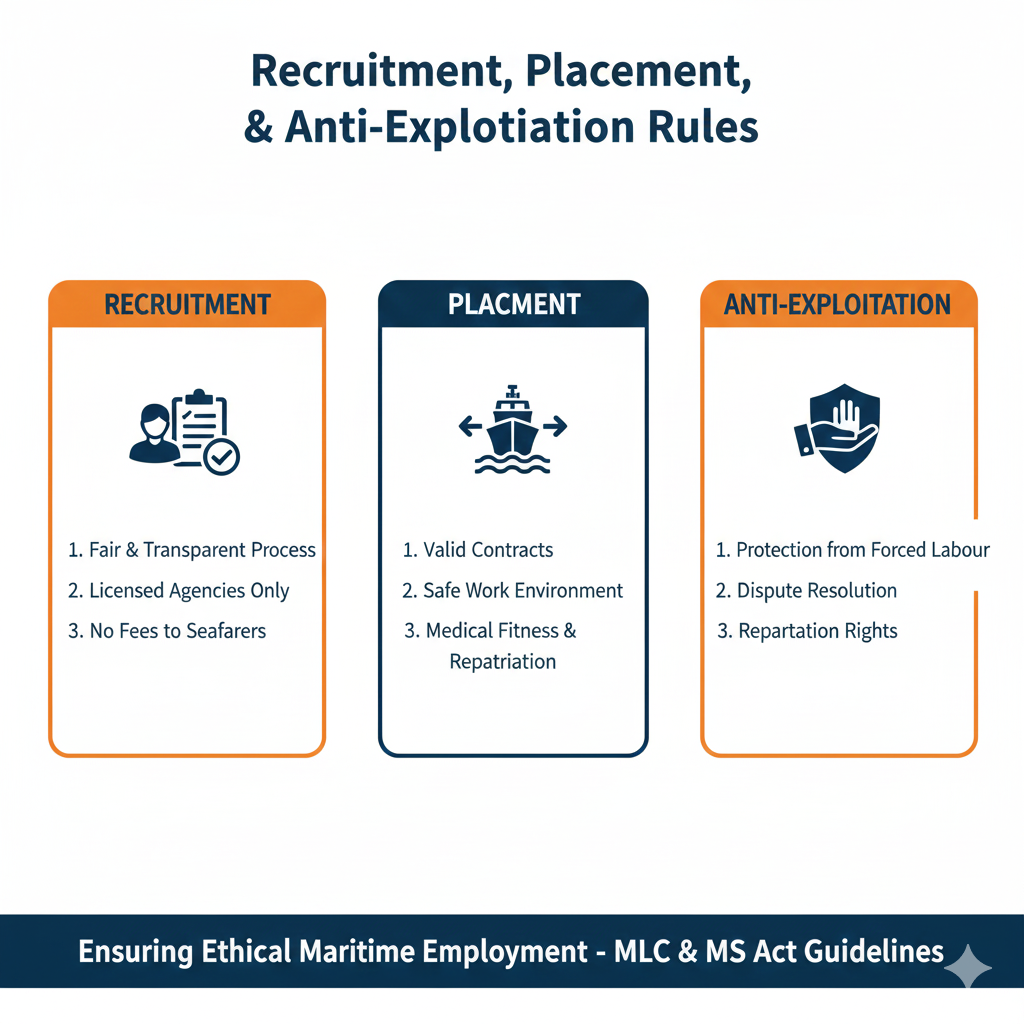
According to part V of the Merchant Shipping Act 2025, only licensed RPS agencies and shipowners are allowed to recruit/hire seafarers into their vessels. No individual or entity can:
- run agencies without a license
- Hire a seafarer without CDC or SID
- Charge any recruitment fee for any seafarer, except for the registration of personal documents.
Only the cost of personal documents, certificate discharge, passport, and other personal/travel document costs will be borne by the seafarer himself, while the cost of visas should be borne by the ship owners.
It is known that some fraudulent and inefficient vessels make their way into the sea with inauthentic and unauthorized methods. To combat the deficiency caused by these ships, the Ministry of Law establishes the rules for registration of vessels under the MS Act 2025, ensuring the registration and boarding of verified, certified, and directorate-approved vessels at sea.
The central government can ban ship owners and agencies from hiring if they notice any mistreatment of the staff or activities on their vessels that do not abide by shipping laws. No executive/officer/owner or crew is allowed to discriminate against their subordinates and coworkers based on;
- Membership or lack thereof in any union that works to support seafarers
- The type of training institute they obtained their certifications.
Any sort of unregistered or unverified employment will not be considered as a sea service. DGMA is allowed to suspend or withdraw the certifications (COD, CDC, COP) provided to seafarers if they violate rules/laws under this act.
RPS agencies must ensure:
– shipowner can repatriate & repatriates abandoned crew
– mortal remains are transported in case of seafarer death
– employment onboard matches SEA terms
– injuries/deaths are reported within the span of 24 hours
– Placement reports are filed with the authority
What are the rights and rules for wages, agreements, leaves & repatriation?
SEA, short for seafarer employment agreement, is a legally enforceable contract that outlines the terms and conditions of employment for seafarers, ensuring their rights and obligations are clearly defined.
Every seafarer is required to sign the seafarer employment agreement (SEA) provided by the recruiters. All seafarers will have the right to seek advice and understand their roles/responsibilities better before signing the agreement.
And for the wages, every ship owner must pay their crew monthly deposits on time and not delay payments unless they have genuine reasons, such as:
(a) a reasonable mistake; or
(b) a reasonable dispute as to liability; or
(c) the act or default of the seafarer; or
(d) any other cause not being the wrongful act or default of the persons liable to make the payment or of their servants or agents.
In all the other cases, the recruiter is mandated to pay interest on the original payment to the seafarer.
Rest, leave, and repatriations:
All employers at sea are mandated to ensure their workers are getting proper and efficient rest; they must ensure that the seafarers are getting recommended hours of sleep and breaks throughout their shifts. And all the seafarers are entitled to a certain number of paid annual leave.
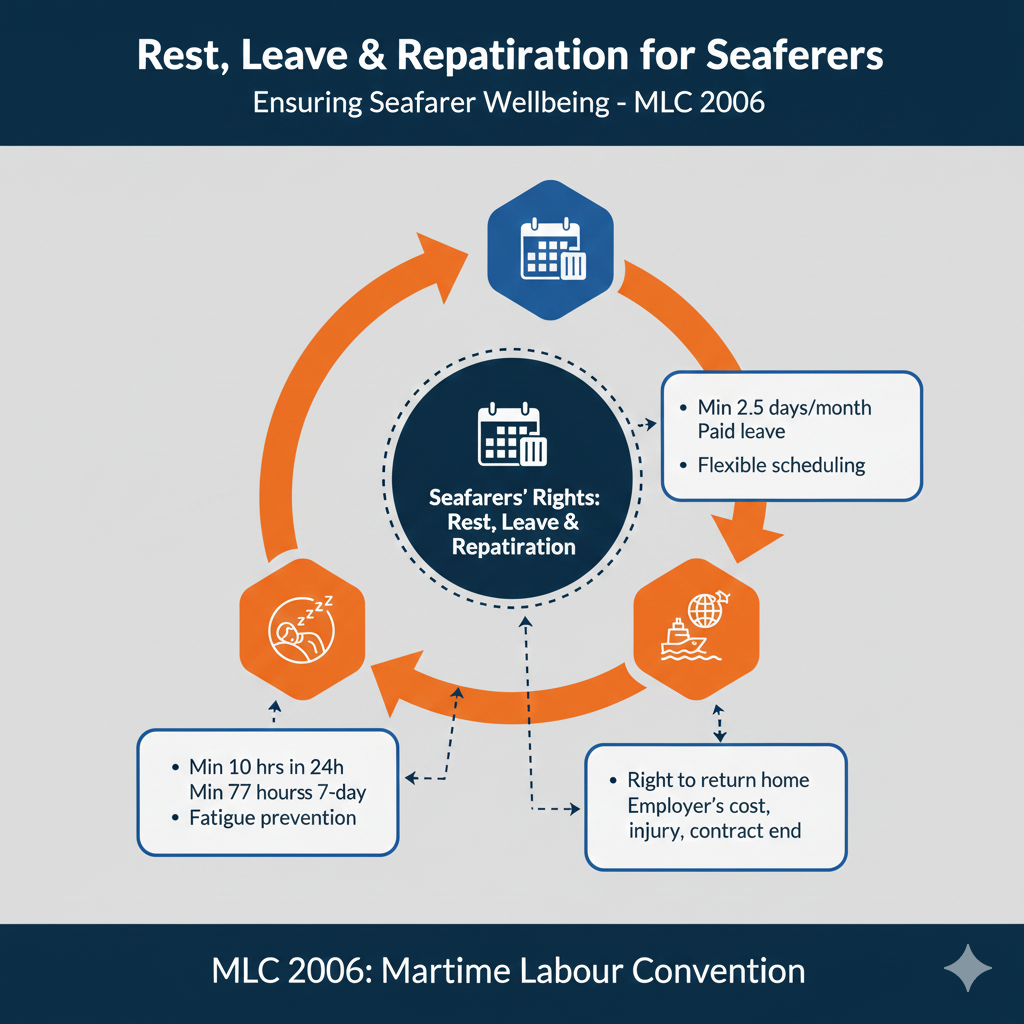
Owners are also mandated to provide financial security for those who are going back to their own countries. All and every seafarer has and will have the right to repatriate as per their own decision.
If a seafarer’s contract is ended early at a foreign port without his consent, the master or shipowner must accommodate him until he gets home and arrange his return to the correct home port. If the shipowner or agent fails to repatriate him, and the seafarer ends up paying for his own stay or travel back, the owners must give him those expenses as wages. And if the Indian embassy pays these costs on the seafarers’ behalf, the amount becomes a debt owed to the Central Government, which will recover it from the shipowner under the law.
Final thoughts
Rules and sections under Part V of the MS Act 2025 majorly focus on seafarer welfare, rights, and eligibility criteria that need to be met to become a cabin crew. This is to ensure the safe hiring, onboarding, and exploitation-free work environments for all workers at sea. The conclusion is to keep the seafarers safe and make sure the vessels are working efficiently because of them.
What is SEA?
SEA, short for seafarer employment agreement, is a legally enforceable contract that outlines the terms and conditions of employment for seafarers, ensuring their rights and obligations are clearly defined.
What does it mean when seafarers are declared “key workers”?
It means they have the right to:
– Smooth and unhindered movement when joining and leaving ships
– Step off board (shore leave) for basic needs
– Access offshore medical treatments when necessary
What are CDC and SID?
The CDC stands for the Centers for Disease Control and Prevention, which is responsible for public health in the United States. It provides information on various health topics, including vaccines and public health initiatives.
SID refers to the Seafarers’ Identity Document, which is a biometric identification system for seafarers. This document is issued by the International Labor Organization (ILO) and includes security features to ensure the identity of seafarers.
What happens when payment of wages to a seafarer is delayed?
If the payment of wages to any seafarer is delayed for any reason, with a few exceptions of genuine mistakes, then the vessel owner will have to pay a certain amount of interest on the payment to the seafarer.
Who does this part of the Merchant Shipping Act apply to?
This applies to everyone involved in the working life of a seafarer. The seafarers themselves, shipowners, and recruitment/placement agencies. If you train, hire, manage, or employ seafarers in any way, the rules in this section apply to you.