
Merchant shipping act, 2025 lays down the legal foundation for safety and security at sea, covering vessels, ports, and the companies that operate them. This is to bring Indian maritime operations to alignment with international safety conventions while clearly defining the duties of ship owners, masters, and authorities. From vessel certification and seaworthiness to emergency response, passenger safety, and incident reporting, this part ensures that life, property, and the marine environment are protected at every stage of a voyage.
Before diving into the safety and security guidelines, it’s important to understand the preliminary of this act, along with the rules for establishment of national shipping board and seafarer welfare board.
With several sections like this, MS act 2025 is to ensure every single person on sea is being responsible, safe and healthy. It also aims to define clear rights and rules for seafarers.
Scope and definitions of the safety & security provisions.
This part of the act covers and applies to:
- Indian vessels
- Foreign vessels while they are within Indian waters
- Port facilities
- Companies operating vessels.
Certain vessels covered under Part XIII (provisions and guidelines for wreck and salvage under the same act) are excluded.
According to this particular part of the act, some of the words have been legally defined; they are as follows:
a) “company” means the owner of the vessel or any other organisation or person, such as the manager or the bareboat charterer or anyone who has taken the responsibility for operation of the vessel in compliance with the International Safety Management Code under the Safety Convention.
(b) Any terms not defined here take their meaning from relevant international maritime conventions referred to later.
Requirements for safety, security & reporting
Every vessel must comply with major international safety and security conventions, they are as follows:
(a) The Safety Convention.
(b) The Load Lines Convention, 1966.
(c) The Special Trade Passenger Ships Agreement, 1971.
(d) The Convention on the International Regulations for PreventingCollisions at Sea, 1972.
(e) The International Convention on Maritime Search and Rescue, 1979.
(f) The Tonnage Measurement Convention, 1969.
(g) The International Convention for Safe Containers, 1972.
(h) Such other convention or agreement or treaty relating to safety or security to which India is a party,as may be notified by the Central Government.
For the vessels for which the above conventions are not applicable, those vessels are advised/mandated to follow the safety standard as prescribed.
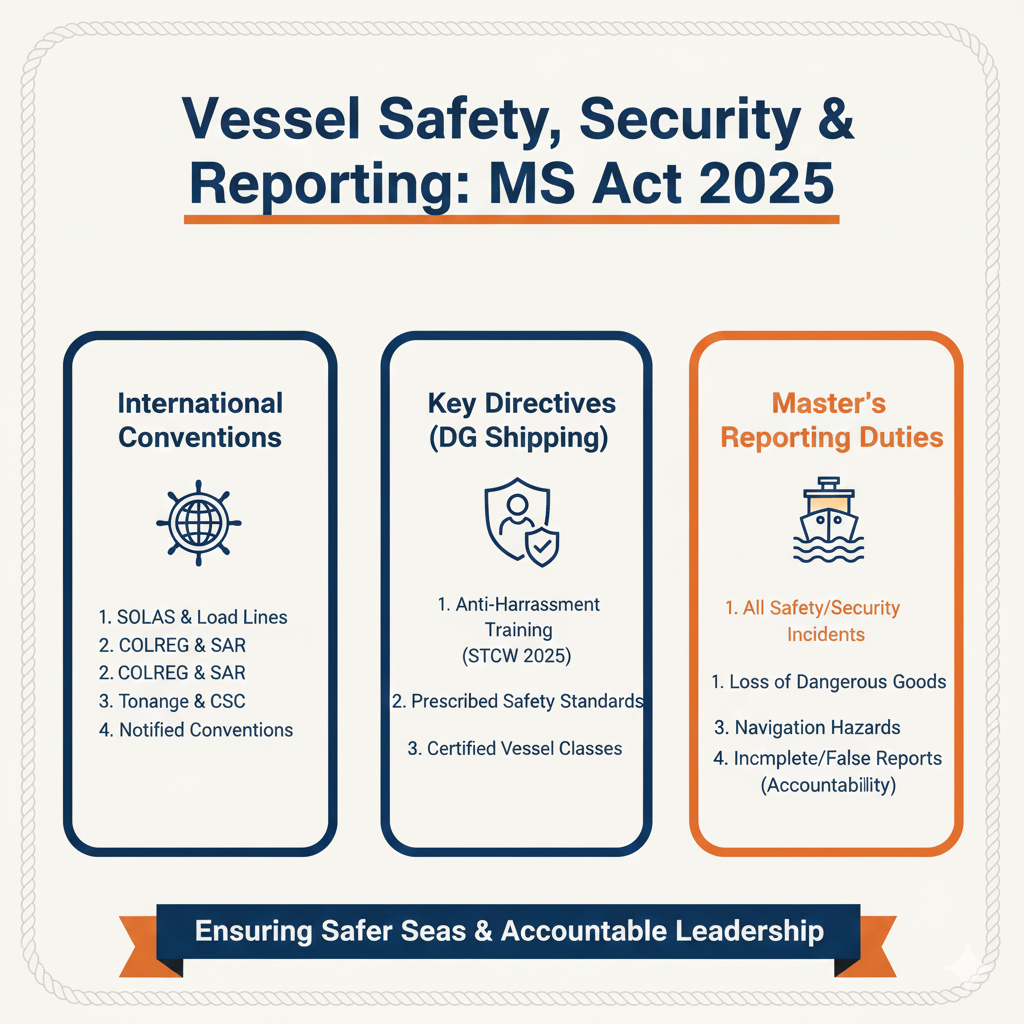
Similar to this, DGMA has released an updated guideline to prevent harassment and bullying onboard through the mandatory harassment prevention training, STWC 2025 curriculum.
Owners and masters are obliged to make sure the rules and conventions are being followed through, and the owners will be pardoned only if the violations are caused due to uncontrollable factors like extreme weather. Different vessel classes must carry prescribed certificates relevant to their class.
The master of the ship holds the responsibility of reporting incidents and bringing them to the notice of higher ups so action for prevention or even damage control can be taken quick, a master is obliged to report cases of:
- Incidents regarding safety & security might be slight violations or severe accidents, they must be reported.
- Loss or potential loss of dangerous goods into the sea, the existence of solid form dangerous goods in bulk onboard.
- Or anything that makes the navigation harder and less safe for the crew.
If the reports are incomplete or the vessel is abandoned, the central government has the right to step in and hold the master of the ship accountable for it.
Assisting people in danger & rescue services.
The master of any vessel upon receiving signals of distress from across the board is obligated to respond immediately and assist the people in danger, he can only refuse if the report/signal turns out to be unreasonable, unsafe or unnecessary.
He is also mandated to record every sign of distress to a person, the vessel or aircraft incidents on the official log book. This is to ensure he has all the recordings for reference when faced with questions and to fix said issues after the voyage to prevent it from happening again. If he is not able to assist people in distress or any incident he must log the reason into the log book as to why he was unable to help.
A master is also obliged to report such incidents to the higher ups from time to time. The authorities onboard also need to ensure desertion and discipline rules are being followed while on water to ensure maximum effectiveness while maintaining the safety standards.
The Central Government is responsible and has the right to arrange maritime search and rescue services, including coastal waters when necessary under the International Convention on Maritime Search and Rescue, 1979. DGMA made new rules for deployment of ETVs, as per 2025, to prevent accidents and reduce the response time for accidents.
Guidelines for vessel readiness, certification and operational safety requirements.
Every Indian vessel must carry and maintain prescribed communication, distress, and safety equipment, along with certified operators.
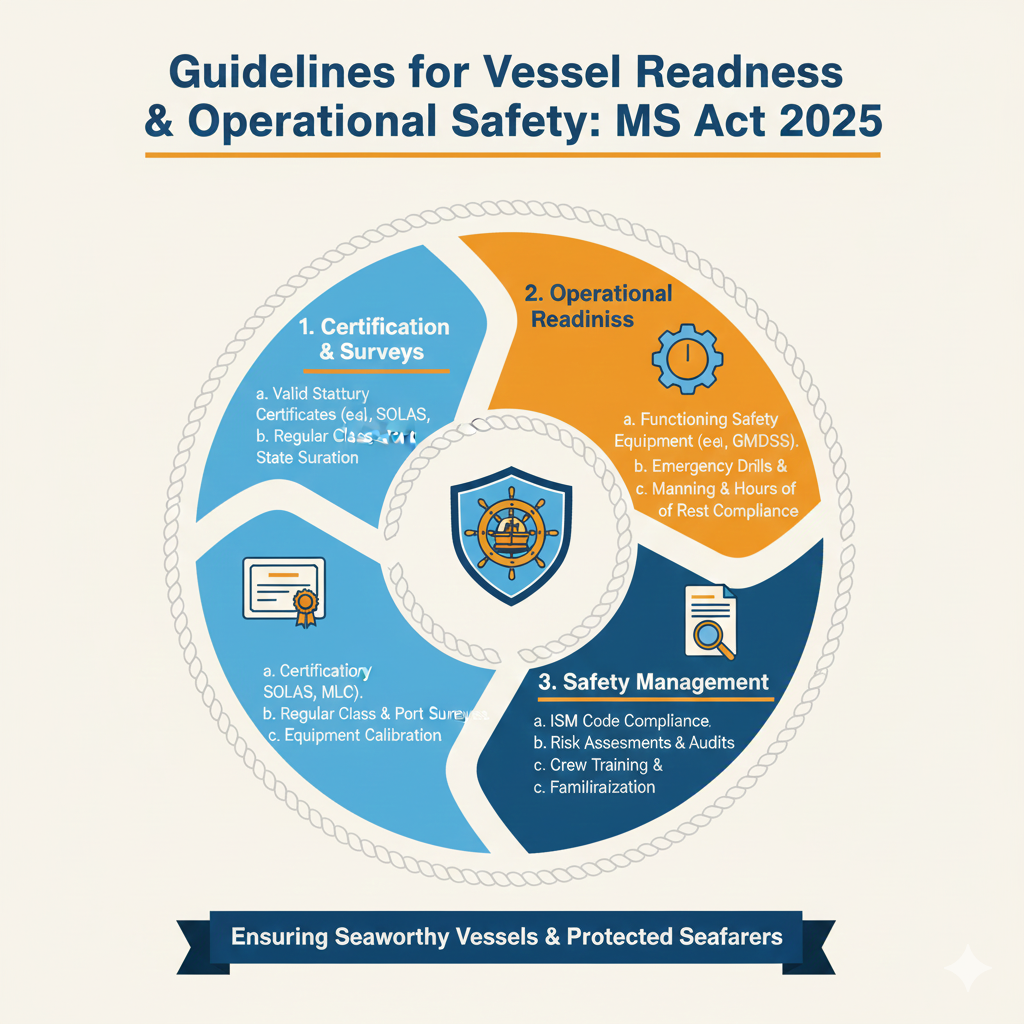
Vessels must carry documents with approved stability and damage control information and general precautions necessary to maintain watertight integrity of the vessels that are approved, in compliance with the provisions of the Safety Convention and the Load Line Convention or the safety and security.
Passenger ship stability shall be approved by the chief ship surveyor or an authorised surveyor. Load lines are assigned in compliance with international rules. No vessels are allowed to be loaded beyond its permitted levels, if done so then it will be liable to face consequences of detention.
These rules can be tricky and not easy to understand as a beginner; it’s important to find guidance, and if you are an individual looking to know more about the regulations and processes to kickstart your maritime business journey, look no further than maritime technical consultancy for RPSL start ups in India.
No vessel is allowed to carry passengers in India or from Indian ports to others without proper certifications onboard. The central government has the right to prescribe or specify the conditions related to;
(a) passenger accommodation
(b) scale of passenger and amenities to be provided to seafarers
(c) space or disallowance of any space on a vessel
(d) scale of provisions and water to be provided
(e) hospital accommodation and medical facilities
(f) the conditions for carriage of cargo and livestock and
(g) any other matter, to carry out the purposes of this Part.
This is to ensure the certifications are only given to vessels that meet all the right guidelines and are not passing through loopholes.The masters are mandated to submit passenger statements before departure.
Vessels are not to proceed without the valid certificates intact. These rules speak for the vessels and owners. The crew will have to go through a different process to get their valid certificates and permissions, especially medical professionals looking to work for maritime, if you are one of them, here’s how to get DGMA approval as a doctor.
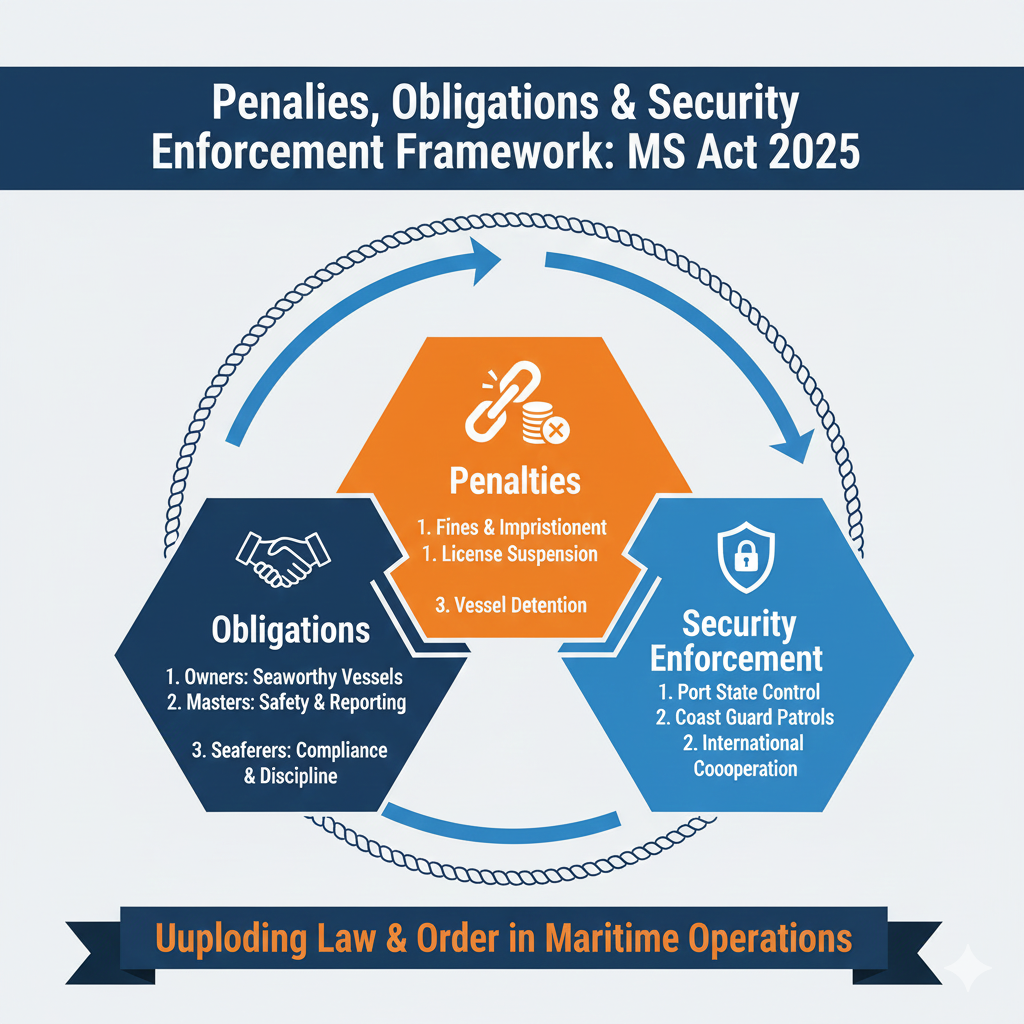
Penalties, obligations and security enforcement framework.
Any person/crew will be liable to pay a penalty and held accountable if he commits any of the following acts:
- Being drunk or disorderly attempts to enter a vessel
- Molesting any person onboard
- Travelling or attempting to travel without payment of fare
- Refuses to quit the vessel on arrival at the destination
- Failing to show his ticket when requested by the master or any other officer
- Causes annoyance or injury to others onboard through his actions.
- Carrying any substance that could jeopardise the safety of vessels, people or the environment in general.
Masters have the right to refuse boarding or removing the said offenders, or hand them over to police.
Vessels must carry cargo and passengers only when they have the certification and according to the limits mentioned in the certificate. Violations can result in suspension or cancellation of the master’s competency certificate. Any person that tries to or sends a vessel that is unseaworthy to sail will be penalised unless his/her reason for doing so is valid and justifiable.
Every service contract automatically includes an obligation on ship owners and masters to ensure the vessel is seaworthy at the start of and throughout the voyage. The government may and will order surveys to verify the compliance.
All vessels, companies and ports must follow the regulations regarding security and safety under this act, the central government will have the power to send authorised staff to conduct audits to set different security levels for ports and vessels.
To ensure further safety of vessels & seafarers the maritime authorities have come up with new criteria for empanelment and retention of salvors, as they play a crucial role in emergency response,
The central government has the authority to make rules regarding the matters of:
- conditions subject to which the vessel shall comply with the conventions, treaties or agreements to which India is a party, and the safety and security requirements to be complied with by vessels to which such conventions, treaties or agreements are not applicable
- safety and security requirements for different classes of vessels and the certificates to be held by such vessels
- manner of reporting the particulars of incidents and the authority to whom such particulars shall be reported
- manner of reporting the particulars of incidents relating to safety and security in the vicinity of the vessel and the authority to whom such particulars shall be reported
- communication equipment, distress and safety equipment, and certified operators to be provided to every Indian vessel
- information relating to the stability of passenger ships to be approved
- safety and security management requirements to be complied with by the vessel, company or port facility
- any other matter which is required to be or may be prescribed
Final thoughts
In conclusion, the safety and security framework under this act plays a crucial role in ensuring that vessels, seafarers, and port facilities operate responsibly and lawfully. By aligning national requirements with international conventions, it strengthens accountability and allows easier risk management at sea. Taken together, they promote safer navigation, better compliance, and stronger protection.
FAQ
1. What is meant by maritime safety and security?
Maritime safety and security refer to the rules and measures that protect ships, people onboard, ports, and cargo from accidents, natural hazards, and unlawful acts. They cover everything from vessel equipment to emergency response duties.
2. Why are international maritime conventions important?
These conventions set common global standards so ships from different countries follow similar security practices. This helps prevent accidents and ensures cooperation at sea.
3. Who is responsible for reporting safety incidents at sea?
The master of the vessel is primarily responsible for reporting any safety or security-related incident. If reports are missing or incomplete, responsibility may still be fixed on the master.
4. What happens if a vessel sails without valid certificates?
A vessel without valid certificates can be detained, penalised, or prevented from sailing. The master or owner may also face suspension or cancellation of competency certificates.
5. What is the International Convention on Maritime Search and Rescue?
The International Convention on Maritime Search and Rescue (SAR Convention) is a global agreement aimed at ensuring that people in distress at sea receive help as quickly and efficiently as possible. The convention focuses on saving lives, regardless of the nationality or status of the persons in distress, and promotes timely assistance to ships, aircraft, and individuals facing emergencies at sea.