
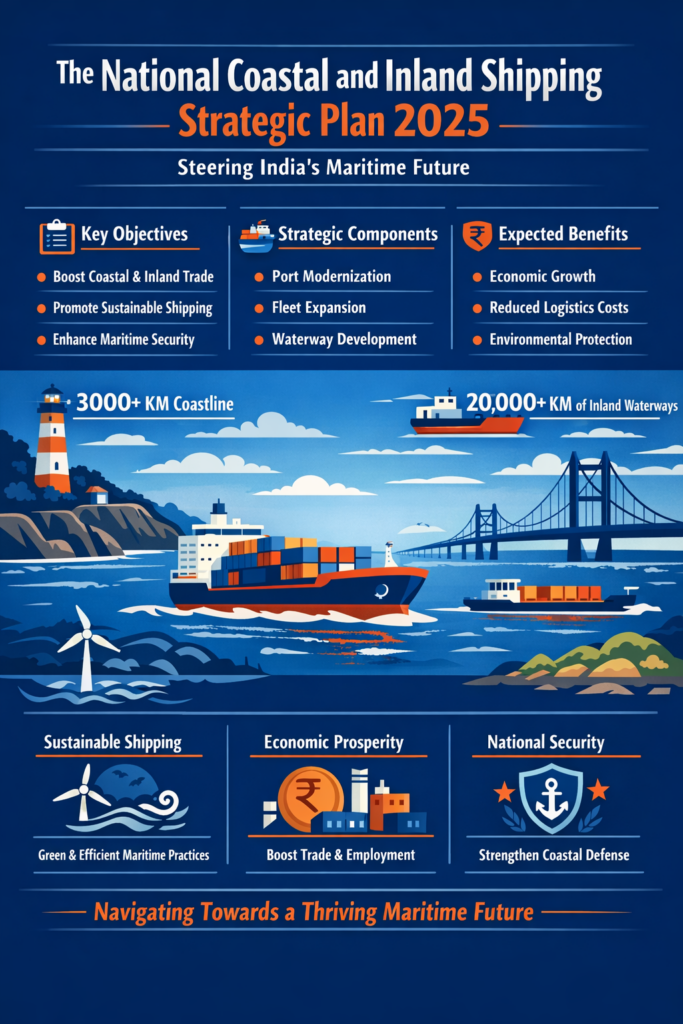
Table of Contents
India’s vast coastline and inland waterways hold immense potential for transforming the country’s logistics and trade landscape. Recognizing this, the Coastal Shipping Act, 2025 mandates the creation of the National Coastal and Inland Shipping Strategic Plan, a visionary framework designed to steer India’s maritime future toward sustainable growth, economic prosperity, and national security. This blog unpacks the significance, components, and promising impact of this strategic plan aimed at building the future of India’s coastal and inland shipping sectors.
A Vision Rooted in Opportunity and Responsibility
India’s coastline stretches over 11,098.81 kilometers, complemented by an extensive network of inland waterways. Yet, coastal shipping has long remained underutilized, accounting for only a small fraction of overall cargo movement dominated by road and rail. The National Strategic Plan, mandated under the Coastal Shipping Act, recognizes the need to change this dynamic by developing a cohesive roadmap to optimize coastal and inland maritime transport. The goal is ambitious yet achievable: to increase coastal cargo traffic to 230 million metric tonnes by 2030, significantly easing pressure on existing transport modes, lowering logistics costs, and reducing environmental impact.
Comprehensive Planning for Lasting Impact
The Strategic Plan is not a static document but a living roadmap developed and updated every two years by a committee of diverse stakeholders including government representatives, port authorities, ship owners, seafarers, RPSL companies and subject matter experts. This inclusive governance ensures that the plan reflects real-world challenges and opportunities across the maritime ecosystem.
Core elements of the plan include:
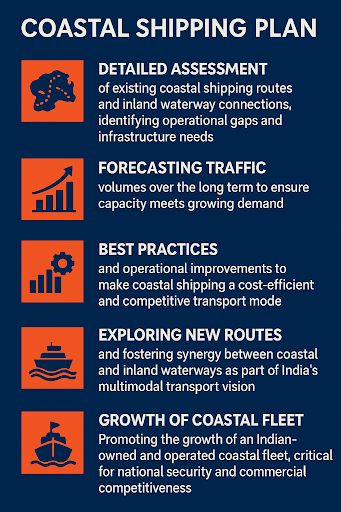
- Detailed assessment of existing coastal shipping routes and inland waterway connections, identifying operational gaps and infrastructure needs.
- Forecasting traffic volumes over the long term to ensure capacity meets growing demand.
- Identifying best practices and operational improvements to make coastal shipping a cost-efficient and competitive transport mode.
- Exploring new shipping routes and fostering synergy between coastal and inland waterways as part of India’s multimodal transport vision.
- Promoting the growth of an Indian-owned and operated coastal fleet, critical for national security and commercial competitiveness.
Transparency and Data-Driven Governance
Accompanying the Strategic Plan is the establishment of a National Database of Coastal Shipping, a state-of-the-art digital portal maintained by the Director-General of Shipping. This database offers transparency by providing real-time access to information on vessel licenses, routes, voyages, cargo and passenger details, and license terms and conditions. Such open data empowers policymakers, investors, and port operators to make informed decisions that align with the country’s maritime goals. It also fosters accountability, ensuring regulatory compliance and timely updates underpin successful implementation.
The Road Ahead: Socioeconomic and Environmental Gains
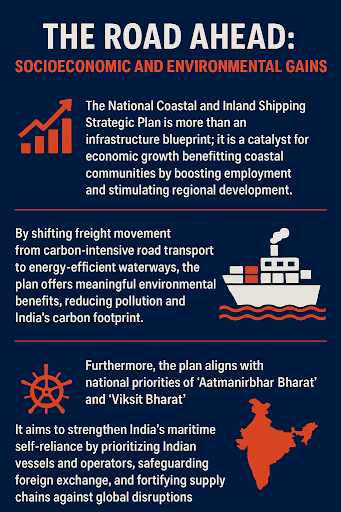
The National Coastal and Inland Shipping Strategic Plan is more than an infrastructure blueprint; it is a catalyst for economic growth benefitting coastal communities by boosting employment and stimulating regional development. By shifting freight movement from carbon-intensive road transport to energy-efficient waterways, the plan offers meaningful environmental benefits, reducing pollution and India’s carbon footprint.
Furthermore, the plan aligns with national priorities of “Aatmanirbhar Bharat” and “Viksit Bharat.” It aims to strengthen India’s maritime self-reliance by prioritizing Indian vessels and operators, safeguarding foreign exchange, and fortifying supply chains against global disruptions.
In conclusion, the National Coastal and Inland Shipping Strategic Plan under the Coastal Shipping Act, 2025 represents a transformative step in modernizing India’s maritime sector. By fostering collaboration, leveraging data, and focusing on sustainability, it sets the stage for a vibrant coastal shipping ecosystem that will play a pivotal role in India’s economic and strategic future. Stakeholders across the board now have a clear, dynamic framework to work toward building an efficient, resilient, and inclusive maritime future for India.
FAQs on India’s Coastal and Inland Shipping Strategic Plan under the Coastal Shipping Act, 2025
What is the National Coastal and Inland Shipping Strategic Plan?
It is a comprehensive, government-mandated roadmap developed to assess, promote, and grow coastal and inland waterway shipping in India. The plan is updated every two years to guide efficient maritime transport development.
Who prepares the Strategic Plan and how often is it updated?
A committee comprising government officials, port authorities, ship owners, seafarers, and maritime experts prepares the plan. The Central Government publishes updates every two years to ensure the plan remains relevant and aligned with evolving needs.
What are the key objectives of the Strategic Plan?
Objectives include assessing current coastal routes and inland waterways, forecasting traffic, improving operational efficiency, identifying new routes, promoting Indian-owned vessels, and fostering integration with inland waterways to advance multimodal transport.
How does the Strategic Plan support transparency and data-driven decision-making?
It is supported by a National Database of Coastal Shipping, providing real-time data on vessels, licenses, routes, cargo, and passenger details accessible to policymakers, investors, and port operators for informed decisions.
What benefits does the Strategic Plan offer to India’s economy and environment?
By boosting coastal shipping, the plan reduces logistics costs, creates jobs, strengthens supply chains, lowers carbon emissions by shifting freight from roads to waterways, and promotes sustainable maritime growth critical for India’s economic and strategic future.