Vessel safety and security, MS Act 2025.
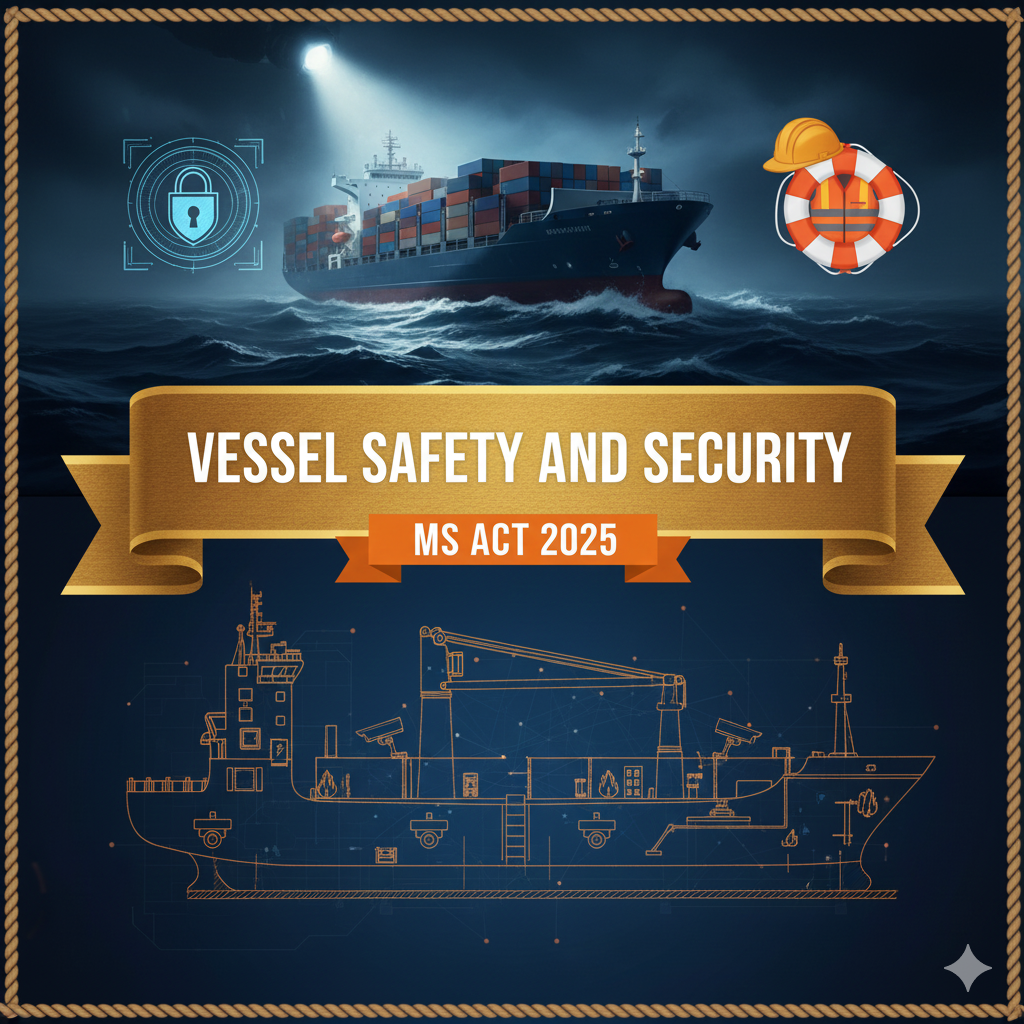
A simplified explanation of the MS, Act 2025 covering vessel safety and security, seaworthiness, certification, reporting, & international compliance.

A simplified explanation of the MS, Act 2025 covering vessel safety and security, seaworthiness, certification, reporting, & international compliance.
Maritime operations inside port waters are often considered routine. However, recent incidents like tug and crane accidents have proven that even short-duration assistance operations, if poorly planned, can quickly turn into serious marine accidents. One such case is the capsizing of a tug during clearance of a fouled anchor cable in port waters, which offers … Read more
In case a seafarer violates the DGS Seafarers Code of Conduct, they must be able to defend themselves under necessity, due diligence, and government-caused errors. These safeguards provide a guarantee for seafarers against discrimination during investigations, as outlined in the guidelines stipulated in the Compliance Enforcement Manual. These come into force from January 1, 2026. … Read more
In maritime operations, safety and compliance are always critical. One important role that connects ships at sea with the company on shore is the Designated Person Ashore, commonly known as the DPA. This person ensures that safety management systems are followed and that communication between ship and shore remains clear at all times. Think of … Read more
The DGS Star System assesses the compliance of seafarers through the awarding of positive stars for outstanding performance in safety standards, skills, and professionalism, and the deduction of stars for non-compliance with the Seafarers’ Code of Conduct under the guidelines within the Compliance Enforcement Manual. This was introduced through DGS Order No. 10 of 2025 … Read more
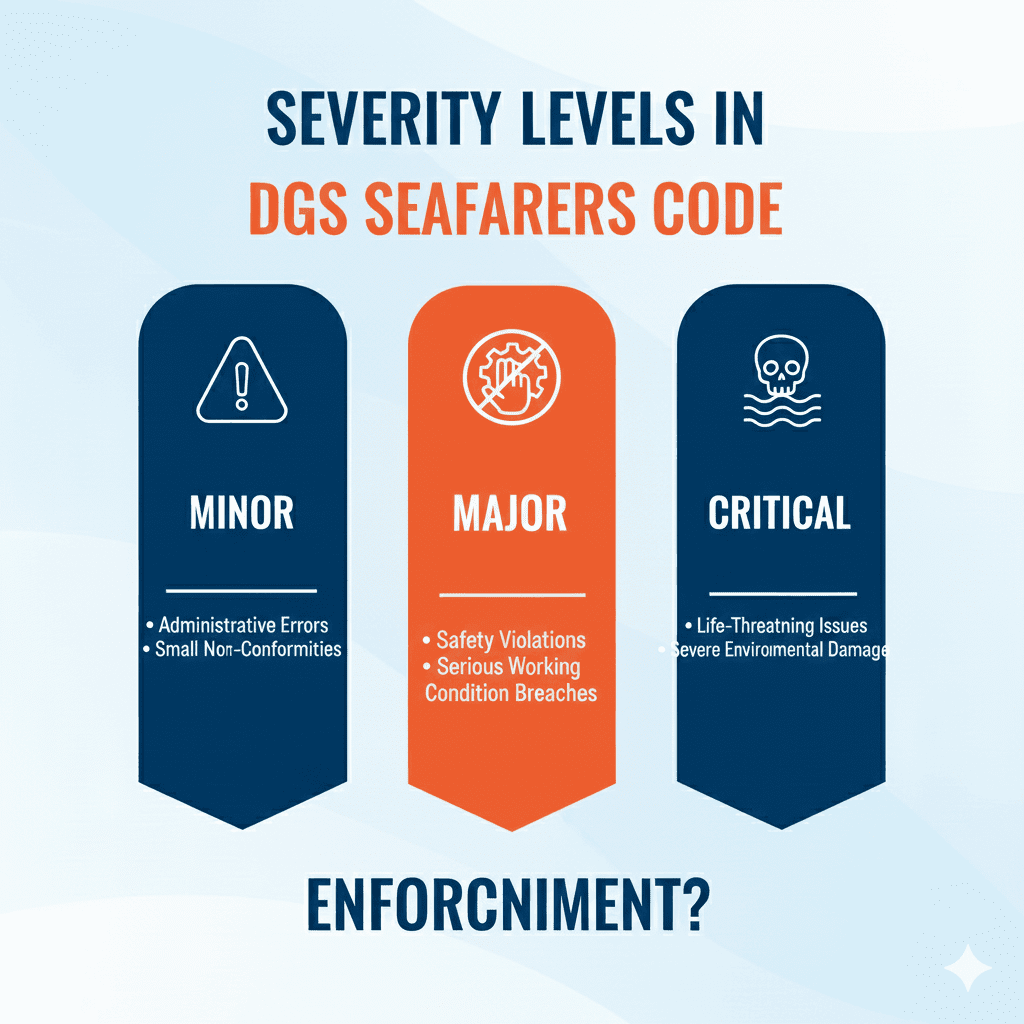
According to the DGS Seafarers Code of Conduct Compliance Enforcement Manual, issued by the Directorate General of Shipping, violations are categorized into three levels of severity based on their potential for risk to safety, environment, assets, and reputation. The present framework, applicable from 1 January 2026, will ensure that proportionate penalties are imposed on the … Read more
Seafarer grievances may be filed against RPSLs within the context of the Seafarers Code of Conduct if they establish violations either by inspecting, observing, and listening to complaints within the guidelines stated in the DGS Compliance Enforcement Manual beginning on January 1, 2026. The process ensures transparency in the enforcement of standards under the Merchant … Read more
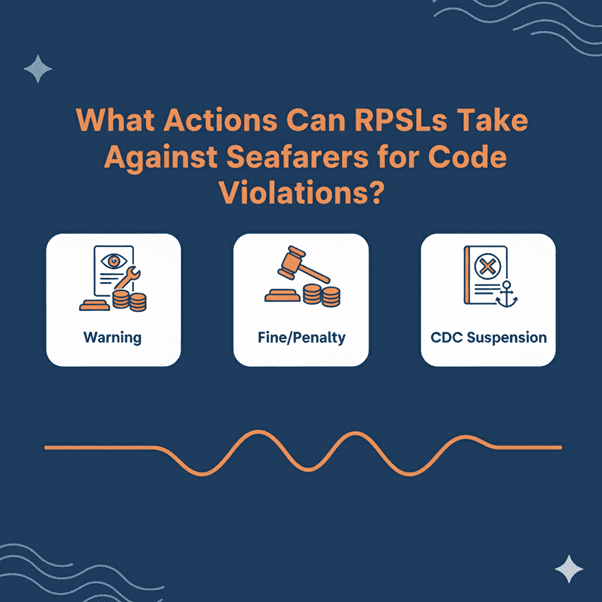
Recruitment and Placement Service Licensees (RPSLs) play a significant part in ensuring compliance with the Seafarers Code of Conduct, as per the Directorate General of Shipping guidelines, which will come into effect from January 1, 2026. The whole system described within the DGS Seafarers Code of Conduct Compliance Enforcement Manual states strict disciplinary action for … Read more
The provisions regarding penalties within The Seafarers’ Code of Conduct, introduced by the Indian government’s Directorate General of Shipping (DGS), emphasize professional ethics, safety, and compliance for ships flagged or crewed by Indians. The code of conduct, featured as part of recent government regulations by DGS, as well as the Merchant Shipping Act, also prescribes … Read more
India’s maritime sector is vital for the effective functioning of the Indian economy. It accounts for approximately 90% of the trade volume. From crude oil to farm goods, everything passes through the port and vessels. The efficiency and reliability of maritime transport are a must for national competitiveness and economic growth. To safeguard the integrity … Read more