
Table of Contents
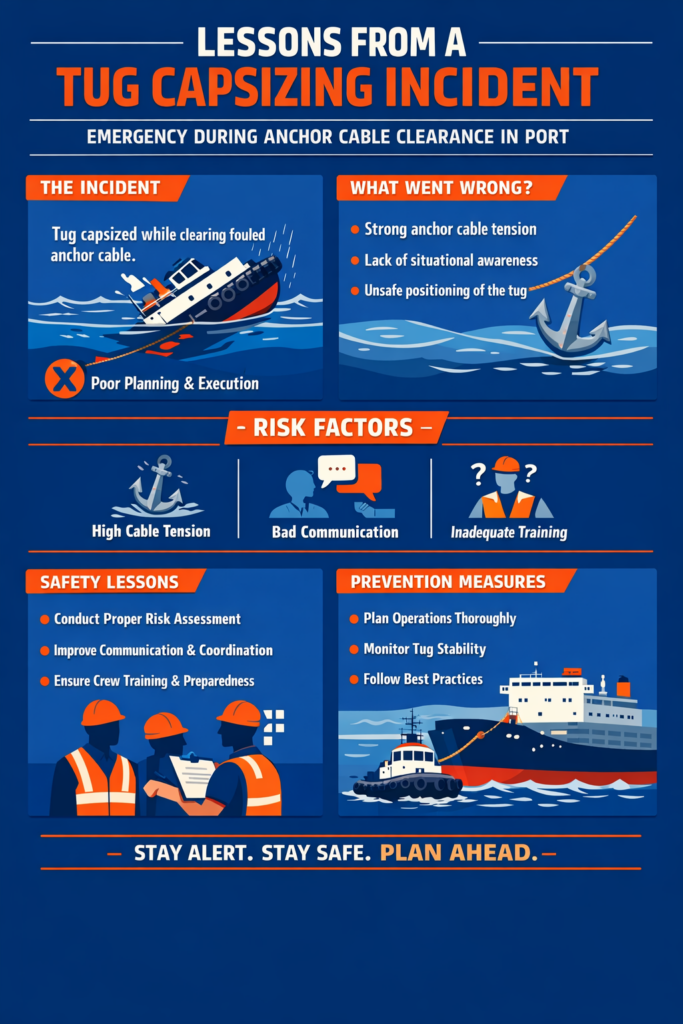
Maritime operations inside port waters are often considered routine. However, recent incidents like tug and crane accidents have proven that even short-duration assistance operations, if poorly planned, can quickly turn into serious marine accidents. One such case is the capsizing of a tug during clearance of a fouled anchor cable in port waters, which offers critical safety lessons for the entire maritime industry.
This article breaks down what went wrong, why it happened, and what port users, tug operators, RPSL Companies and supervisors must do to prevent similar incidents in the future.
Understanding Tug Capsizing in Port Waters
A tug capsizing typically occurs due to a sudden loss of stability, often caused by external forces such as:
- Strong tidal currents
- Improper tow angles
- Inadequate tug size or power
- Unsafe towing practices
In confined port waters, these risks increase due to restricted maneuvering space, heavy traffic, and pressure to complete operations quickly.
What Is Girding and Why Is It So Dangerous?
One of the most critical factors in tug capsizing incidents is girding.
Girding Explained Simply
Girding occurs when:
- A tug is pulled sideways (broadside) by the tow
- The towing force exceeds the tug’s righting ability
- The tug loses balance and capsizes within seconds
Once girding begins, recovery is extremely difficult unless the towing line can be released immediately.
Key lesson: If the capsizing lever becomes greater than the righting lever, the tug will capsize regardless of crew experience.
Key Safety Failures Observed in Port Tug Operations
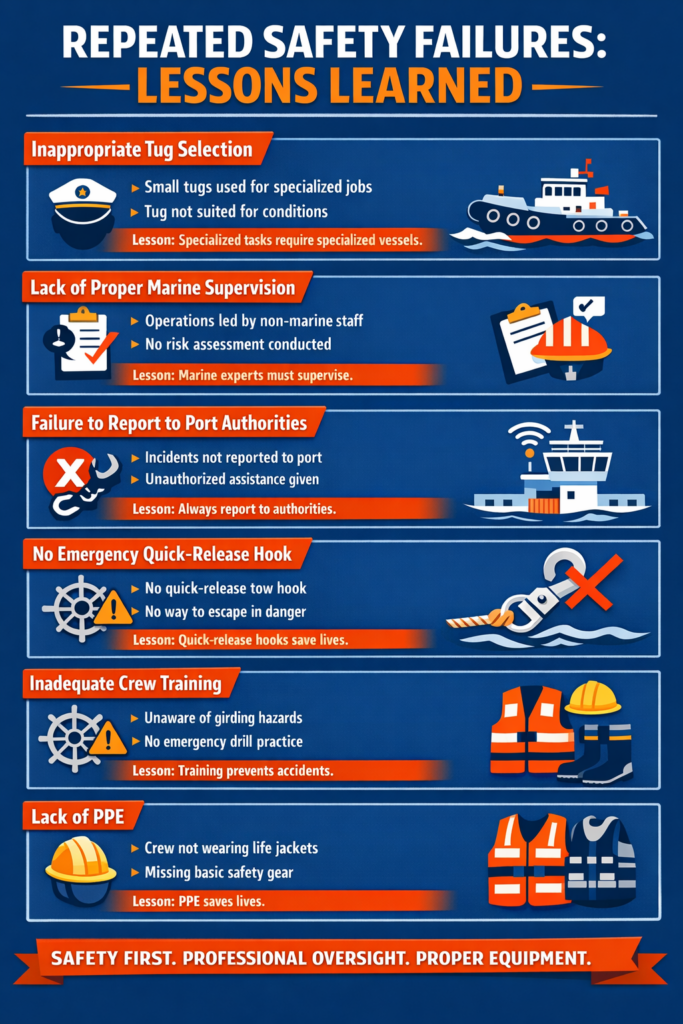
Analysis of recent incidents highlights repeated and avoidable safety failures:
1. Inappropriate Tug Selection
- Small or underpowered tugs were deployed for specialized operations like anchor cable clearanceor 2026
- Tug capability was not matched with environmental conditions such as strong tidal currents
Lesson: Not all tugs are suitable for all jobs. Specialized marine tasks demand specialized vessels.
2. Lack of Proper Marine Supervision
- Operations were directed by non-marine personnel
- No formal risk assessment was conducted
Lesson: Marine operations must only be supervised by qualified nautical professionals with authority and experience.
3. Failure to Report to Port Authorities
- Anchor fouling incidents were not reported to Port Authority or VTMS
- Assistance was initiated without authorization
Lesson: Unreported operations remove oversight, coordination, and emergency preparedness.
4. Absence of Emergency Quick-Release Towing Hooks
- The tug lacked an emergency towing hook release
- Crew had no immediate way to disengage under danger
Lesson: Emergency quick-release mechanisms are not optional. They are lifesaving equipment.
5. Inadequate Crew Training
- Crew were unfamiliar with:
- Girding risks
- Safe towing angles
- Emergency response actions
Lesson: Formal training and simulator-based drills significantly reduce accident probability.
6. Poor Use of Personal Protective Equipment (PPE)
- Crew were not wearing:
- Life jackets
- Working vests
- Basic safety gear
Lesson: PPE does not prevent accidents, but it prevents fatalities.
Environmental Risk: The Overlooked Consequence
When a tug capsizes, the danger does not stop at crew safety. There is a serious risk of oil pollution, especially in port waters.
- Fuel leakage can disrupt port operations
- Cleanup costs can be substantial
- Legal and financial liabilities increase
Immediate notification to the Coast Guard is essential in any capsizing or sinking event.
Best Practices to Prevent Tug Capsizing in Port Waters
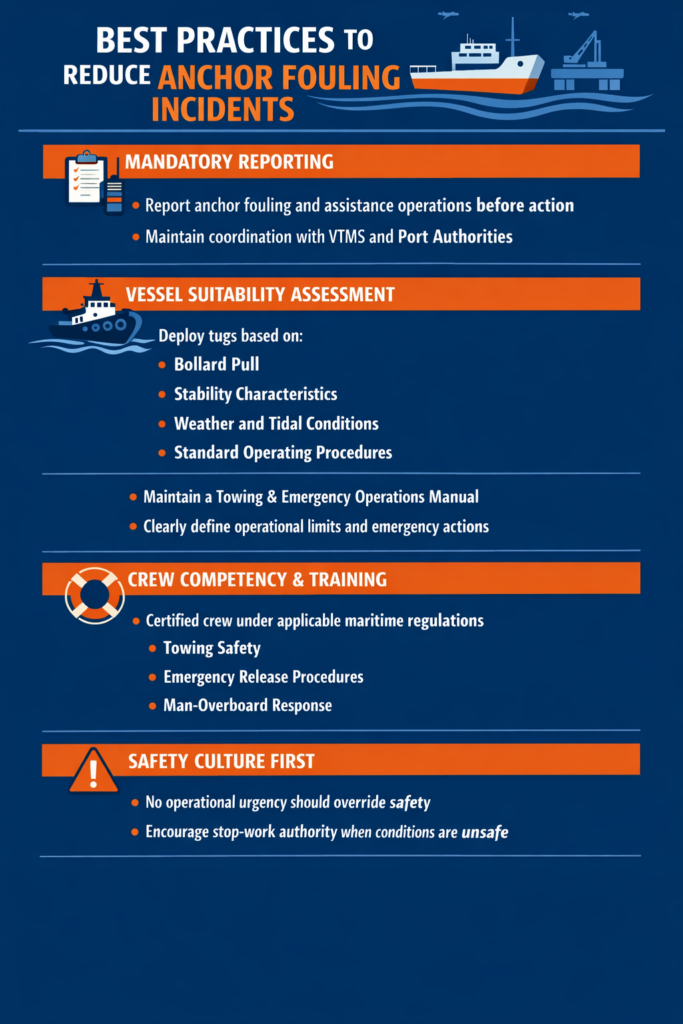
To reduce the risk of similar incidents, maritime stakeholders should adopt the following best practices:
Mandatory Reporting
- Report anchor fouling and assistance operations before action
- Maintain coordination with VTMS and Port Authorities
Vessel Suitability Assessment
- Deploy tugs based on:
- Bollard pull
- Stability characteristics
- Weather and tidal conditions
Standard Operating Procedures
- Maintain a Towing and Emergency Operations Manual
- Clearly define operational limits and emergency actions
Crew Competency & Training
- Certified crew under applicable maritime regulations
- Regular training on:
- Towing safety
- Emergency release procedures
- Man-overboard response
Safety Culture First
- No operational urgency should override safety
- Encourage stop-work authority when conditions are unsafe
Why These Lessons Matter for the Maritime Industry
Tug capsizing incidents are rarely caused by a single mistake. They result from a chain of preventable failures like poor planning, weak supervision, inadequate equipment, and lack of training.
For port operators, tug owners, insurers, and regulators, the message is clear: Safety in port waters is not routine. It requires constant vigilance.
How Safety Procedures Protect Seafarers and Crew
Well-defined safety procedures play a critical role in protecting seafarers working in port waters, where risks can escalate rapidly. Procedures such as proper risk assessment, mandatory reporting, safe towing practices, and clear communication ensure that crew members are not exposed to avoidable hazards. When tugs are operated within their limits, equipped with emergency quick-release systems, and guided by trained supervisors, the likelihood of sudden incidents like girding or capsizing is greatly reduced.
Most importantly, the compulsory use of personal protective equipment (PPE) such as life jackets and working vests ensures that, even if an accident occurs, crew members have a far better chance of survival. Consistent training and adherence to standard operating procedures empower seafarers to recognize danger early, take corrective action, and respond effectively in emergencies, making safety procedures a frontline defense for both life and livelihood. Also strict adherence to marine safety protocols ensure that Indian shipping stays compliant to international maritime conventions.
Final Thoughts
The capsizing of a tug during anchor clearance operations serves as a powerful reminder that marine safety depends on preparation, competence, and compliance. By learning from such incidents and implementing corrective measures, the maritime industry can prevent loss of life, protect the environment, and ensure smoother port operations.
Frequently Asked Questions on Tug Capsizing in Port Waters
1. What are the main causes of tug capsizing in port waters?
Tug capsizing in port waters is usually caused by a combination of factors such as girding, strong tidal currents, improper tow angles, unsuitable tug selection, and lack of emergency release mechanisms. Poor planning and inadequate supervision further increase the risk during specialized operations like anchor handling or towing.
2. What is girding, and how does it lead to tug capsizing?
Girding occurs when a tug is pulled broadside by the tow, causing the towing force to exceed the tug’s righting moment. Once this happens, the tug can capsize within seconds. Without an emergency quick-release towing hook, the crew may have no way to escape the dangerous situation.
3. Why is reporting anchor fouling incidents to port authorities important?
Reporting anchor fouling and assistance operations to the Port Authority and VTMS ensures proper coordination, risk assessment, and traffic management. Failure to report removes oversight and can lead to unsafe operations, delayed emergency response, and increased accident risk.
4. What safety equipment is essential on tugs operating in port waters?
Essential safety equipment includes:
1. Emergency quick-release towing hooks
2. Life jackets or working vests for all crew
3. Proper communication equipment
4. A Towing and Emergency Operations Manual
These tools are critical for preventing capsizing and protecting crew lives during emergencies.
5. How can tug operators prevent similar accidents in the future?
Tug operators can prevent capsizing incidents by:
1. Deploying appropriately sized and equipped tugs
2. Ensuring crew receive formal and simulator-based training
3. Following standard operating procedures
4. Using mandatory PPE
5. Never allowing non-marine personnel to direct marine operations
A strong safety culture and strict compliance with regulations are key.