
In 2026, Indian Flag vs foreign flag ships face distinct rules under DGMA Order No. 01 of 2026, issued on January 21 by the Directorate General of Maritime Administration (DGMA), Mumbai. This order sets full age norms and qualitative parameters for registration and operation of vessels under the Indian flag, while also applying to foreign-flagged ships needing licenses under Sections 406 & 407 of the Merchant Shipping Act, 1958.
Indian-flagged ships must meet strict entry age limits and condition assessments like CAP ratings to modernize the aging fleet and align with IMO greenhouse gas goals. Foreign-flagged ships get similar checks only when entering Indian waters for coastal or EEZ operations, creating a level playing field but with easier entry for younger vessels. For instance, oil tankers over 20 years old cannot join the Indian registry, but foreign ones may operate if compliant with licensing.
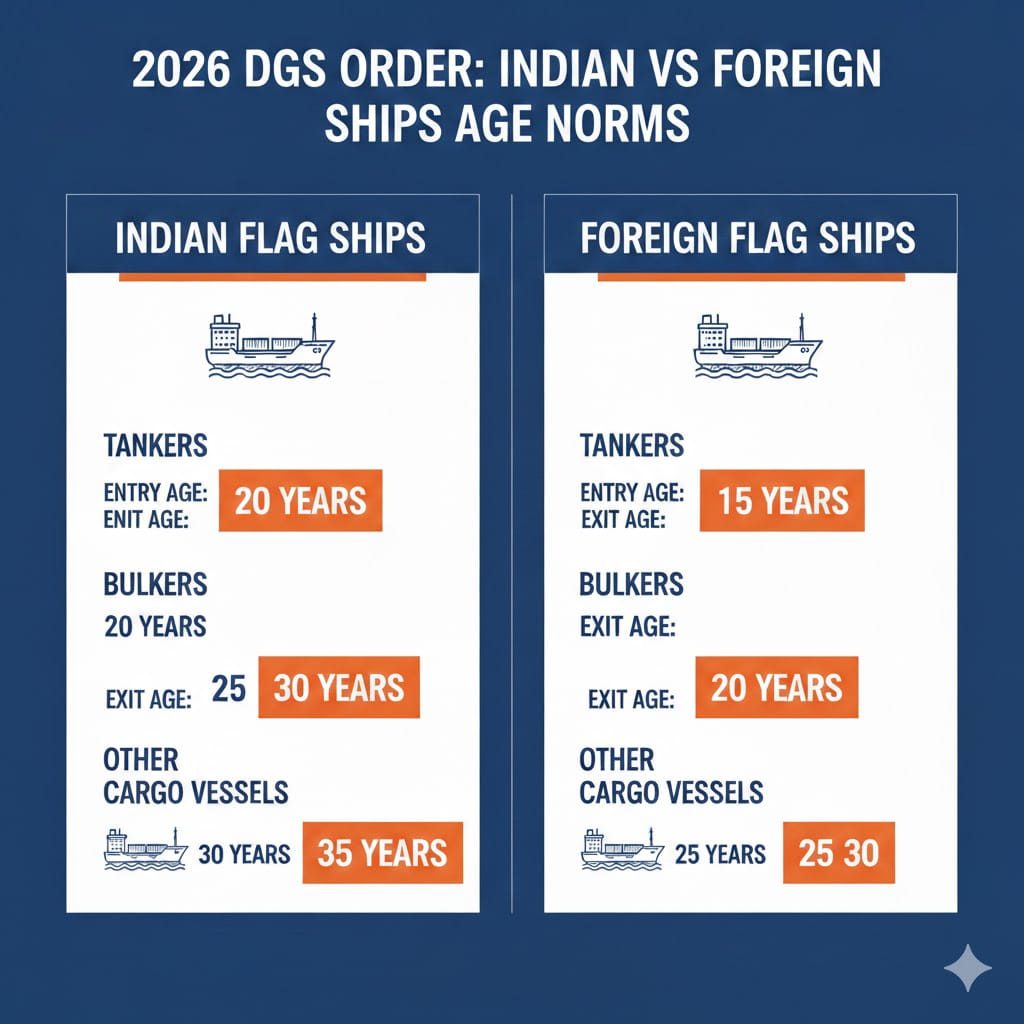
These rules stem from the need to reduce average Indian tonnage age, which rises while global fleets get younger, pushing for low-carbon ships. Owners must plan replacements carefully, as existing vessels get transition time till 2031 with sustainability indexing.
Why Does DGMA Order 01 of 2026 Matter for Indian Flag Ships?
DGMA Order 01 of 2026 matters because it enforces quality tonnage for safety, pollution control, and security under the Merchant Shipping Act, 1958. Indian flag ships now follow Annexure-I for entry age ranges: below 15 years needs no extra checks if IACS classed; 15-20 years requires CAP 1 hull rating; over 20-25 years often not permitted for key types like oil tankers. This phase out old fossil fuel ships for greener alternatives amid IMO GHG targets.
For example, bulk carriers over 20 years old cannot be acquired second-hand under the Indian flag, needing Rightship scores or equivalent. Existing ships operate till March 31, 2029, with a possible two-year extension to 2031 based on sustainability reviews. This helps Indian owners compete globally while ensuring safer seas.
When Do Age Norms Apply to Indian Flag vs Foreign Flag Ships?
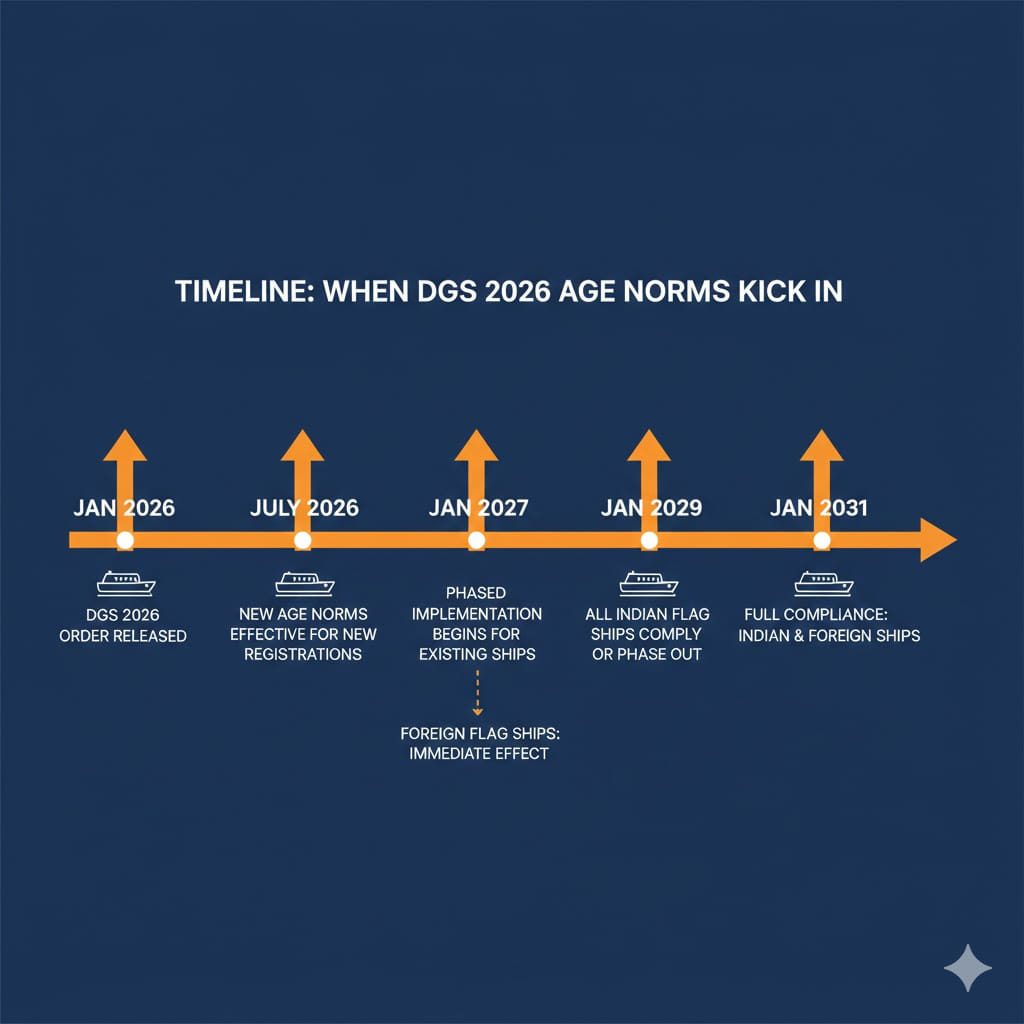
Age norms apply from the Date of Delivery on the Cargo Ship Safety Construction Certificate, effective immediately from January 21, 2026. For Indian Flag vs Foreign Flag Ships, Indian registry checks apply at acquisition; foreign ones at license application under Sec 406/407 for EEZ/coastal trade.
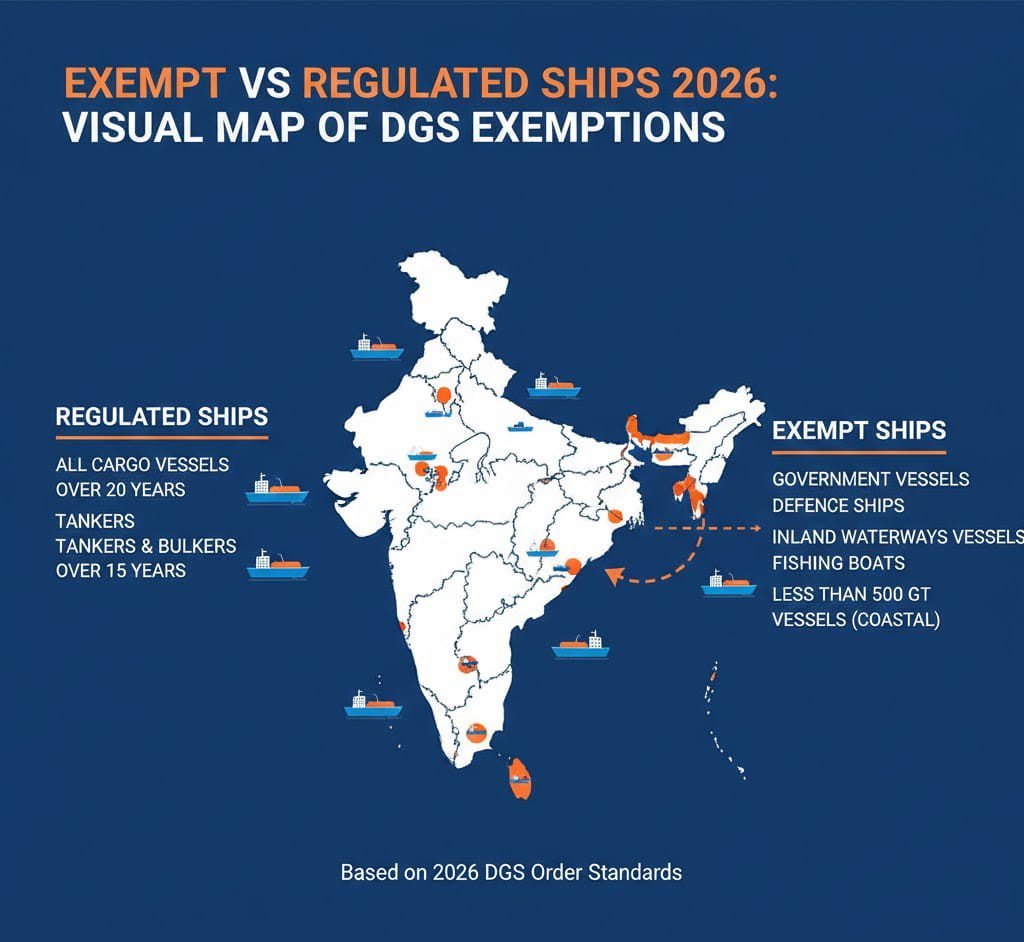
Exemptions cover passenger vessels, FPSOs, dredgers, and specialized units like MODUs—no age limits there. Vessels in Indian Controlled Tonnage (DGMA Order 10/2014) follow the same rules as those of the Indian flag.
What Entry Age Rules Differ for Key Ship Types?
Entry rules vary by type in Annexure I. Oil tankers: under 15 years ok if IACS; 15-20 years need Rightship within 6 months; 20+ not permitted. Bulk/general cargo: similar, no 20+ second-hand, CAP1/2 ratings required. Offshore supply: up to 20 years; DP2 at 30 years withdrawal. Container/cement carriers: no second-hand post-20/25 years.
A foreign flag mirrors this at licensing—over entry age rejected. These push fleet renewal, as India’s fleet ages while the world declines.
| Ship Type | Indian Flag Entry Age | Foreign Flag at License | Same at the application |
|---|---|---|---|
| Oil Tankers | <15: IACS; 15-20: Rightship; 20+ No | Same at application | CAP1 Hull, Rightship Score 3+ |
| Bulk Carriers | <15: IACS; 15-20: CAP; 20+ No | Max age at service start | Rightship/DGMA equivalent |
| Offshore Supply | <20: IACS; 20-25: OVID | Entry range enforced | Annual OVID/FSI |
| Tugs (Harbour) | <20: IACS; 20-25: TIQ | Same | Annual FSI |
| General Cargo | <15: None extra; 15-20: CAP | Compliant at entry | CAP ratings at drydock |
Why Are Qualitative Parameters Like CAP and Rightship Required?
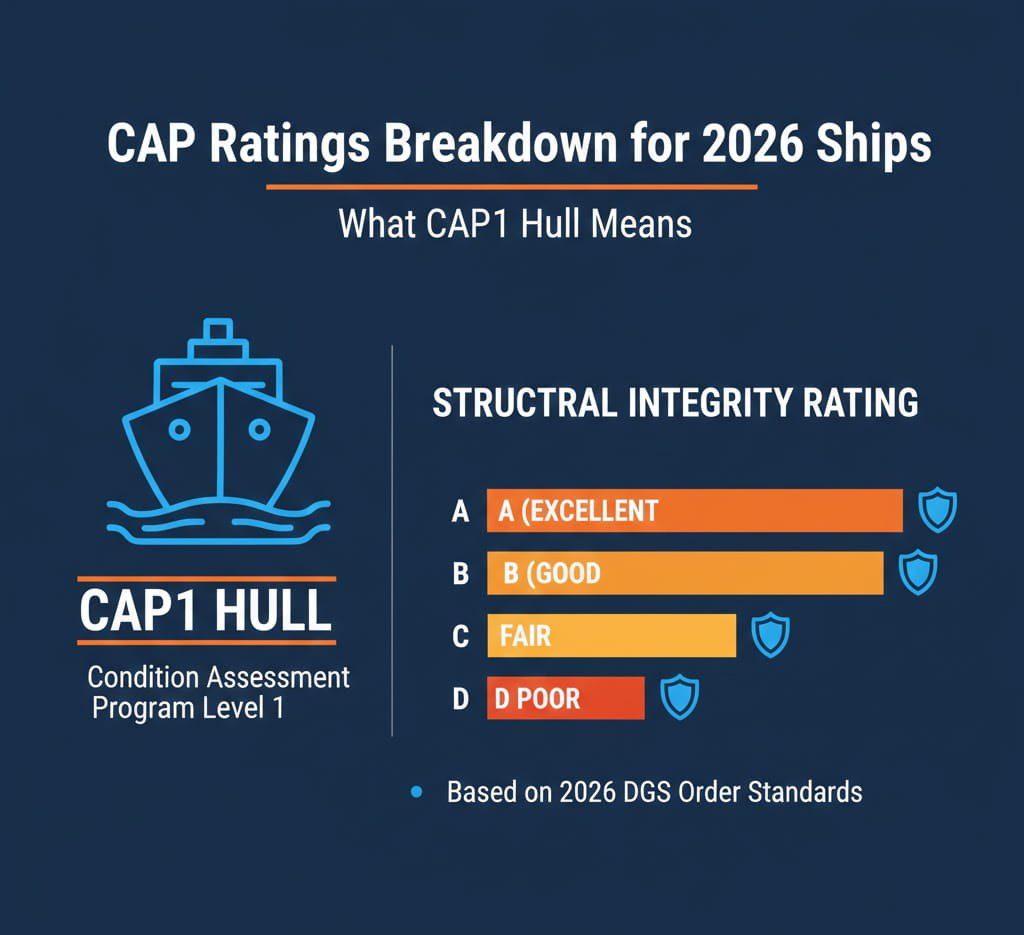
Qualitative checks ensure safety beyond age. CAP 1 (hull) and CAP 2 (machinery/cargo) from GoI ROs are needed for older vessels at every drydock. Rightship/OVID inspections mandatory for bulkers/tankers within set timelines. The IACS class is baseline; the non-IACS harder. These align with IMO safety/pollution goals, preventing accidents from aging hulls.
For Indian Flag vs foreign-flag ships, both need these at key points, but the Indian registry demands upfront payment for acquisition.
When Can Existing Vessels Continue Operating Under New Rules?
Existing vessels (registered pre-Jan 21, 2026) get grace: operate till March 31, 2029; extension to 2031 possible post-sustainability review. Over-40 general cargo limited to fair weather. Foreign licensed ones comply at renewal. DGMA can dispense case-by-case with INSA input.
How Do These Rules Impact Coastal and EEZ Trade?
Coastal/EEZ trade needs licenses; foreign ships now face entry age/qualitative checks, even exempted ones and Indian Controlled Tonnage aligns fully. This also helps to promote local fleet, sustainability.
Why can’t I register a 25-year-old tanker under Indian flag?
Tankers over 20 years face a total ban on second-hand acquisition under Indian flag due to safety risks. Younger ones (15-20 years) need Rightship inspection or CAP ratings to ensure hull integrity.
When do foreign flag ships need these checks?
Foreign flag ships must comply at license application under Sec 406/407 for EEZ or coastal operations. Maximum age is checked from service start date, rejecting over-limit vessels outright.
What is CAP rating in ship regulations?
CAP (Condition Assessment Program) rates hull (CAP 1) and machinery/cargo systems (CAP 2) by GoI-recognized ROs. Required for older vessels at drydocks to verify structural safety.
How long can existing old ships operate?
Pre-2026 registered vessels can run till March 31, 2029, with a possible 2-year extension to 2031. Subject to sustainability indexing review after two years.
Are dredgers exempt from age norms?
Yes, dredgers are exempt, along with FPSOs, FSRUs, passenger ships, heavy lift barges, research vessels, and MODU/SPS-certified units. Due to their complexity and low availability.
What computes vessel age?
Vessel age starts from “Date of Delivery” on the Cargo Ship Safety Construction Certificate or equivalent IMO statutory document. Used uniformly for all compliance checks.
Why push younger fleet in India?
India’s fleet age is rising (unlike global decline), risking safety and IMO GHG targets for low-carbon ships. Age norms phase out old fossil fuel vessels for modern, efficient tonnage.
Can DGMA waive rules?
Yes, the Directorate General of Maritime Administration can dispense requirements case-by-case, considering INSA/ICCSA inputs in public interest or exceptional circumstances
What is Sustainability Indexing?
Upcoming DGMA metric to evaluate ships’ environmental performance for extensions beyond 2029/2031. Based on IMO GHG goals, issued after stakeholder consultation.