Merchant Navy - Indo Search

What Is the Basic Safety Training Course (BST)?
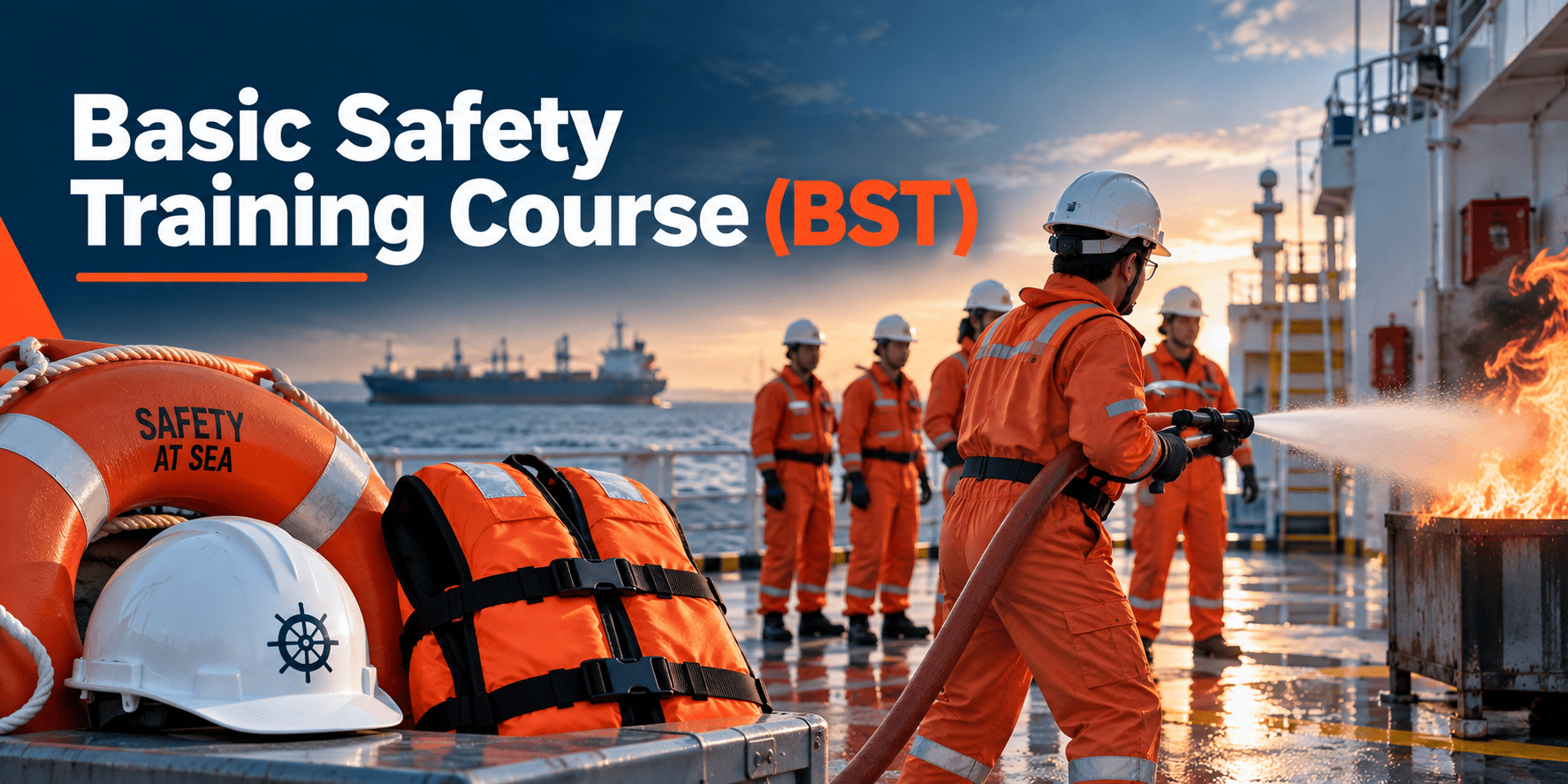
Basic Safety Training Course (BST)

The Basic Safety Training course (BST) is the mandatory STCW certification every seafarer needs before joining a ship. It bundles four modules, survival techniques, firefighting, first aid, and personal safety, into one certificate you earn at a DGMA-approved maritime training institute. It stays valid for five years. If you are planning a career at sea, … Read more
What Is the NCV Engine Cadet Scheme Under DGMA Circular No. 51?

DGMA Circular No. 51 of 2026 NCV Engine Cadet Scheme

DGMA Circular No. 51 of 2026 defines the NCV Engine Cadet Scheme as a structured pathway that lets General Purpose (GP) Rating holders qualify for the Marine Engineer Officer Class-IV (NCV) Certificate of Competency. Candidates need a qualifying education, a completed GP rating course, and 6 to 12 months of approved seagoing service as an … Read more

What Are the MEO and ETO Preparatory Course Requirements?

MEO and ETO Preparatory Course Requirements

DGMA’s MEO and ETO preparatory course requirements make a one-month offline course compulsory for MEO Class IV and ETO candidates and cut the MEO Class II course from four months to three, effective for candidates appearing on or after 1 January 2027. The MEO Class-I course stays at two months. Approved institutes can start batches … Read more

What Is the ETO to MEO Class IV Bridging Course Syllabus?

ETO to MEO Class IV Bridging Course Syllabus

The ETO to MEO Class IV bridging course syllabus, set out in Annexure I of DGMA Circular No. 50 of 2026, covers 15 subjects across 360 contact hours over three months. It covers 15 subjects, from Marine Engineering Practice to Workshop Skills through Videos, Case Studies and Practical Demonstrations, with assessment through written examinations, tutorials, … Read more

How Can an ETO Become an MEO Class IV Officer?

ETO to MEO Class IV CoC Transition Pathway

A certified ETO can complete the ETO to MEO Class IV CoC transition under DGMA Circular No. 50 of 2026 by finishing 24 months of sea service, a 3-month DGMA-approved bridging course, an engine room simulator course, and 6 to 9 months of onboard engineering watchkeeping before sitting the MEO Class IV exams. That is … Read more

What Is the Minimum Safe Manning Scale for Type 4 River-Sea Passenger Vessels?

Minimum safe manning for Type 4 River-Sea passenger vessels

Minimum safe manning for Type 4 River-Sea passenger vessels comes from Annexure G-6 of DGMA Circular No. 54 of 2025, and it covers Type 4 RSVs carrying passengers, including Ro-Ro and Ro-Pax configurations, specifically where the vessel carries more than 12 and not more than 400 passengers. A vessel under 500 GT needs 7 nautical … Read more

What Is the Minimum Safe Manning Scale for High-Speed Crafts in India?

Minimum safe manning for high-speed crafts in India

Minimum safe manning for high-speed crafts in India comes from Annexure G-7 of DGMA Circular No. 54 of 2025, and it stands apart from every other scale in the circular in one important way: it is not banded by Gross Tonnage at all. A single fixed crew of 5 nautical seafarers covers every Category A … Read more

What Is the Minimum Safe Manning Scale for Passenger Ships Operating Between Indian Ports?

Minimum safe manning for passenger ships between Indian ports

Minimum safe manning for passenger ships between Indian ports comes from Annexure G-4 of DGMA Circular No. 54 of 2025, and it is the tightest operating envelope of any passenger vessel scale covered in this series so far. A passenger vessel under 200 GT needs 6 nautical crew here. A vessel of 6000 GT and … Read more

What Is the Minimum Safe Manning Scale for Type 3 River-Sea Passenger Vessels?

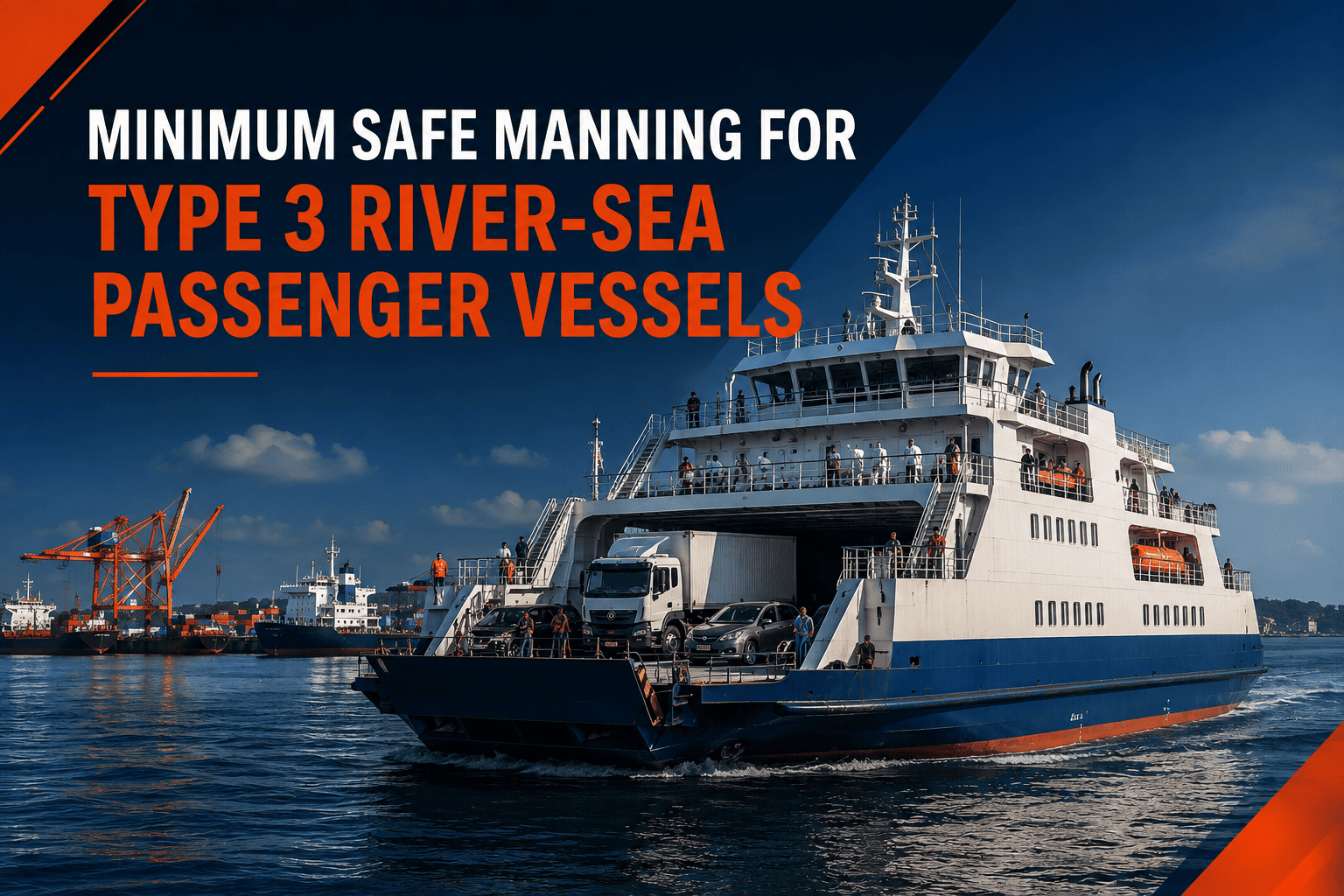
Minimum safe manning for Type 3 River-Sea passenger vessels

Minimum safe manning for Type 3 River-Sea passenger vessels comes from Annexure G-5 of DGMA Circular No. 54 of 2025, and it covers passenger vessels classed as Type 3 RSVs, including Ro-Ro and Ro-Pax configurations, whether they are carrying foot passengers only or vehicles as well. A vessel under 500 GT needs 7 nautical crew. … Read more

What Is the Minimum Safe Manning Scale for Passenger Ships on NCV and Short International Voyages?

Minimum safe manning for passenger ships on NCV and short international voyages

Minimum safe manning for passenger ships on NCV and short international voyages comes from Annexure G-2 of DGMA Circular No. 54 of 2025, and it is the only passenger vessel scale in the circular where the certificate requirement can change mid-voyage without the crew number changing at all. A passenger vessel under 200 GT needs … Read more